Ireland’s capital is a bite-sized kind of place, easy to navigate on foot and with public transport options like Dart (train) and Luas (tram) for attractions and coastal villages on the outskirts.
A big swathe of the city centre is taken up by Trinity College Dublin, and as well as hosting a world-class library, this is one of four universities infusing the capital with a youthful sense of fun.
Temple Bar doubles as a boisterous night out and vibrant cultural quarter, with galleries aplenty on its cobblestone streets, while further out are the planned squares and terraces of Georgian Dublin.
So while Dublin is compact it still has the gravitas of a capital in its elegant parks, cultural institutions and the visitable headquarters of brands known the world over, from Guinness to Jameson.
1. Kilmainham Gaol
 Source: matthi / shutterstock
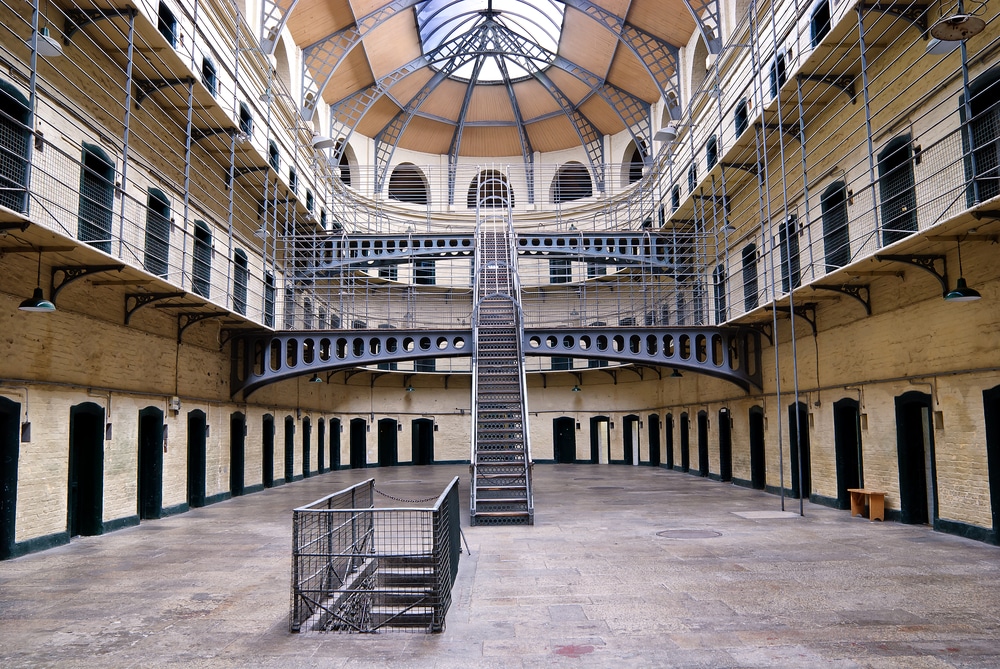
This intimidating grey complex, west of central Dublin, is a preserved symbol for Irish militant and constitutional nationalism from the Rebellion of 1798 up to the Irish Civil War of 1922-23.
Kilmainham Gaol was established in 1796 as the Dublin County Gaol, and having lain empty for a century now evokes both oppression and defiance.
Many of the everyday prisoners incarcerated here in the 19th century were transported to Australia.
Some were serious criminals, but a high proportion had most likely committed crimes of desperation in a period marked by poverty and famine.
The prison is best known for holding the leaders of the rebellions of 1798, 1803, 1848, 1867 and 1916, constituting some of Ireland’s most cherished national figures, including Robert Emmet, Henry Joy McCracken, Charles Stewart Parnell and Anne Devlin.
Some were released but many were executed, among them the leaders of the 1916 Easter Rising.
On a sobering visit you can see the specific cells for the likes of Robert Emmet, Éamon de Valera and Grace Gifford, and step out into the Stonebreakers’ Yard where the leaders of the Easter Rising were executed.
2. National Museum of Ireland — Archaeology
 Source: Kit Leong / Shutterstock
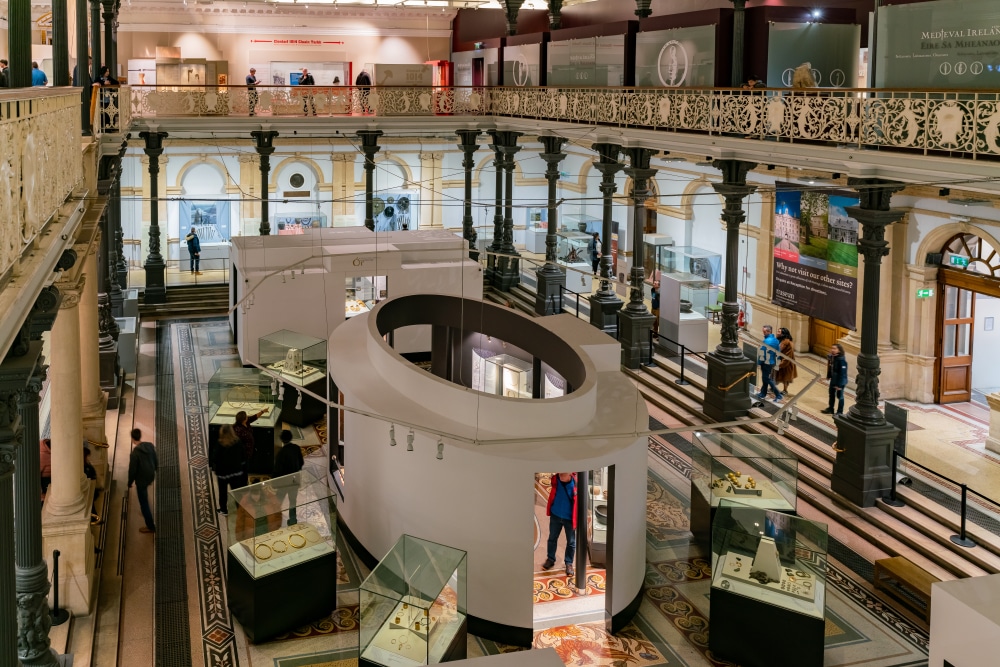
The National Museum of Ireland has three branches in and around Dublin, and the essential one of these is Archaeology.
The setting is impressive, surrounded by government buildings including Leinster House and just next to the National Gallery of Ireland.
The permanent exhibitions deal with the period from the Stone Age to the Late Middle Ages, and it’s thrilling to think that many of these treasures were unearthed in the 19th century by farmers cultivating land that had been left untouched for millennia.
Ór – Ireland’s Gold, shows off one of the greatest collections of Bronze Age gold objects in Europe, while the equally enthralling Kingship and Sacrifice displays several human bodies preserved in Ireland’s peat, along with their personal effects, for more than 2,000 years.
The Treasury is a showcase for Medieval Irish metalwork, with fabulous pieces of workmanship like the Tara Brooch (650-750 CE) and the Ardagh Chalice (c. 900 CE).
Look out for the museum’s temporary exhibitions, which tend to deal with ancient civilisations, like Egypt, Greece and Rome.
3. National Gallery of Ireland
 Source: Benoit Daoust / Shutterstock
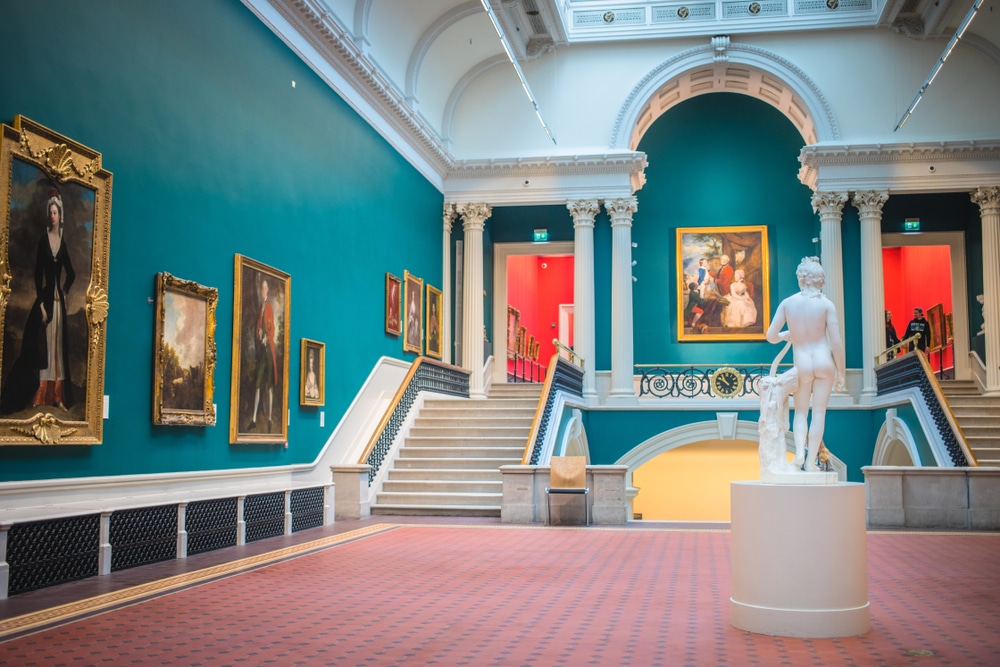
Ireland’s formidable national collection of fine art has a beautiful home next to Leinster House, the seat of the country’s parliament.
The museum building was ready in 1864 and displays paintings, prints and drawings from all the European schools, but with an accent on Dutch Masters and the Italian Baroque.
Some pieces you can’t leave without seeing are The Taking of Christ (1602) by Caravaggio, The Kitchen Maid (1620-22) by Diego Velázquez, Goya’s Portrait of Doña Antonia Zárate (1805) and Vermeer’s Lady Writing a Letter with a Maid (1670-71).
Irish art is well-represented, by James Barry, Walter Osborne and Augustus Nicholas Burke, the latter famed for A Connemara Girl (1868).
The National Gallery also holds a set of 31 watercolours by J. M. W. Turner, only displayed in the month January as stipulated by their bequeather, Henry Vaughan.
After a tour you can refuel at the Gallery Café in the airy Millennium Wing, which opened on Clare Street in 2002.
4. St Patrick’s Cathedral
 Source: trabantos / Shutterstock
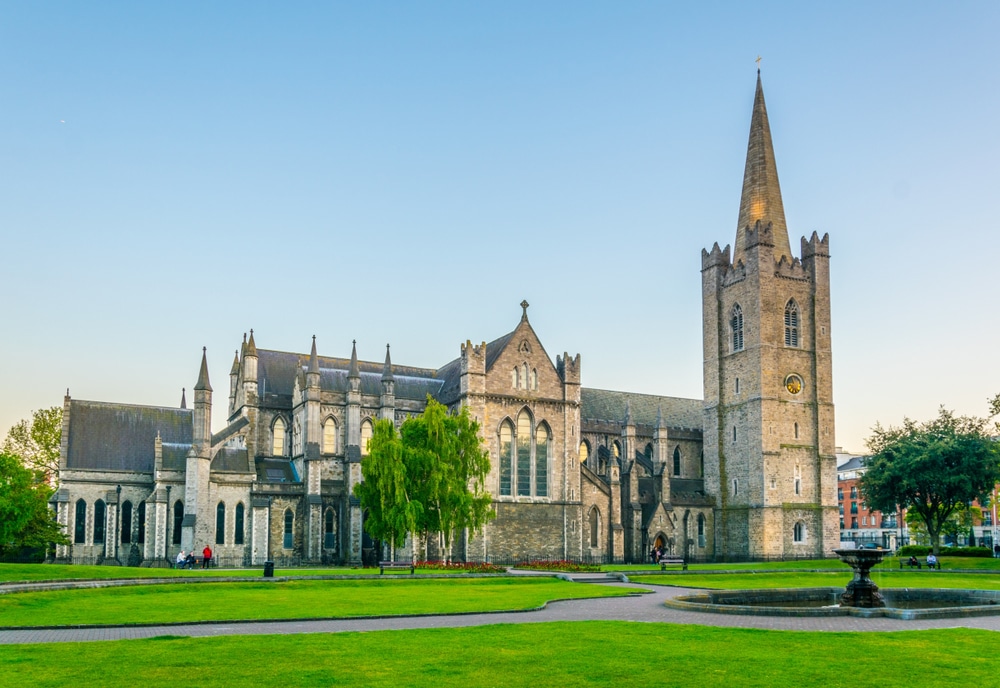
Ireland’s national cathedral and the venue for numerous national ceremonies was founded at the purported site of a holy well where Saint Patrick baptised Christian converts some 1,500 years ago.
Among the 500+ burials at St Patrick’s Cathedral is writer Jonathan Swift (1667-1745), who was dean from 1713 until his death.
There has been a church at this location, outside the walls of Medieval Dublin, since at least the 12th century, and it was elevated to cathedral status around the turn of the 13th century. This was an unusual move for a city that already had a cathedral (Christ Church).
The building’s layout comes from the 13th century and has an Early English Gothic style, with neo-Gothic details from a 19th-century restoration.
This work was funded by Benjamin Guinness of the brewing dynasty after the cathedral had fallen into disrepair.
A gorgeous holdover from the 13th century is the Lady Chapel, completed a little later than the rest of the church and recently restored to its Medieval glory.
One curiosity to seek out on a self-guided tour is the Celtic cross from the early Middle Ages, discovered at the turn of the 20th century and thought to have marked the site of that holy well.
The cathedral’s choir was established as long ago as 1432 and can be heard during term time.
5. Chester Beatty
 Source: Kit Leong / Shutterstock
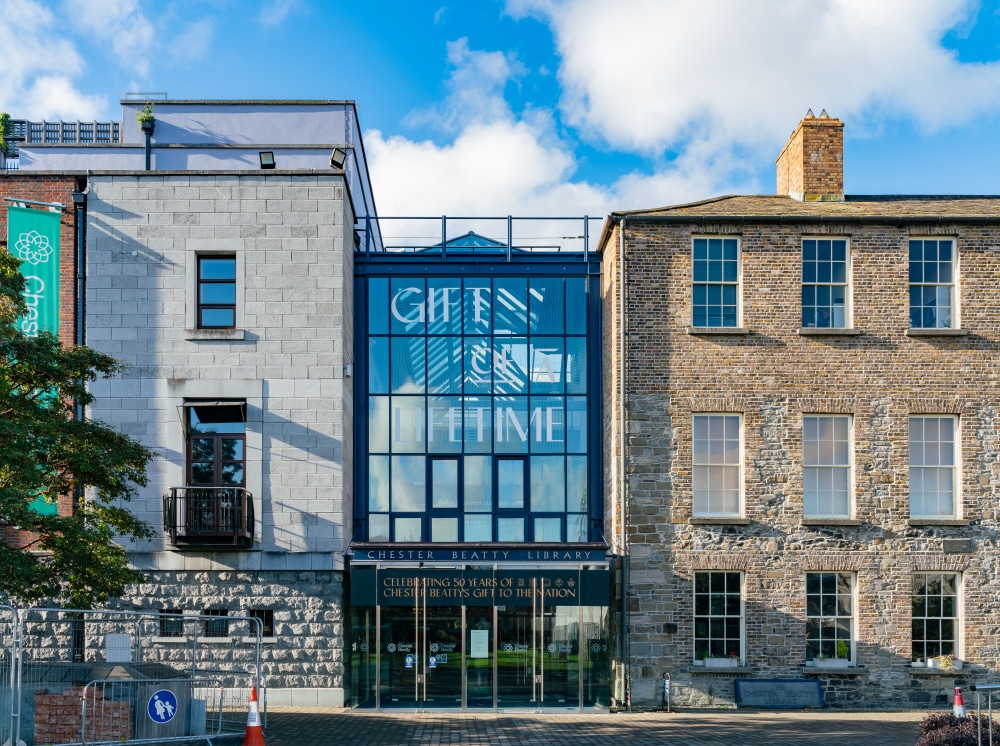
When the American mining magnate Chester Beatty (1875-1968) moved to Dublin in 1950 he brought with him a priceless collection of manuscripts, paintings, rare books and objets d’art from North Africa, China, Japan, Persia and Southeast Asia, among others.
The Chester Beatty museum reopened at Dublin Museum in 2000 and soon garnered a host of awards, including the European Museum of the Year (2002).
The museum is free and has much to keep you fascinated, including some of the earliest Christian artefacts in the world, one of the most extensive collections of papyri and a vast array of Islamic art and texts.
Among these is the Turkish epic, Life of the Prophet (c. 1388), about the life of Muhammad and described as “the largest single cycle of religious painting in Islamic art”.
Also exceptional is the 3rd-century Gospel of Mani, a rare surviving artefact from the Manichaeism religion that thrived in Persia between the 3rd and 7th centuries CE.
6. Trinity College Dublin
 Source: David Soanes / Shutterstock
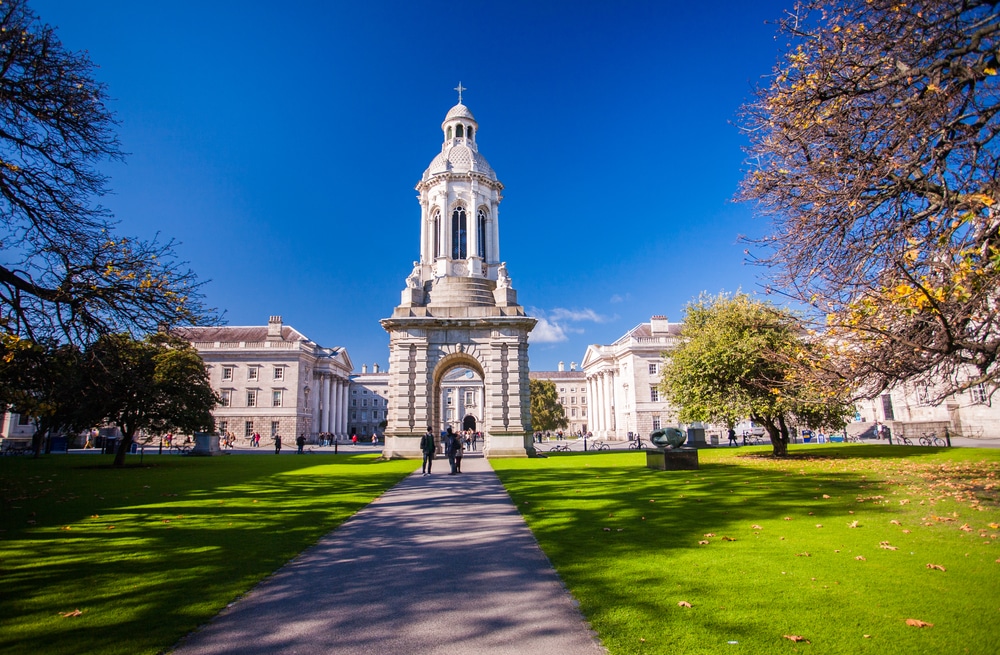
Founded by Elizabeth I in 1592, Trinity College Dublin dominates the city centre east of Grafton Street and counts Samuel Beckett, Oscar Wilde, Bram Stoker and Jonathan Swift among its alumni.
The campus is one of the prettiest in the world, not least for its profusion of Georgian architecture.
For a summary you can book a whirlwind guided tour, visiting the four main squares in about half an hour.
But the main event, and one of Ireland’s most treasured cultural spaces, is the Old Library. This extraordinary building, constructed from 1712 to 1732, is famed for its 65-metre, barrel-vaulted “Long Room”, and holds thousands of early and rare volumes.
The foremost of these is the invaluable 9th-century illuminated manuscript, the Book of Kells, held as a masterwork of western calligraphy.
Another point of pride, on show in the Long Room, is the Trinity College Harp, dating from the 14th or 15th century and serving as the model for the coat of arms of Ireland.
Also not to be missed is one of the few copies of the 1916 Proclamation of the Irish Republic.
7. Dublin Castle
 Source: SAKhanPhotography / Shutterstock
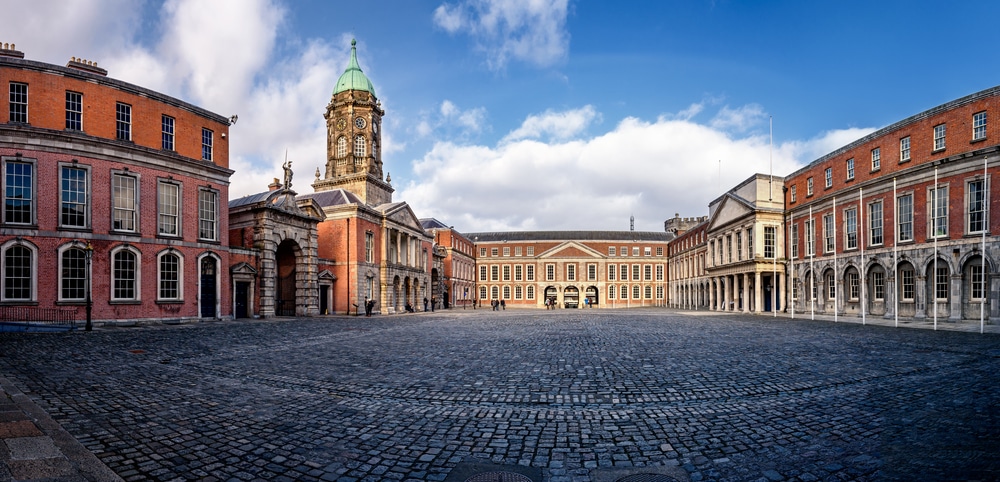
For centuries up to Anglo-Irish Treaty in 1921 this government complex off Dame Street was the seat of the Lord Lieutenant of Ireland.
Dublin Castle has been here since the 13th century and was built on the site of a Viking settlement from the early Middle Ages.
A fire in 1684 took out most of the Medieval building, save for the impressive 13th-century Record Tower, and the remainder was rebuilt in the 18th century as a Georgian palace.
The opulently decorated state apartments from the days of the British administration now serve a ceremonial purpose, hosting functions like state visits and the presidential inauguration.
You can make your way through these fine rooms on a guided or self-guided tour, admiring superb collections of paintings, tapestries, stained glass, clocks, sculpture, textiles, glassware and more.
The standout space is Saint Patrick’s Hall, built in 1740 and decorated later that century with glorious frescoes by Vincenzo Valdrè (1742-1814) depicting scenes from Irish history and mythology.
The Gothic Revival Chapel Royal and the 13th-century vaults in the basement can be seen on a guided tour.
8. EPIC The Irish Emigration Museum
 Source: EQRoy / Shutterstock
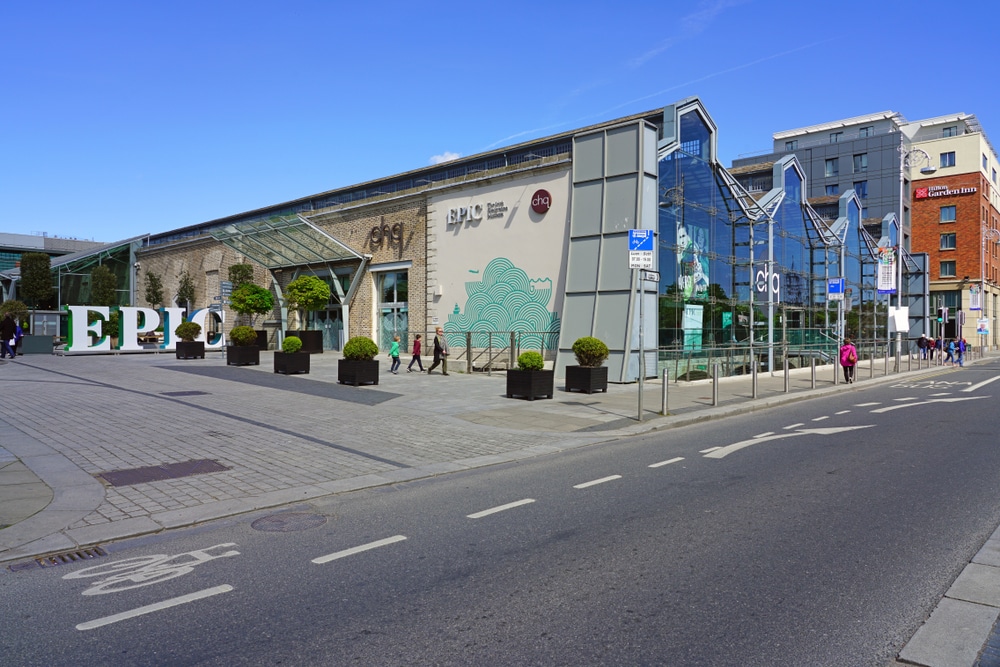
Picking up a ton of awards since it opened in 2016, this high-tech interactive museum tells the multifaceted story of the Irish diaspora.
The venue is special too, at the refurbished CHQ Building, a Georgian warehouse in the docklands, constructed in 1820. EPIC is fully digital, and its 20 dynamic galleries make wonderful use of interactive technology to help you ponder what it means to be Irish or have Irish ancestry.
Going beyond stereotypes, you’ll discover how Ireland has influenced the world in politics, the arts, science and popular culture.
With touchscreens, multimedia and fun activities, you can delve into the stories of those poets, authors, sports stars, scientists, politicians and musicians, not to mention famous outlaws at the Rogues’ Gallery.
Especially touching are the excerpts from letters sent back to Ireland by men and women who had made new lives abroad.
9. Christ Church Cathedral
 Source: C.Echeveste / Shutterstock
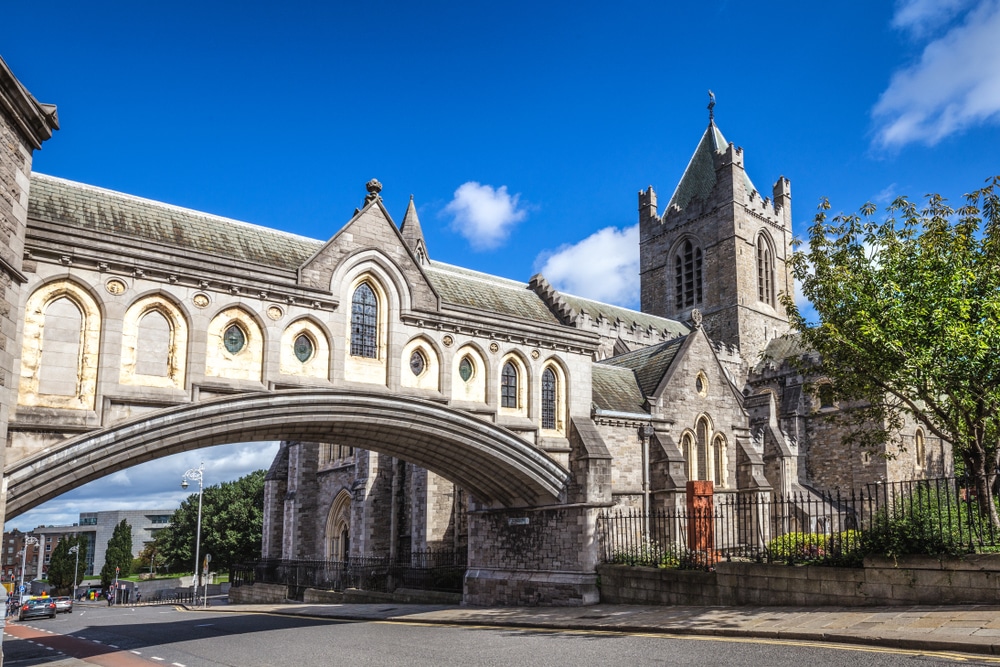
This Church of Ireland cathedral has a history beginning at the start of the 11th century, in the time of the Viking king Sitric Silkenbeard.
There are elements going back to a Romanesque rebuild in the 12th century, although much of the current neo-Gothic appearance comes from a big renovation in the 19th century.
That work left Christ Church Cathedral with gorgeous floor tiles and an unusual covered footbridge that links the church with the former synod house across Winetavern Street.
But the most celebrated feature of all is an enormous crypt, belonging to the 12th-century cathedral and extending for 63.4 metres.
The cathedral’s treasury is kept down here, and includes some exciting pieces like a tabernacle and set of candlesticks from the brief reign of the Catholic King James II in the 1680s, when the cathedral, temporarily, reverted to Catholicism, and a plate donated by William III after his victory at the Battle of the Boyne (1690).
Also on show are a mummified cat and rat, a set of stocks from 1670 and sculpted figures that once stood outside Dublin’s Medieval administrative building, The Tholsel. These constitute the oldest secular carvings in the city.
10. Guinness Storehouse
 Source: Anton_Ivanov / Shutterstock
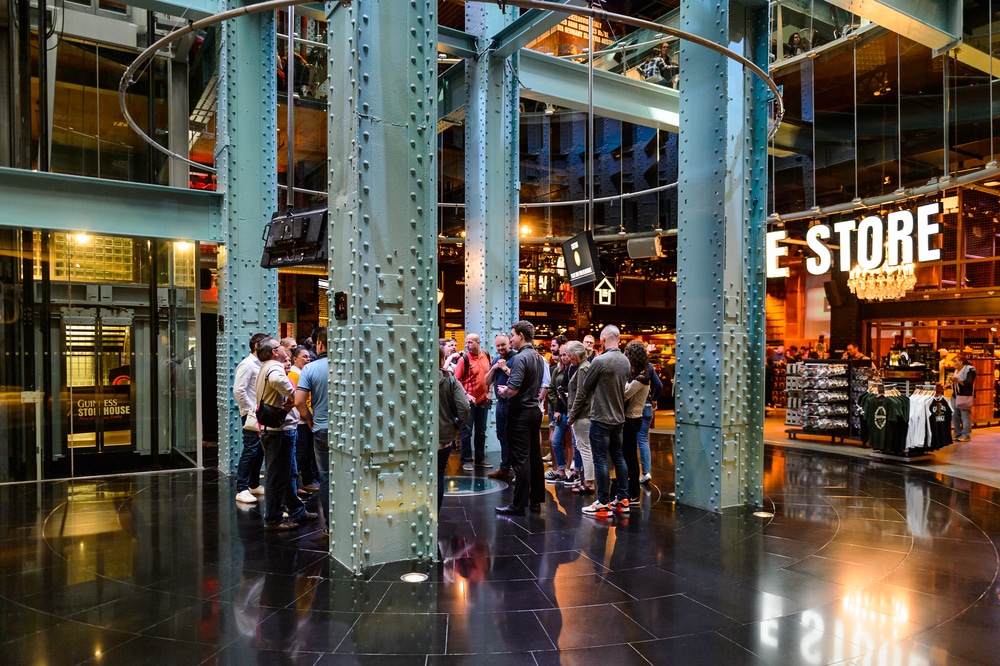
In 2000 this mammoth industrial building in the Guinness Brewery complex at St. James’s Gate became a visitor attraction for the world-famous brand of dry stout.
The Guinness Storehouse was built as a fermentation plant in 1902 and now, on seven floors, takes you on a journey across 250+ years of one of the world’s most beloved beer labels.
With the help of a slew of interactive stations you’ll learn all about the founder, Arthur Guinness, as well as the simple ingredients that go into each pint (water, hops, barley and yeast), and see how Guinness has cultivated its iconic brand with innovative advertising.
On the panoramic seventh floor you’ll come to the Gravity Bar for a complimentary pint, while your ticket also grants you access to the Open Gate Brewery to sample some niche Guinness varieties.
If you’re ready to go even deeper, there’s the three-hour Guinness Brewery Tour, going behind the scenes at St James’s Gate, taking in the Roast House, Brewhouse 4, an underground passenger tunnel and much more besides.
11. Temple Bar
 Source: Rolf G Wackenberg / Shutterstock
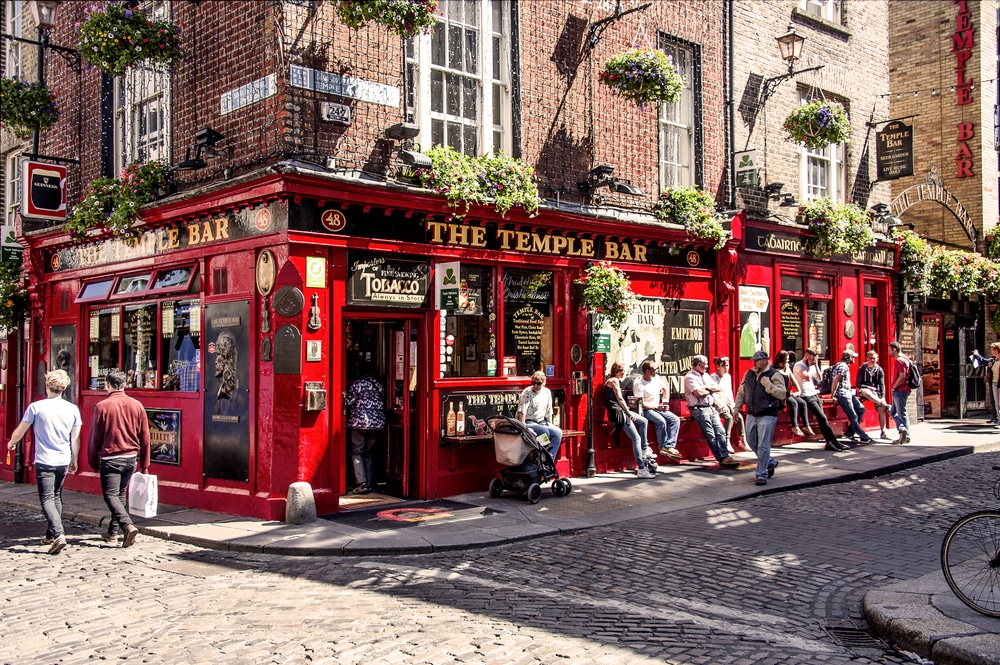
Dublin’s prime entertainment and nightlife district is on a maze of cute cobblestone lanes between Dame Street and the River Liffey.
A bunch of big cultural institutions are squeezed into Temple Bar, like the Irish Film Institute, Project Arts Centre and the National Photographic Archive.
By day it’s a pretty place to potter around, peruse some art at a gallery and grab lunch at one of the many pubs and contemporary restaurants.
The Dollard & Co. Food Hall & Deli meanwhile is a hip new food market, with a cosmopolitan range of gourmet treats and food to go.
After sunset Temple Bar has a reputation as a raucous night out, but also happens to be a live music destination almost without equal in Europe.
13. Glasnevin Cemetery Museum
 Source: Annik Susemihl / Shutterstock
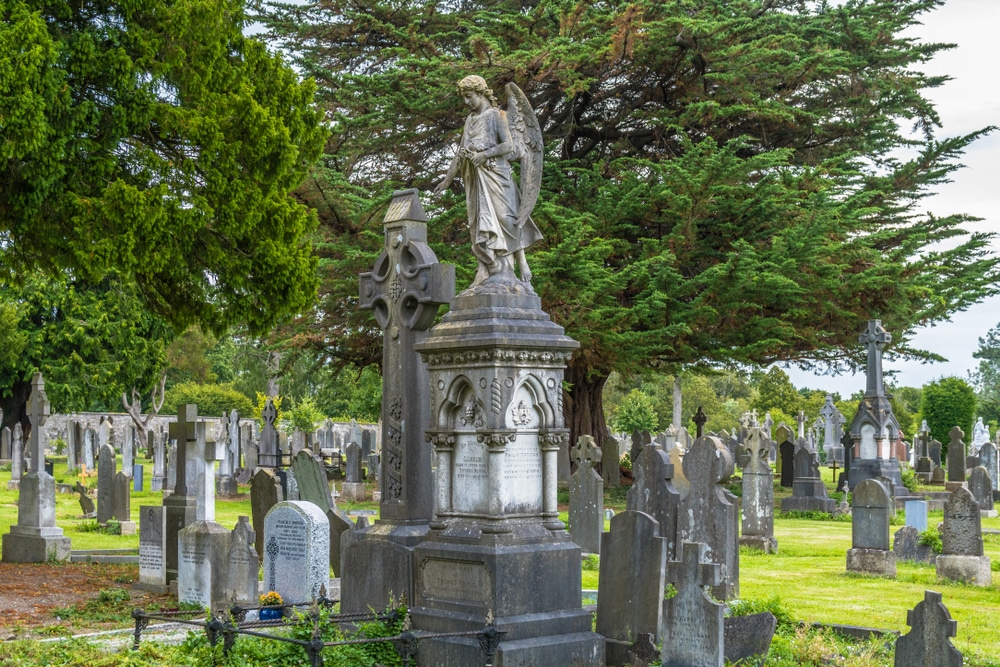
The sprawling cemetery a few kilometres north of the centre of Dublin was founded in 1832 and has an important place in Irish history.
The opening of Glasnevin Cemetery finally signalled the end of the Penal Laws, enacted to repress public displays of Catholicism, as Catholics and Protestants could be buried in dignity at this 50-hectare site.
Since then more than 1.5 million people have been interred at Glasnevin Cemetery.
Among them many important figures like the Catholic statesman Daniel O’Connell (1775-1847), whose campaign led to the cemetery’s establishment, as well as Michael Collins (1890-1922), Éamon de Valera (1892-1975) and Charles Stewart Parnell (1846-1891), to name a small few.
You can visit these graves, and many more, on a guided tour or armed with a map and audioguide.
O’Connell is also remembered with an imposing round tower, erected in 1854 and giving you a far-reaching view of Dublin after climbing 198 steps.
The permanent exhibition at the cemetery’s modern museum building goes into detail on the history of this site and the historic personalities laid to rest here.
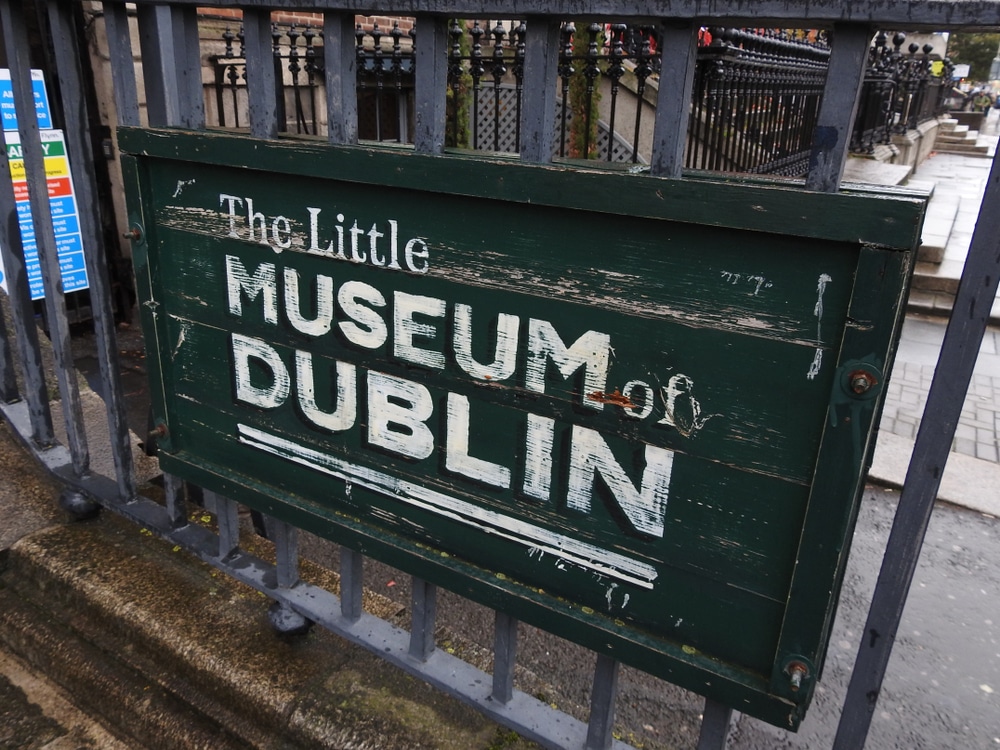
13. Little Museum of Dublin
 Source: Derick Hudson / Shutterstock
This endearing museum opened in 2011 in one of the Georgian townhouses fronting St Stephen’s Green.
The Little Museum of Dublin is loved for its enlightening tours, both inside the building and out on the green.
These open a window on specific aspects of Dublin’s past, from its queer history to famous writers, all infused with plenty of wit and absorbing accounts.
Inside there’s also a selection of pocket-sized temporary exhibitions, all well-curated and covering topics like Dublin’s Georgian period and its big cultural exports like the rock band, U2.
And if you only have a little time to spare, the self-guided standard admission whisks you through 1,000 years of Dublin history in the space of an hour.
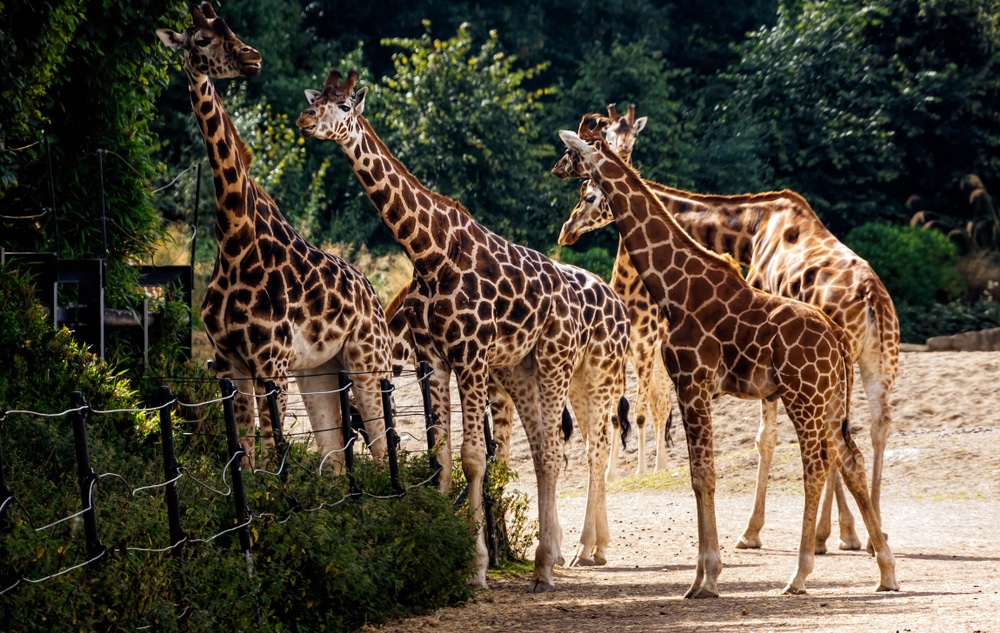
14. Dublin Zoo
 Source: Dawid K Photography / Shutterstock
On the city side of the huge Phoenix Park is one of Ireland’s favourite days out.
Dublin Zoo first opened its doors in 1831, making it one of the oldest zoological parks in the world.
Firmly oriented towards wildlife conservation, the zoo has also invested a lot in its enclosures and animal welfare over the last 25 years.
The park is now divided into zones, like the expansive African Plains, which provides a savanna-style environment for zebras, giraffes and white rhinoceroses, and enclosures for gorillas, chimpanzees and hippos.
The wonderful Kaziranga Forest Trail provides a habitat for the zoo’s Asian elephants, which are part of a successful breeding programme yielding new calves every couple of years or so.
Elsewhere, the South American House contains sloths, marmosets, tamarins and squirrel monkeys, while Family Farm is a space for kids to find out about farming and domestic species in Ireland.
15. National Botanic Gardens
 Source: Davi Costa / Shutterstock
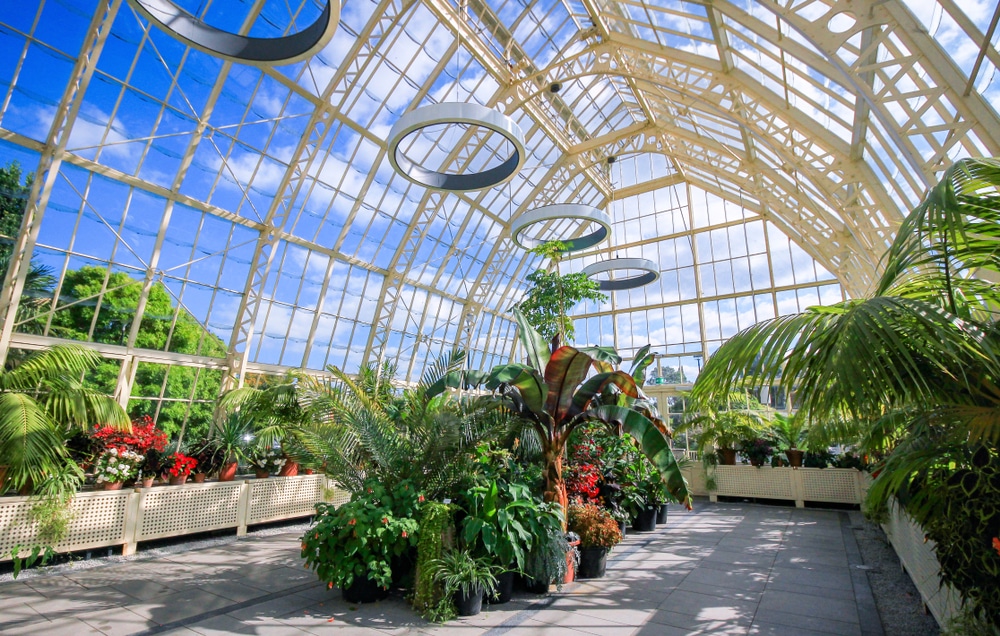
East of the cemetery in Glasnevin are Ireland’s National Botanic Gardens, which have a history going back to 1795 and are famed for their gorgeous heritage glasshouses.
It was here that the potato blight that partly led to the Great Famine was first identified, while there’s a double-line of yew trees, Addison’s Walk, harking right back to the 18th century.
There are around 20,000 plants growing at the National Botanic Gardens, from species and cultivars originating from all over the world.
The architectural highlights include the Great Palm House (1883) and the stately Curvilinear Range (1843 and 1869), while the Victoria Waterlily House has been standing since 1854.
At the Great Palm House there’s a plaque commemorating the Viennese philosopher Ludwig Wittgenstein who would visit the building to read in the late-1940s.
Outside there’s much to love, at the arboretum, rock garden, bog garden, rose garden and herbaceous border.
16. Phoenix Park
 Source: Fireglo / Shutterstock
Dublin Zoo is set within the largest enclosed public park of any European capital.
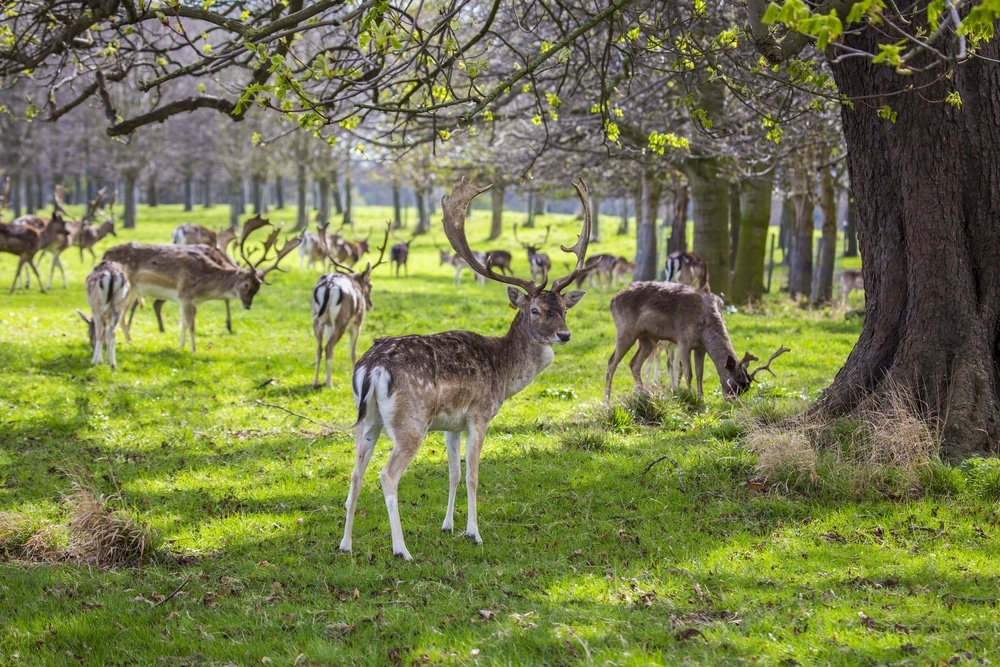
Little more than a mile west of O’Connell Street, Phoenix Park encompasses 707 hectares and started life as a royal hunting ground in the 17th century, before opening to the public in 1747. A large herd of fallow deer continues to roam in semi-freedom.
There are lots of notable properties in the park, like Áras an Uachtaráin (1747), the official residence and workplace of the President of Ireland, open for free guided tours on Saturdays.
The Deerfield Residence (1776) meanwhile is home to the United States’ ambassador to Ireland.
Head to Phoenix Park’s visitor centre for a deep dive on this area’s storied history and nature, and next door you can visit Ashtown Castle, a 15th-century defensive tower house that was revealed when the Georgian mansion enclosing it was pulled down.
On the park’s south-east side is the Magazine Fort, an artillery fortress from 1735, demilitarised in the 1980s and open for tours.
Finally there are two sizeable monuments worthy of mention: The Papal Cross, marking the sight of a million-strong mass on Pope John Paul’s visit to Ireland in 1979, and the huge Wellington Monument (1861) which, at 62 metres, is the tallest obelisk in Europe.
17. Marsh’s Library
 Source: Derick Hudson / Shutterstock
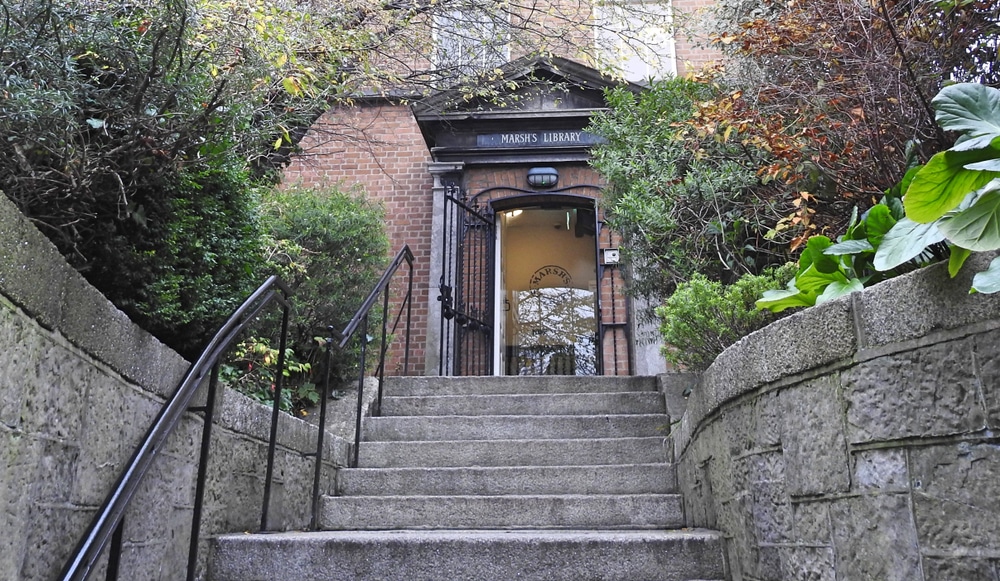
Dating back to 1707, Ireland’s first public library still fills its original purpose, and holds more than 25,000 books from the 16th, 17th and 18th centuries.
In addition, Marsh’s Library contains some 300 manuscripts and 80 incunabula (early books) dating from before 1501.
Remarkably, most of the original interior fittings are still in place, including the beautiful bookcases carved from Baltic oak and with lettered gables.
Some even have bullet holes from the Easter Rising of 1916 when the Jacob’s Biscuit Factory next door was occupied by the Dublin Brigade of the Irish Volunteers under Thomas MacDonagh.
Among the luminaries to have frequented Marsh’s Library are Jonathan Swift and Bram Stoker, and you can pay your own visit to catch an exhibition or join the daily guided tour departing at 15:00.
18. St Stephen’s Green
 Source: trabantos / Shutterstock
Historically common land, St Stephen’s Green was walled off in the 17th century, becoming a private square that was later lined with Georgian townhouses.
Those 18th and 19th-century townhouses can be seen mostly on the south and east sides, and are interspersed with modern buildings.
St Stephen’s Green was reopened to the public in 1880 after Arthur Guinness, 1st Baron Ardilaun purchased, landscaped and donated this space.
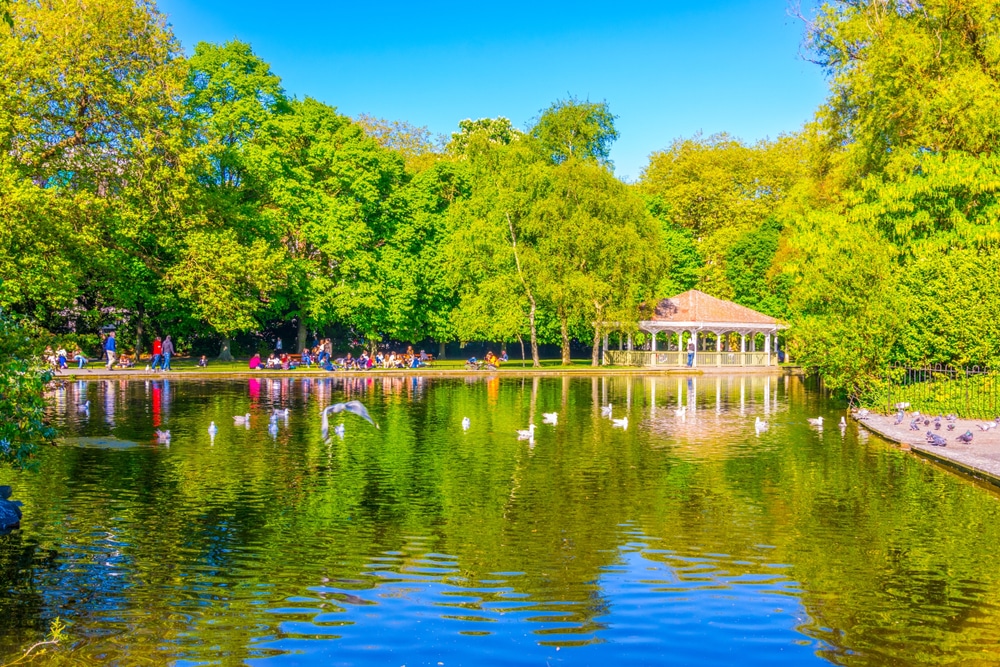
His layout survives, with 3.5 kilometres of meandering paths and 750 trees, many of which are mature.
There’s an elegant formal garden at the centre, on a circular plan, while much of the north side of the park is taken up by an ornamental lake, attracting lots of waterfowl and crossed in the centre by a stone bridge.
Among the monuments dotted around St Stephen’s green are the James Joyce Memorial Sculpture and a sculpture by Henry Moore, in the Yeats Memorial Garden.
The bandstand, from 1887, continues to be a venue for free daytime concerts in the summer months.
19. Grafton Street
 Source: jamegaw / Shutterstock
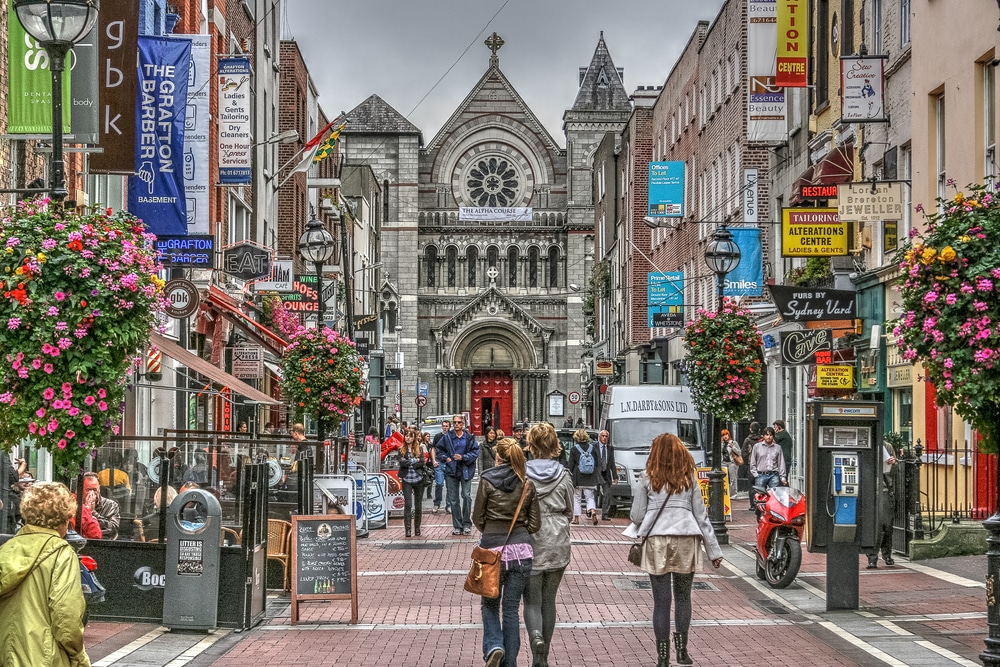
From the north-west side of Stephen’s Green you can make your way along this bustling, upmarket shopping street that continues to Trinity College.
Grafton Street has been pedestrianised since the 1980s and is up there with the most expensive shopping streets in the world by property value.
The way is lined with midmarket and high-end brands, from Christian Louboutin to Boss, and is famed for the buskers and street artists who perform to the throng. Plenty of Grafton Street buskers have gone on to have recording careers, like Glen Hansard and Damien Rice.
The historic hot beverage brand Bewley’s has had a presence on Grafton Street since 1927, and their handsome café at 78-79 reopened in 2017 after a refurbishment.
For dining there’s a multitude of pubs and an international line-up of restaurants on the intersecting and parallel streets, in particular Anne Street and William Street.
20. Jameson Distillery Bow St.
 Source: Marcin Piwowarczyk / Shutterstock
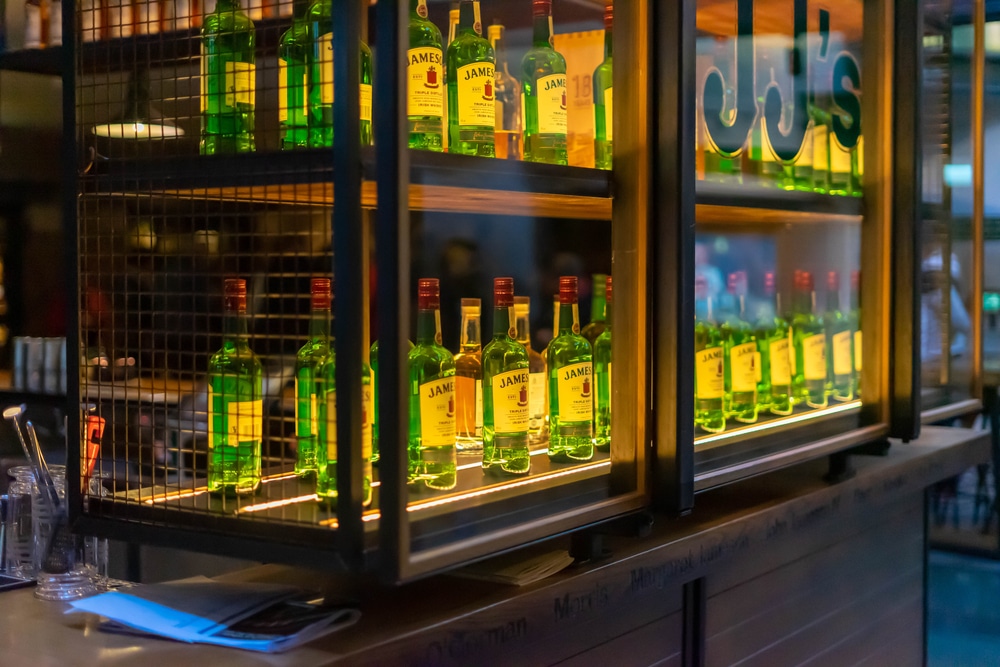
The site where Jameson Irish Whiskey started distilling in 1780 has been turned into a visitor experience shining a light on the world’s best-selling Irish whiskey.
This distillery closed in 1971 when production was moved to New Midleton, County Cork, and the visitor centre opened in 1997.
After an award-winning update, the Jameson Distillery Bow St. is the most-visited attraction of its kind in the world, offering five engaging experiences.
The prime draw is the Bow St. Experience, which entails a 40-minute guided tour packed with stories, humour and a drink at the place where one of Ireland’s big exports was born.
You could also sign up for special tasting experiences, a blending class or a visit to the maturation warehouse. Or you could just pull up a stool for a drink at JJ’s Bar.
21. The Jeanie Johnston
 Source: Leonid Andronov / Shutterstock
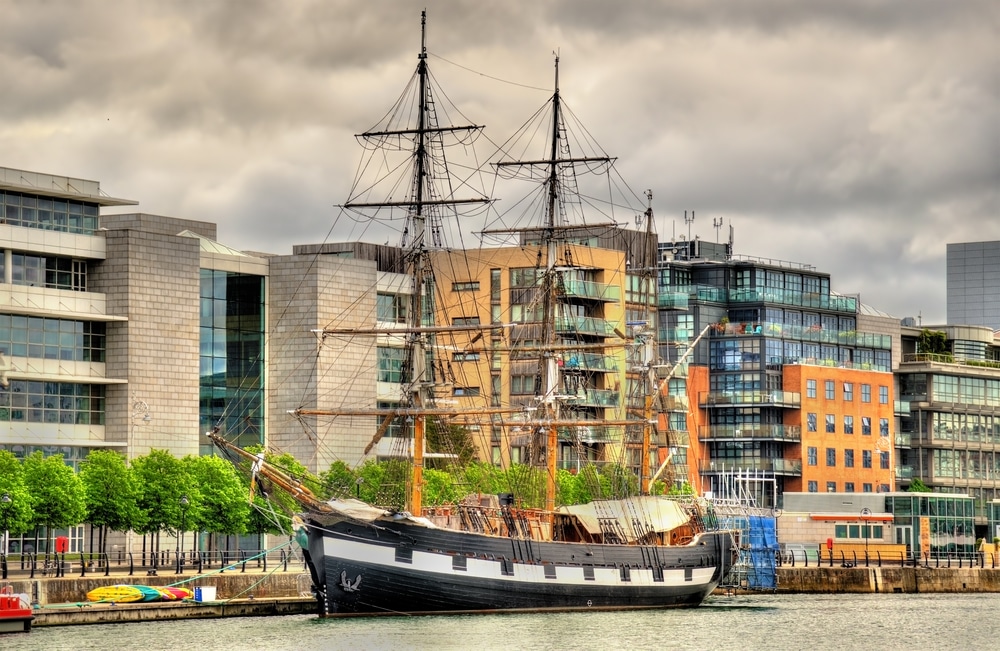
Moored at Custom House Quay is a precise replica of a three-masted barque that was laid down in Quebec in 1847.
The Jeanie Johnston was mainly a cargo ship, but found a new, more important role between 1848 and 1855, as an emigration, or coffin ship during the Great Famine.
The vessel made 16 voyages between Ireland and North America during this time, in one instance carrying 254 passengers from Tralee to Quebec, despite being licensed to carry no more than 40 people, crew included.
As a poignant memorial to Ireland’s famine victims, the new Jeanie Johnston was completed in 2002 after six years of construction, employing more than 300 shipwrights.
Until 2008 the ship retraced those famine voyages across the Atlantic, before settling at its current spot.
You can go aboard to appreciate the craftsmanship, find out more about the original Jeanie Johnston, learn about the fate of individual passengers and get a sense of conditions on a coffin ship during the Great Famine.
22. Irish Whiskey Museum
 Source: Bene Images / Shutterstock
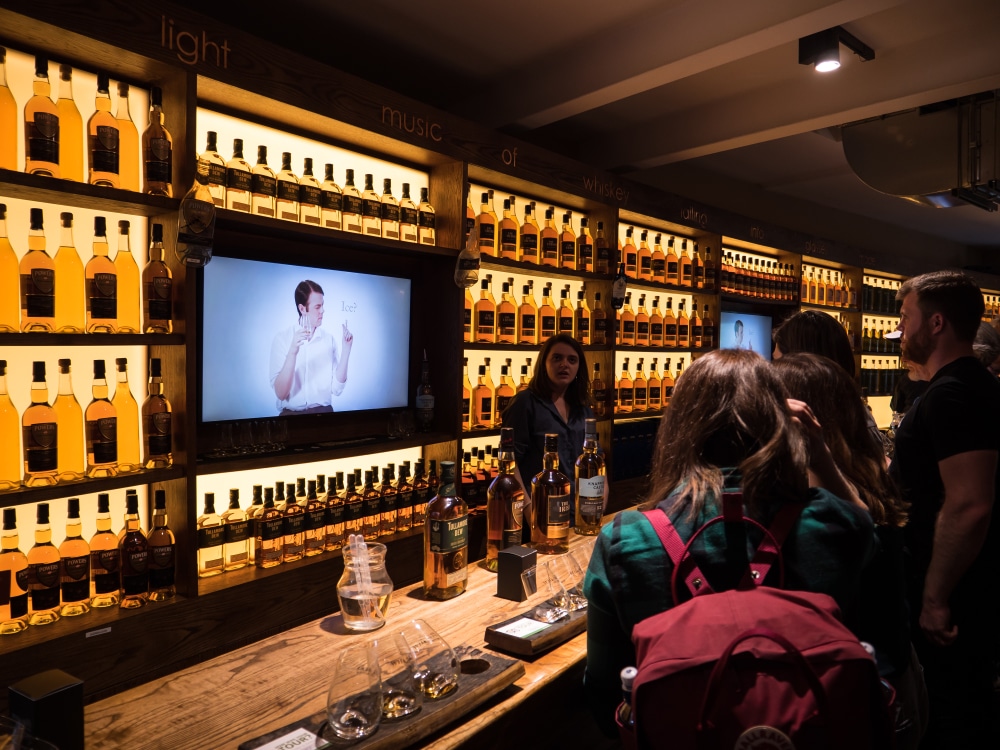
In a privileged spot at the north end of Grafton Street by Trinity College is an attraction that will turn you into an expert on Irish whiskey.
The museum is totally independent and unaffiliated with any distilleries, and will walk you through the history of this famous beverage, covering a different period in each of its four rooms.
On a one-hour tour with an engaging and knowledgeable guide, you’ll pick up lots of intriguing anecdotes.
Naturally the most anticipated bit is when you’ll get to taste from a large selection of whiskeys, be it single grain, pot still, malt or blended whiskey.
This tasting session can be upgraded for a small fee, and there’s also a choice of premium tours and experiences.
23. Dalkey
 Source: Zava Media / Shutterstock
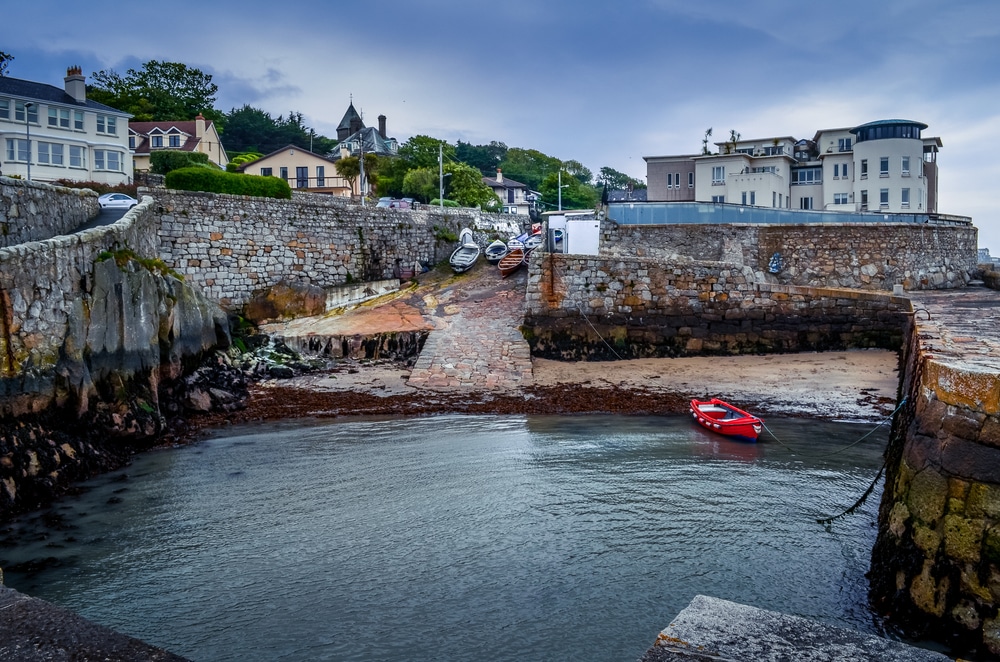
For a carefree day trip you could make your way to the pretty coastal village of Dalkey, just 15 kilometres south-east of the capital.
This is an affluent part of the world, and the likes of Maeve Binchy, Van Morrison, Bono and Matt Damon have, or have had, homes here.
There’s also lots of history, in the form of a 10th century church and two Norman castles. One of these, Dalkey Castle, has a gallery showing off the work of some of the cultural figures who have settled in the area.
Living history actors bring historic skills and trades like archery and Medieval cooking to life, while the view from the battlements is a treat.
Also make time for the quaint Coliemore Harbour, the main trading hub on the east coast of Ireland in Medieval times.
From here you can catch a ferry for the brief crossing to Dalkey Island. Inhabited only by rabbits, wild goats and a growing colony of seals, the Island is big with anglers and kayakers and hosts the ruins of a church from the Middle Ages and a Martello tower from the Napoleonic period.
24. Malahide Castle
 Source: neuartelena / Shutterstock
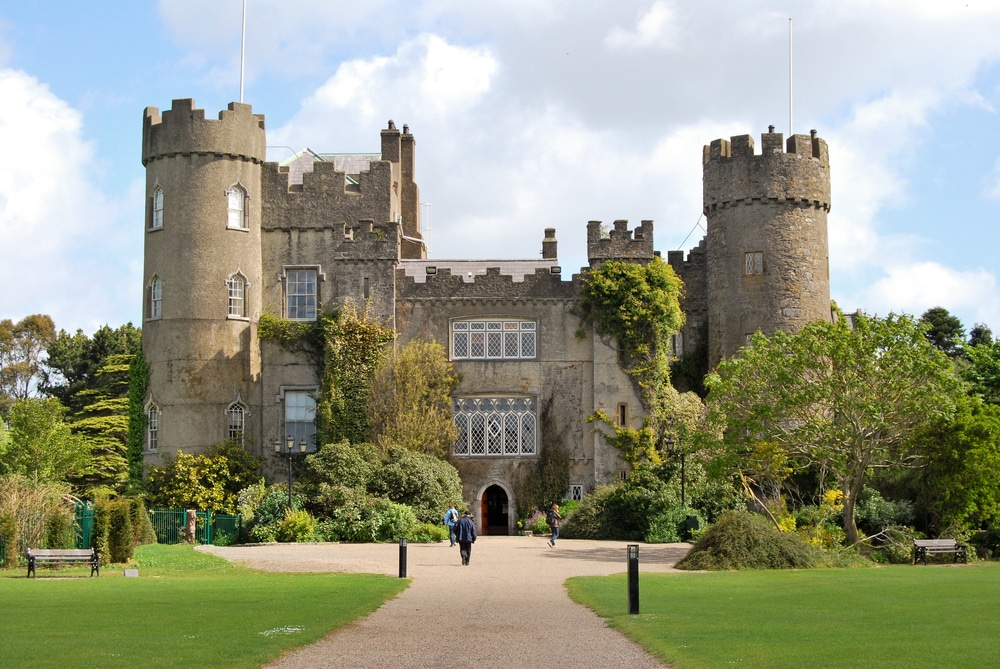
In the other direction, Malahide Castle is in the seaside village of the same name, just 14 kilometres north of the centre of Dublin.
Resting in just over 100 hectares of parkland, this historic property belonged to the Talbot family from 1185 up to 1976, save for an interruption under Cromwell.
The oldest parts of Malahide Castle were standing back in the 12th century, and on a free guided tour you’ll see the Gothic Great Hall and find out riveting details about the Talbots and the central role that this stronghold played in Irish history.
One staggering factoid is that fourteen members of the family sat down to breakfast on the morning of the Battle of the Boyne and all were dead by the evening.
The grounds, open for free all year, are also a delight, planted with 5,000 different species and cultivars, among them exotic trees like Tasmanian pencil pines, a cedar of Lebanon and ginkgo bilobas.
The walled garden contains a charming Victorian conservatory, while Ireland’s only butterfly house is inhabited by 20 different species.
25. St Michan’s Church
 Source: Pierre-Olivier / Shutterstock
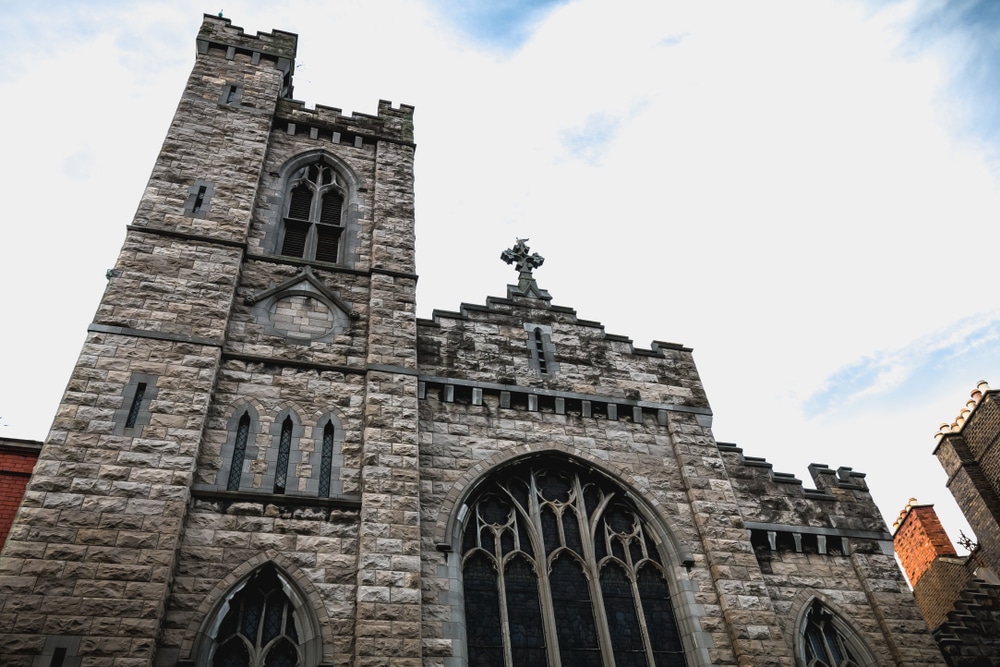
Surrounded by modern buildings on Church Street is a Church of Ireland place of worship dating right back to a chapel on the site in the late-11th century.
The current understated building is from a reconstruction in the 1680s, and the last restoration took place in the 19th century.
The interior has lots of interesting fittings, like a fine organ case from the 1720s, but what attracts the most interest is the crypt, which was the burial place for some of the city’s most important families in the 17th and 18th centuries.
The atmospheric conditions, partly caused by the limestone, have helped to mummify some of the burials and several of these are on show.
Keep an eye out for the death mask of the revolutionary Wolfe Tone (1763-1798), executed by hanging after the 1798 Irish Rebellion.