More than 1,500 years after the Fall of the Western Roman Empire, the capital’s monuments are still among the most recognisable in the world.
There’s nothing original about that statement, but it underlines the exciting sense of continuity between the ancient and the present in modern Rome.
You can enter ancient palaces to view frescoes that inspired Michelangelo and Raphael, while museums in Renaissance palazzi abound with the sculpture that once decorated the baths and temples that lie in ruins around the city.
You can also trace the very origins of Western Christianity in Rome, and visit the seat of the Roman Catholic church at the Vatican City, itself rich with world-famous architecture and masterpieces of art going back to antiquity.
1. Colosseum
 Source: prochasson frederic / Shutterstock
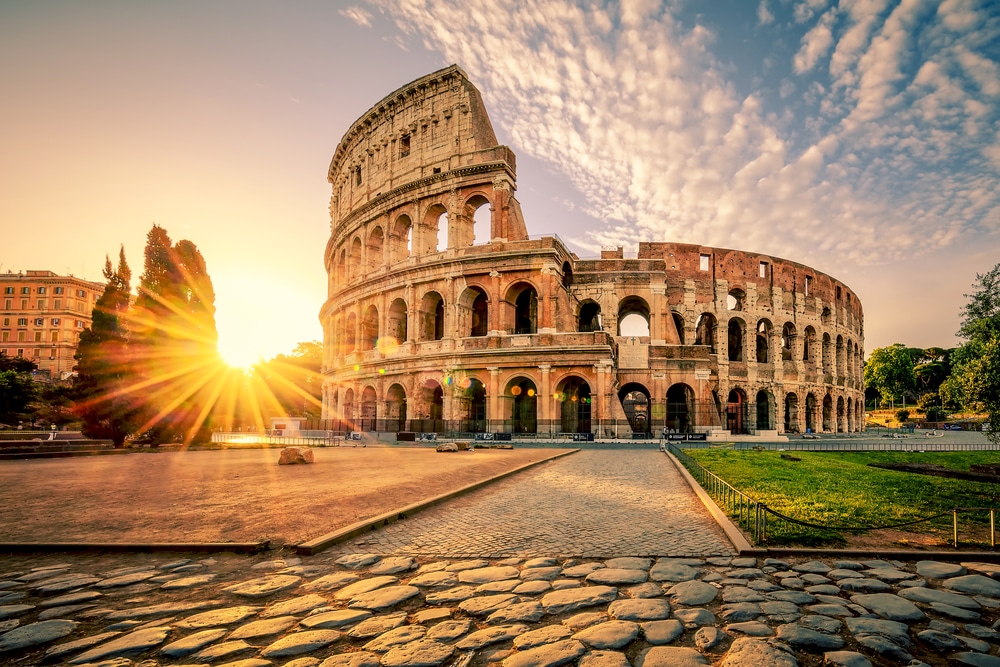
The largest Roman amphitheatre ever built was completed under Emperor Titan in 80 CE and had a capacity of up to 80,000.
Almost 2,000 years later the Colosseum is a global landmark, instantly calling to mind the power, ambition and technical prowess of Ancient Rome.
This was originally called the Flavian Amphitheatre, and the name Colosseum was adopted later, after a giant statue of Emperor Nero, modelled on the Colossus of Rhodes, was placed beside the building in the 2nd century.
You can gaze awestruck at those three tiers of arcades, once topped by an immense canvas awning to protect spectators from the sun.
Excavated inside is the hypogeum, the intricate system of tunnels that allowed for a high degree of stagecraft for the spectacles unfolding above.
The Colosseum witnessed gladiator contests, but also animal hunts, reenactments of battles, dramas rooted in Roman mythology, executions and even mock sea battles when the entire arena would be flooded.
By tradition, the Colosseum is linked to Christian martyrdom, and is the scene for a candlelit Way of the Cross procession led by the pope on Good Friday.
2. Pantheon
 Source: Phant / Shutterstock
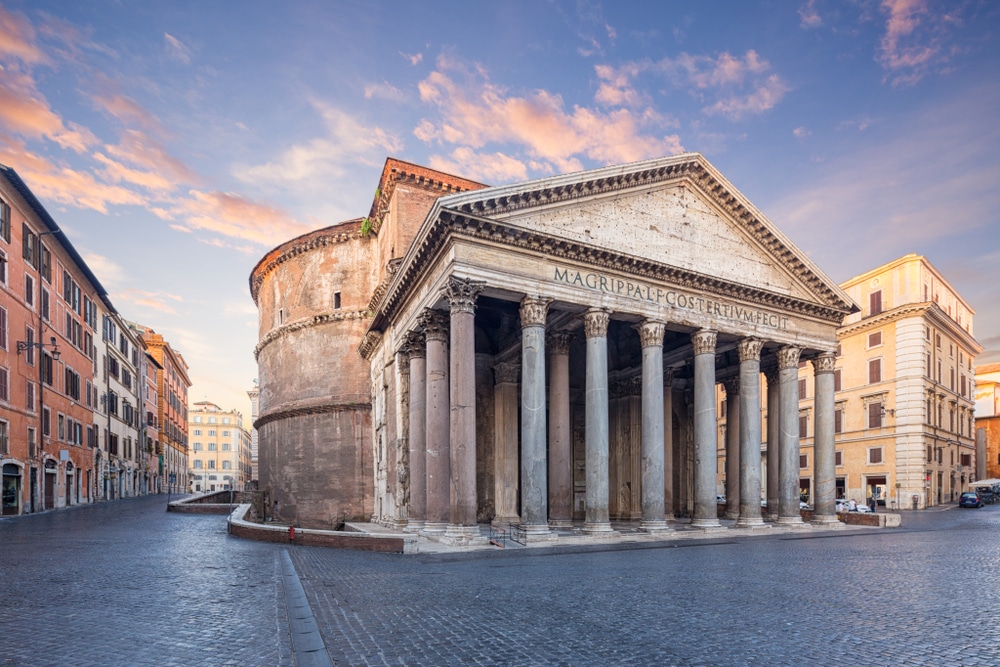
The best-preserved building from Ancient Rome also happens to be one of its highest architectural achievements.
Dating to the reign of Hadrian in the 120s CE, the Pantheon is on the site of two earlier buildings with the same title.
Although the exact role of this monument is unknown, its design, with an imposing portico leading onto one of the world’s most celebrated domes, suggests a temple.
The reason the Pantheon has made it to modern times in such good condition is that it became a church in the 7th century, a role it still fills.
The Pantheon is striking from the outside, although it lost a lot of its marble, as well as bronze roof-cladding that was melted down at the behest of Pope Urban VIII in the 17th century to make bombards.
The interior is nothing short of magnificent, and its multi-toned marble, although restored, would be familiar to an ancient Roman visitor.
What will draw the eye is the largest unreinforced concrete dome in the world, with five rings of coffers and an oculus 8.8 metres in diameter.
The distance from the floor to the oculus and diameter of the dome’s interior circle are the same, at 43.3 metres, in a perfect sphere.
Since the Renaissance the Pantheon has been the burial place for numerous important figures, the most famous of which is Raphael, whose tomb is on the right side, just after you cross the threshold.
3. St Peter’s Basilica
 Source: Vladimir Sazonov / Shutterstock
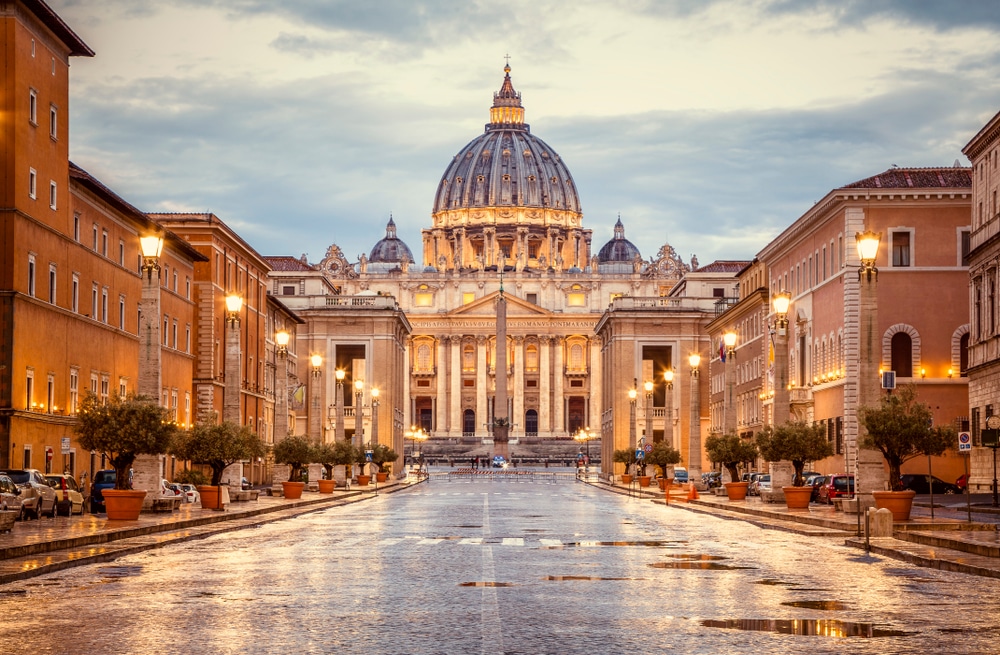
The tallest dome in the world at 136.57 metres dominates the Roman skyline from the right bank of the Tiber.
This is of course St Peter’s Basilica, surely the Renaissance’s greatest achievement and counting Michelangelo (dome) and Bernini (towers) amongst its architects.
Something that strikes many people about St Peter’s Basilica is that despite its record-breaking dimensions, the largest church in the world never feels overwhelmingly large, and this is put down to its supreme sense of proportion.
As the purported burial place of St Peter, this is one of the most venerated sites in Christendom, as well as a sightseeing experience like no other.
You have to scale the dome for a stirring view of the Vatican City and Rome, and ponder Bernini’s many contributions like the sublime tomb monument for Alexander VII and the St Peter’s Baldachin.
Michelangelo’s Pietà (1498-99) in the first chapel on the north aisle is naturally a high point, and it’s also worth making time to go down a level to the underground cemetery at the Vatican Grottoes, and down even further into the Vatican Necropolis where you’ll be in the Roman cemetery where Peter the Apostle is believed to have been buried after his martyrdom.
As a forecourt, the basilica has a majestic oval plaza enclosed to the north and south by Bernini’s curving colonnades, and centred on an ancient Egyptian obelisk brought to Rome by Caligula in the 1st century.
4. The Vatican Museums and the Sistine Chapel
 Source: JurateBuiviene / Shutterstock
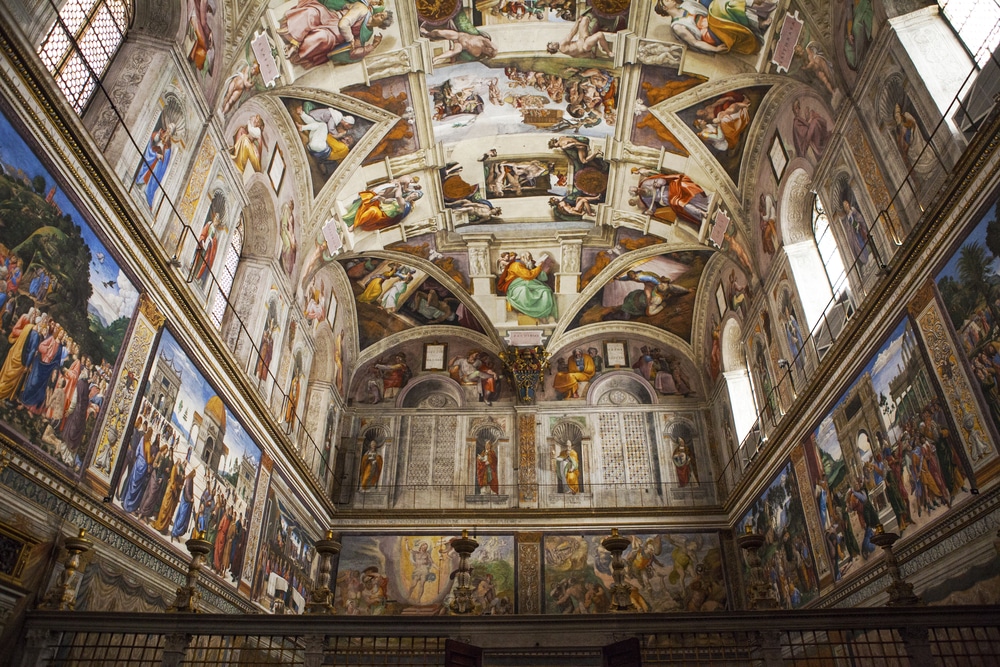
At the various apartments, chapels and corridors of the Apostolic Palace, as well as in purpose-built galleries, you can marvel at the immense collections assembled by the popes down the centuries.
A great deal of the museums’ masterpieces are in situ. For instance, the visitor route through the Vatican Museums culminates with the Sistine Chapel, famed of course for Michelangelo’s ceiling, as well as another dramatic and world-renowned fresco depicting the Last Judgment.
Also treasured are the Raphael Rooms, painted for the apartments of Pope Julius II and marking the High Renaissance in Rome.
We have to mention the Pinacoteca Vaticana, showcasing masterpieces by the likes of Giotto, Leonardo da Vinci, Raphael and Caravaggio, and the Collection of Modern Religious Art, featuring Gauguin, van Gogh, Chagall and Picasso, among others.
Even now we’ve barely scratched the surface of this huge attraction, displaying iconic ancient Greek and Roman sculpture, Flemish tapestries, 16th-century maps, ethnographic pieces from around the world, carriages, exquisite decorative arts and a lot more besides.
5. Trevi Fountain
 Source: TTstudio / Shutterstock
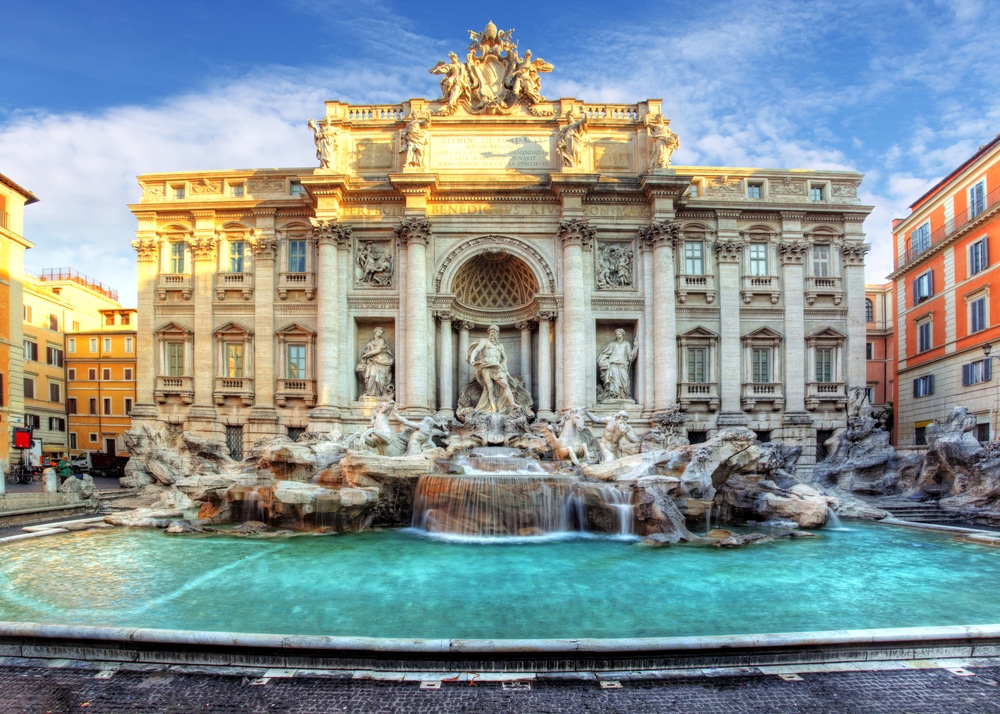
Up there with the most famous and most beautiful fountains ever created, the Trevi Fountain is also the largest in Rome, at more than 26 metres high and 49 metres wide.
Much of this late-Baroque monument, dating to 1762, is sculpted from white travertine that is periodically scrubbed to remove discoloration caused by smog.
The last restoration took place in 2013, when more than 100 LED lights were installed to make the fountain even lovelier at night.
The work, designed by Nicola Salvi is set against the facade of Palazzo Poli and shows tritons taming hippocampus beneath Oceanus in his shell chariot, flanked by Abundance and Salubrity.
The fountain has ancient Roman origins, where the Aqua Virgo aqueduct terminated at the junction of three Roman roads (tre vie).
Trevi Fountain’s most remembered appearance on screen has to be the scene with Anita Ekberg in Fellini’s La Dolce Vita (1960).
But it was Three Coins in the Fountain (1954) that introduced the coin-throwing ritual that sees €3,000 a day deposited in the basin.
6. Roman Forum
 Source: Rudy Balasko / Shutterstock
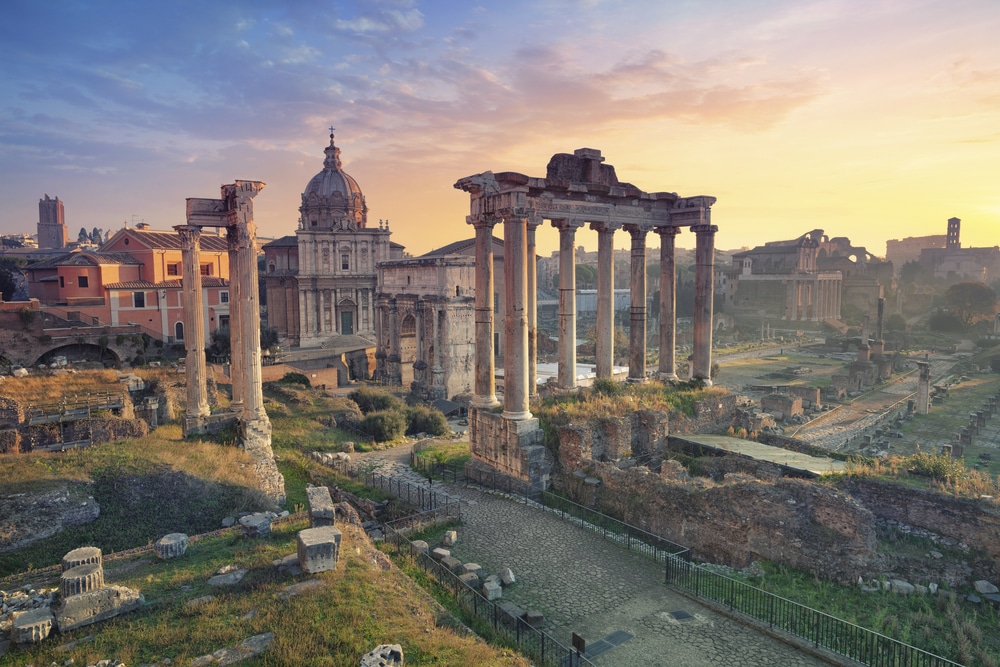
This field of evocative ruins in the valley between the Palatine and Capitoline Hills was the beating heart of Ancient Rome, where daily life and events of seismic importance unfolded.
Starting in the early Middle Ages It was slowly buried under debris from the Tiber’s floodplain and eroding hills, and became empty ground used for grazing.
Later the rich materials that went into the forum’s temples and monuments were exploited for Renaissance projects like the new St Peter’s Basilica.
There’s tons to see, especially if you include the newer spaces like Trajan’s Forum to the north. But be sure to make time for a few highlights: Threading through Roman Forum is the Via Sacra, the city’s main artery linking the top of the Capitoline Hill with the Colosseum.
Close to the Colosseum is the Arch of Titus (81 CE), ordered by Domitian to commemorate his older brother’s deification.
The most intact of all the forum’s temples is the Temple of Antoninus and Faustina (141 CE) as it was later adapted into a church.
See also the cavernous arches of the Basilica of Maxentius (4th century CE), hinting at what was the largest building in the forum, and the imposing Arch of Septimus Severus (203 CE), commemorating victories over the Parthian Empire.
7. Piazza Navona
 Source: sancastro / Shutterstock
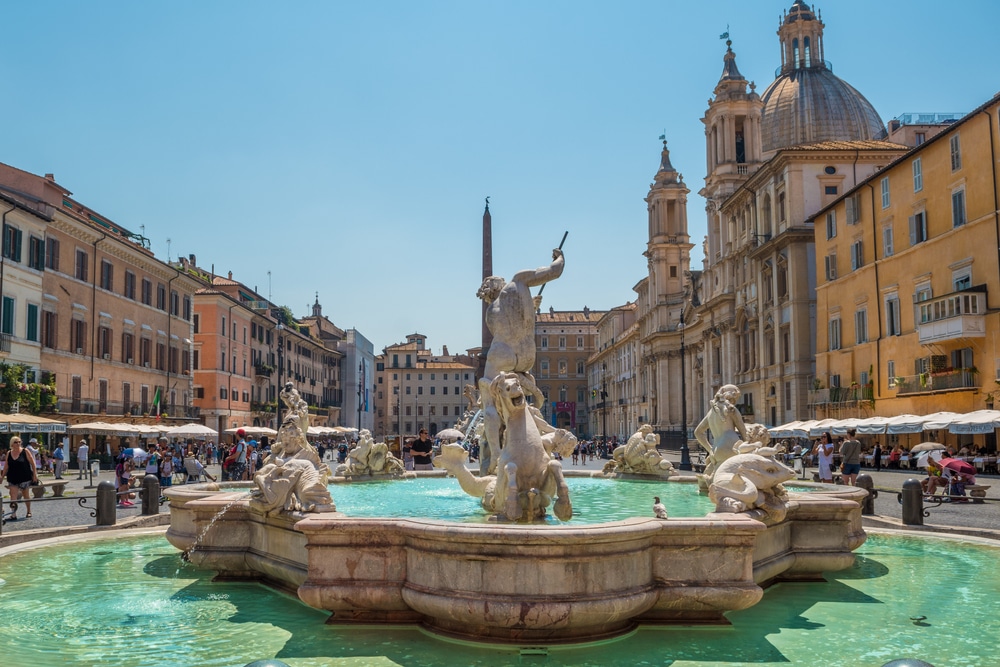
A public square of rare beauty, the Piazza Navona was modelled in the baroque style during the 17th-century pontificate of Innocent X, whose family palace faced the plaza.
But as you might tell from the square’s unique elongated plan, this space was the arena for the Stadium of Domitian, completed in 80 CE and used for athletic events.
The stadium’s lower arcades are integrated into the buildings fronting the square.
The centrepiece of Piazza Navona is Bernini’s masterpiece, the much-copied Fontana dei Quattro Fiumi (1651), representing the Nile, Danube, Ganges and Rio de la Plata to signify the reach of papal authority by that time.
The 1st-century obelisk above is carved from Egyptian Aswan granite and inscribed with a hymn in hieroglyphics to Emperor Domitian.
It once stood at the 4th-century Circus of Maxentius, before eventually findings its way here. At the square’s south end is the Fontana del Moro, first designed by Giacomo della Porta in the 1570s and embellished with a statue of a Moor by Bernini in 1653.
Then at the north end you’ll find the Fountain of Neptune, with a 16th-century basin by della Porta and statuary from the 1870s depicting Neptune fighting an octopus.
8. Borghese Gallery and Museum
 Source: Kamira / Shutterstock
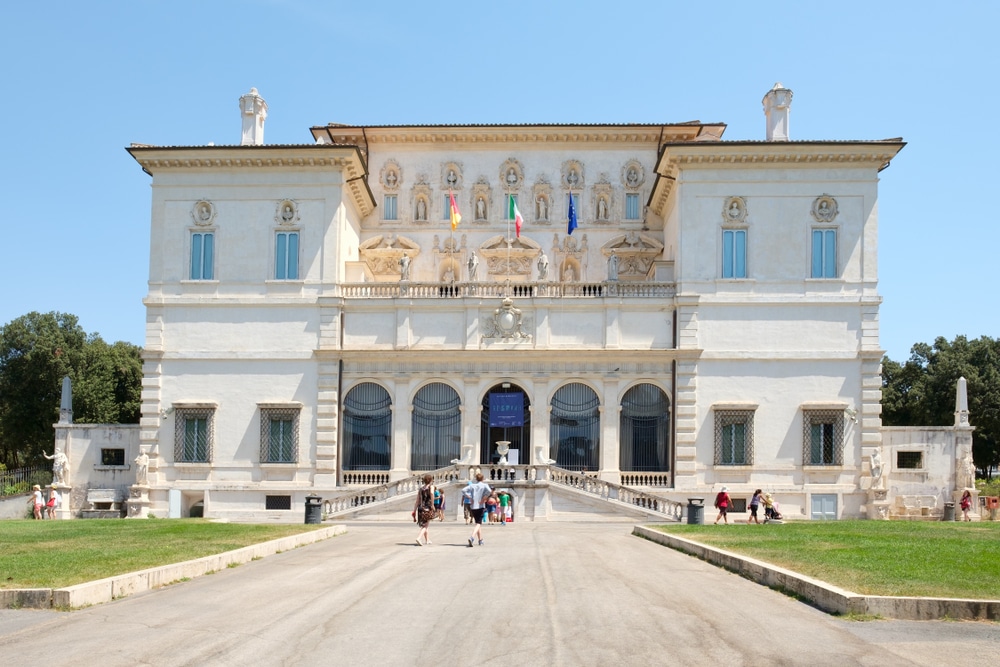
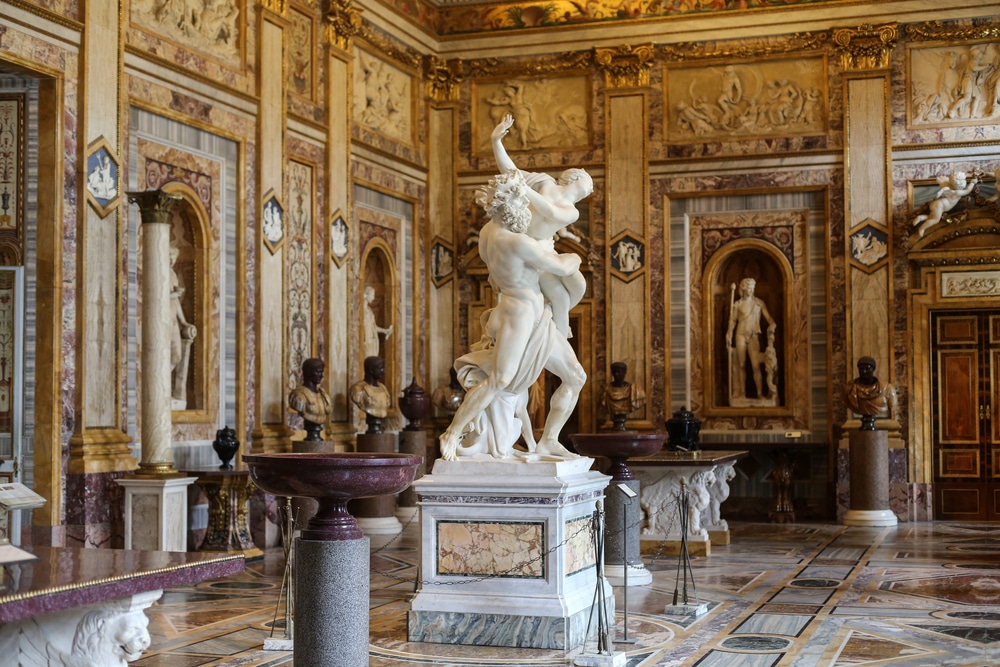
Scipione Borghese (1577-1633), nephew of Pope Paul V, was a discerning art patron and rapacious collector who helped usher in the Baroque style.
He championed Bernini early in the sculptor’s career, but also Caravaggio, and it was Scipione’s legacy that formed the basis for one of the world’s greatest museums.
This was established in 1903 in the Villa Borghese, built as a summer residence beyond Rome’s walls in the early-1610s.
There are 20 rooms here teeming with exceptional works of art by Bernini and Caravaggio, as well as Veronese, Domenichino, Raphael, Rubens, Bellini, Lucas Cranach, Titian and Canova, to name a few.
What really distinguishes the museum are the sculptures by Bernini and Canova that appear in each room, and what the exhibition can tell us about its colourful and unscrupulous 17th-century collector.
9. Villa Borghese
 Source: wjarek / Shutterstock
The villa’s grounds on the Pincian Hill encompass 80 hectares and stand as Rome’s third-largest and favourite public park.
This space was first landscaped in 1606 by Scipione Borghese, who set about transforming the former vineyards into Rome’s largest garden.
The park, reworked in a rambling English style in the 19th century, had been informally open to the public long before it was officially purchased by the commune of Rome in 1903.
Now Villa Borghese is a peaceful interlude in a frenetic city, with an ornamental lake and lots of specimen trees, but also packs a cultural punch as the setting for Galleria Borghese, National Etruscan Museum and the French Academy in Rome.
In the same vein, Villa Borghese is replete with sculpture, fountains and monuments, like the Temple of Aesculapius, raised in the Ionic order in the 1780s.
Also present is Bioparco di Roma, the city’s zoo, home to upwards of 1,100 animals from 220+ species.
10. Domus Romane di Palazzo Valentini
 Source: Tomasz Guzowski / Shutterstock
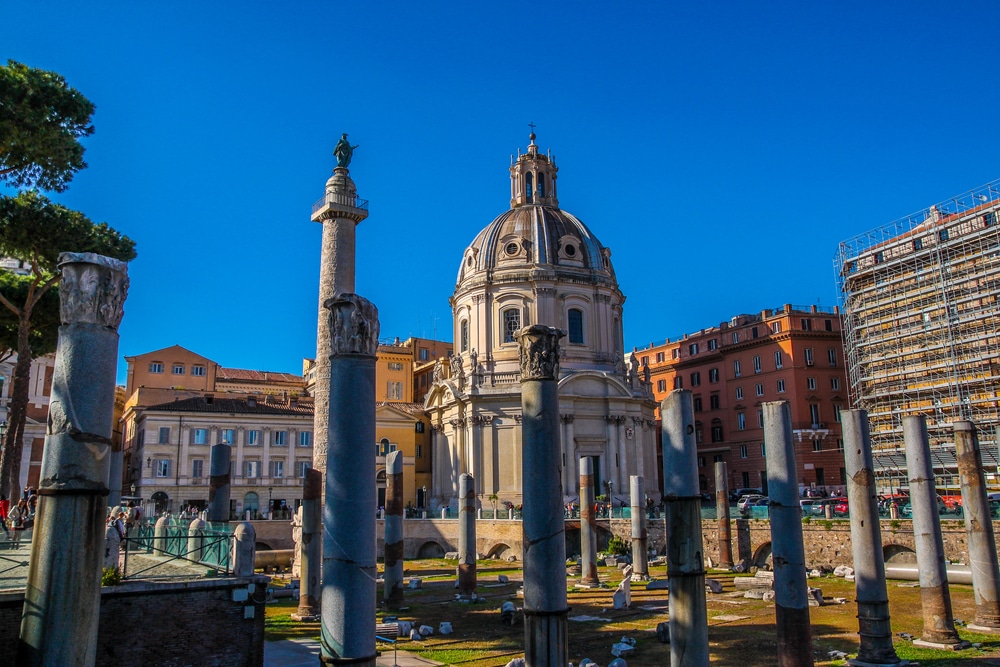
It’s natural to be a little overwhelmed by the volumes of history at the Roman Forum, but you can seek out some interpretation at the Palazzo Valentini next to Trajan’s Column.
This building dates back to 1585 and today is the seat of Rome provincial and prefectural administration.
It’s the basement that attracts attention, displaying the excavated remnants of two imperial-era Roman houses as well as a small baths complex.
These were unearthed in the 2000s and are in an excellent state of preservation, complete with mosaics, staircases, fountains and inlaid marble flooring.
But the site is made all the more engaging by 3D projections that show you in sparkling clarity what these buildings would have looked like in their heyday.
A smart movie also lets you view the reliefs on Trajan’s Column in unprecedented detail.
11. Capitoline Museums
 Source: mikecphoto / Shutterstock
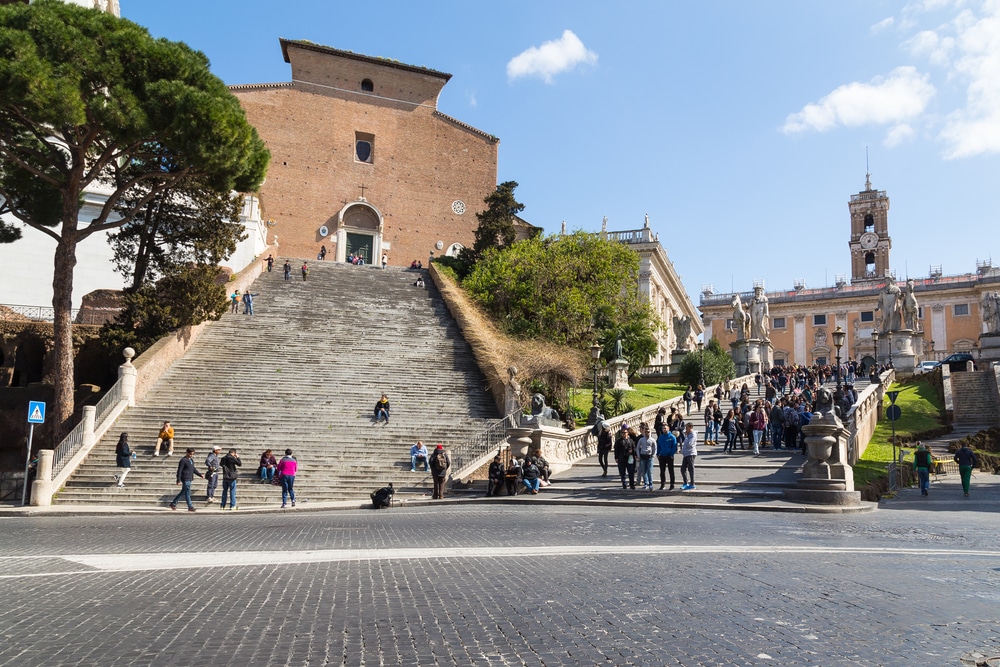
Rome’s main civic museums have a wonderful location at the hilltop base of power for Ancient Rome, on a square that was redesigned in the 1530s by Michelangelo to impress Holy Roman Emperor Charles V.
Housed mainly in two historic palazzi and reached via Michelangelo’s grand Cordonata stairway, the Capitoline Museums are thought to be the oldest in the world, founded under Pope Sixtus IV in 1471 and opened to the public in 1734.
On show is a trove of ancient Roman sculpture, reliefs, mosaics, stelae, jewellery and coins, as well a world-class array of Medieval and Renaissance and Baroque art. Tintoretto, Rubens, Titian and Caravaggio are a few of the famous names in the collection.
But the star has to be the iconic Capitoline Wolf, along with the Capitoline Venus and the 13th-century statue of Charles I of Anjou.
The latter is significant as the first realistic European sculpted portrait of a living figure since the Classical period.
The two palazzi are linked beneath the piazza by an underground gallery, containing the museum’s collection of epigraphs and displaying the remnants of ancient Roman dwellings in situ.
12. Palazzo Massimo alle Terme
 Source: Anna Pakutina / Shutterstock
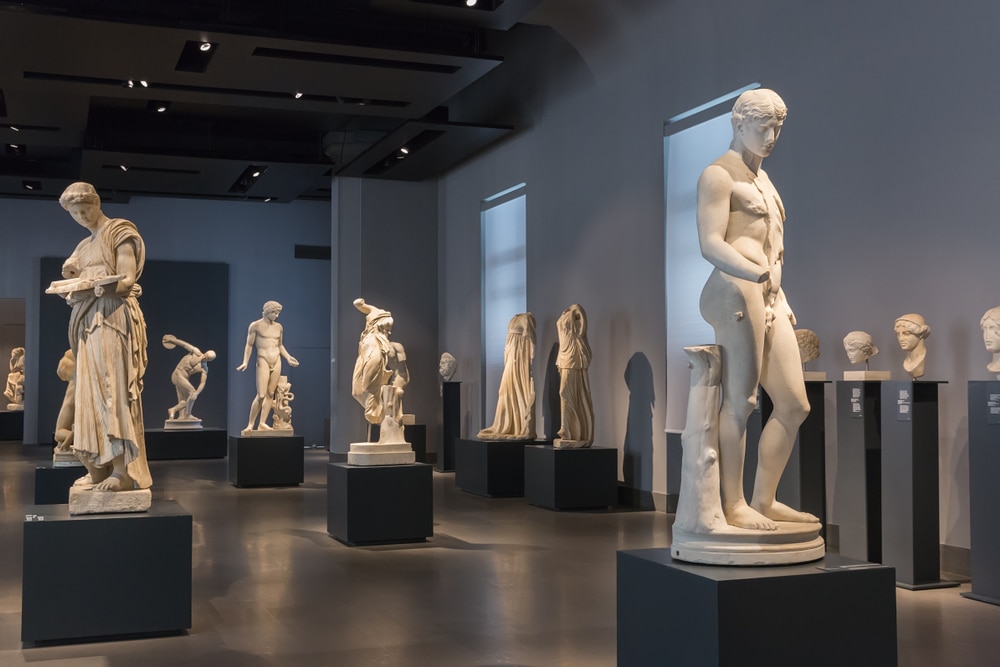
Today a branch of the National Roman Museums, the Palazzo Massimo alle Terme dates to the 1880s and was built in the style of the Renaissance palazzi of the 16th century to house the new Jesuit school.
After filling a few different uses the building was in a state of neglect by the 1980s when it was restored and adapted to show off some of the finest art produced in Ancient Rome.
Over four floors you’ll be treated to frescoes, sarcophagi, sculpture, reliefs, jewellery and mosaics, all excavated in the city and region from the 1870s onwards.
The list of masterpieces goes on and on, but you have to make extra time for pieces like the extraordinarily complex Portonaccio Sarcophagus (180 CE), the Hellenistic sculpture, Boxer at Rest (330-50 BCE) and the 1.8-metre Torlonia Vase, carved from white marble in the 1st century BCE.
13. Baths of Caracalla
 Source: Viacheslav Lopatin / Shutterstock
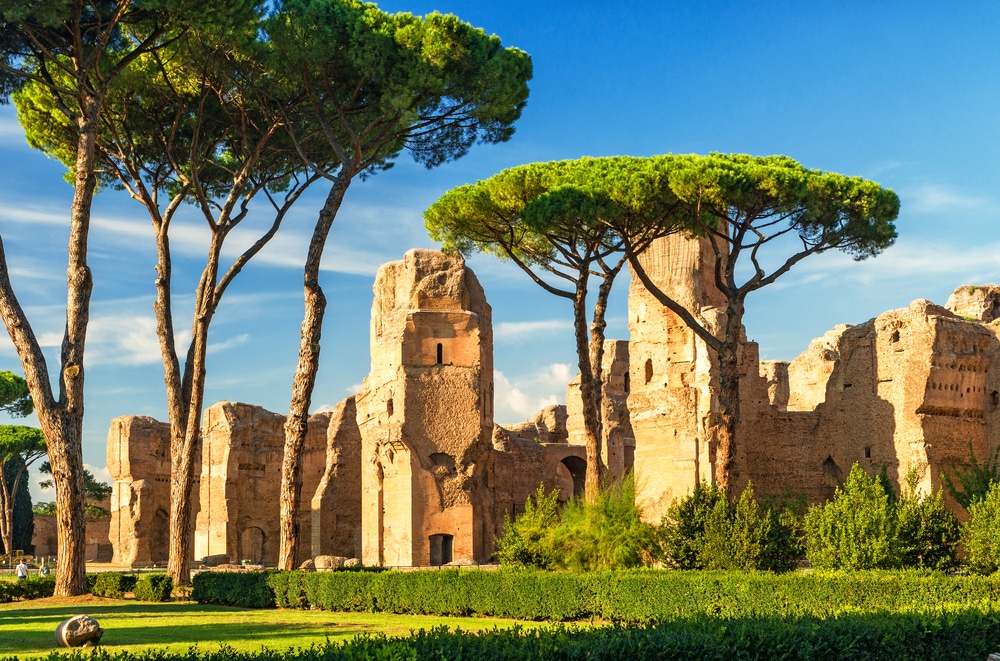
Arguably the finest ancient bathing complex, the Baths of Caracalla took shape in the 3rd century CE under Septimus Severus and Caracalla, and were in use for the next 300 years.
The design, covering 110,000 square metres, served as a blueprint for a host of subsequent buildings, including Penn Station and Chicago Union Station, and was lined with marble and opulently decorated with enduring artworks like the Farnese Bull and Farnese Hercules.
These were all plucked from the site down the centuries, but the reason to visit this vast complex is to marvel at the design and engineering, and the lifestyle that the baths afforded Rome’s citizens.
More than 1,600 bathers could use the Baths of Caracalla at once, and an audio-guided tour takes in the swimming pool, changing rooms, the gym and hot room.
You’ll need a good three hours to see everything, and for an extra fee virtual reality headsets show the baths in their 3rd-century glory.
The party scene in La Dolce Vita, before Sylvia goes frolicking in the Trevi Fountain, was filmed here.
14. National Etruscan Museum
 Source: Anna Pakutina / Shutterstock
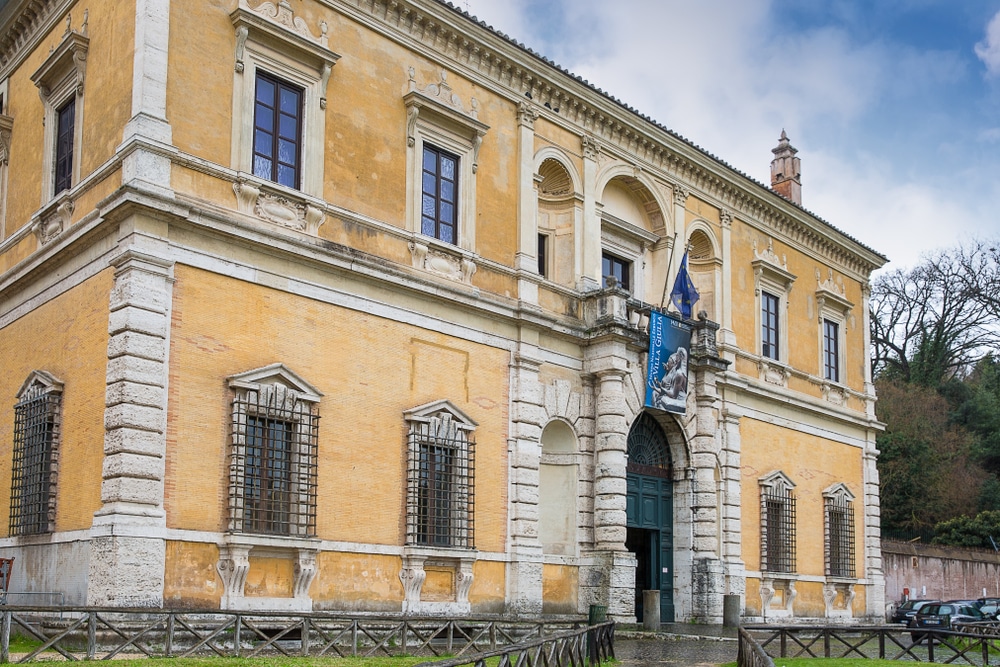
Another of the sumptuous properties in the Villa Borghese gardens is the gorgeous Villa Giulia, built as a summer escape for Pope Julius III in the early-1550s.
On what was once the edge of the city, Villa Giulia was a papal property up to 1870, and since the start of the 20th century has contained the superb National Etruscan Museum.
Here you can trace the progress of the Etruscan civilisation, from its Iron Age origins to its assimilation into Roman society beginning around the 4th century BCE.
There are some breathtaking pieces along the way, like the masterful Sarcophagus of the Spouses (late-6th century BCE), depicting a married couple at a banquet in the afterlife.
Also invaluable are the Pyrgi Tablets (500 BCE), three golden plates inscribed with a dedicatory text in both Etruscan and Phoenician, and the life-sized terracotta Apollo of Veii, from around the same time.
15. Castel Sant’Angelo
 Source: Blue Planet Studio / Shutterstock
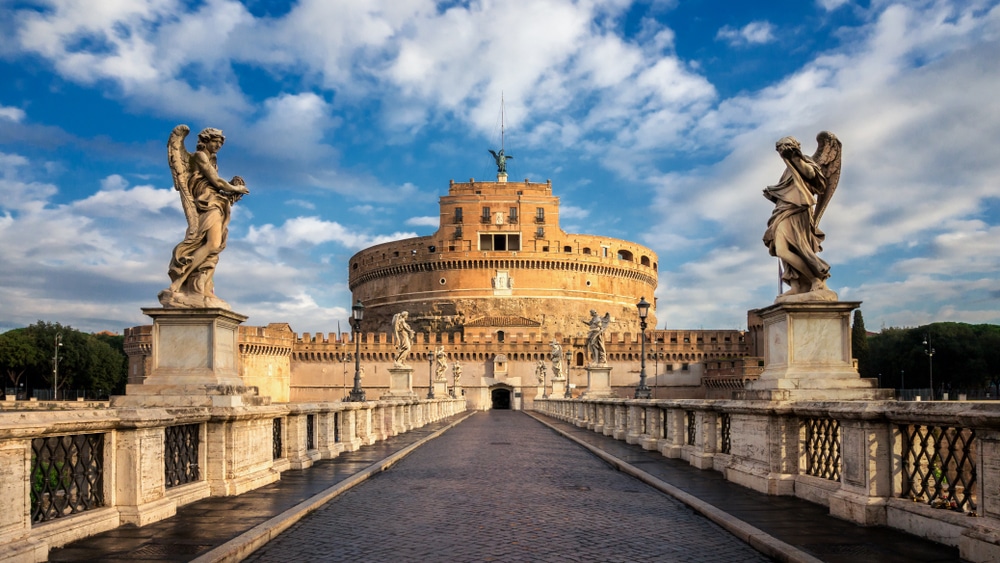
Even by Rome’s high standards this imposing cylindrical building on the right bank of the Tiber is steeped in history.
At one time the tallest building in Rome, Castel Sant’Angelo was raised in the 120s and 130s CE as Emperor Hadrian’s tomb, and was also the burial place of several of his successors.
There are few reminders of that time as those monuments were destroyed in Alaric’s sacking of Rome in 410 CE, after which the structure became a fortress.
Castel Sant’Angelo’s history is intertwined with the Vatican: The fortified corridor, Passetto di Borgo, provided a safe passage for popes to the stronghold in times of peril. In 1527 during the Sack of Rome, Clement VII escaped along this passage, helped by a rearguard action by the Swiss Guard, almost completely massacred by troops of Emperor Charles V.
Flanking the iconic Ponte Sant’Angelo in front are glorious Baroque statues of angels, carved by Bernini, among others, and cresting the fortress is an 18th-century depiction of the Archangel Michael by Peter Anton von Verschaffelt.
The building is now a museum, preserving the papal apartments, recording the castle’s military past and giving you a stirring view of the city from its roof.
16. Spanish Steps
 Source: Jon Chica / Shutterstock
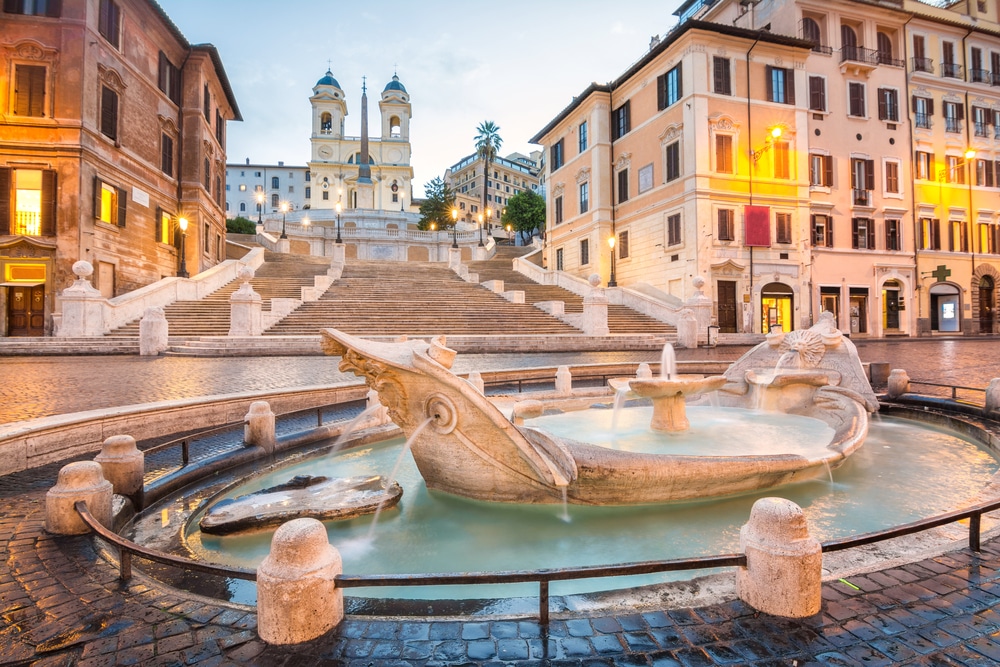
This monumental stairway, crowned by the 16th-century towers of the Trinità dei Monti church, is one of the images that will always come to mind when people think of Rome.
Designed by the obscure late-Baroque architect Alessandro Specchi, the Spanish Steps were built in the 1720s to link the church and Bourbon Spanish Embassy with the Holy See and Spanish Square below.
At that time the church was under the patronage of the King of France, and the steps were a French-funded project.
Now this is arguably the world’s most famous open stairway, and if you can pick your way through the crowd you’ll count 135 steps.
The scene has been fixed in the international consciousness as a runway for fashion shows and a filming location for movies like Roman Holiday (1953) and more recently the Talented Mr Ripley (1999).
The Spanish Steps are especially pretty in spring around the anniversary of Rome on April 21 when they are festooned with azaleas.
17. Basilica of San Clemente
 Source: Stefano_Valeri / Shutterstock
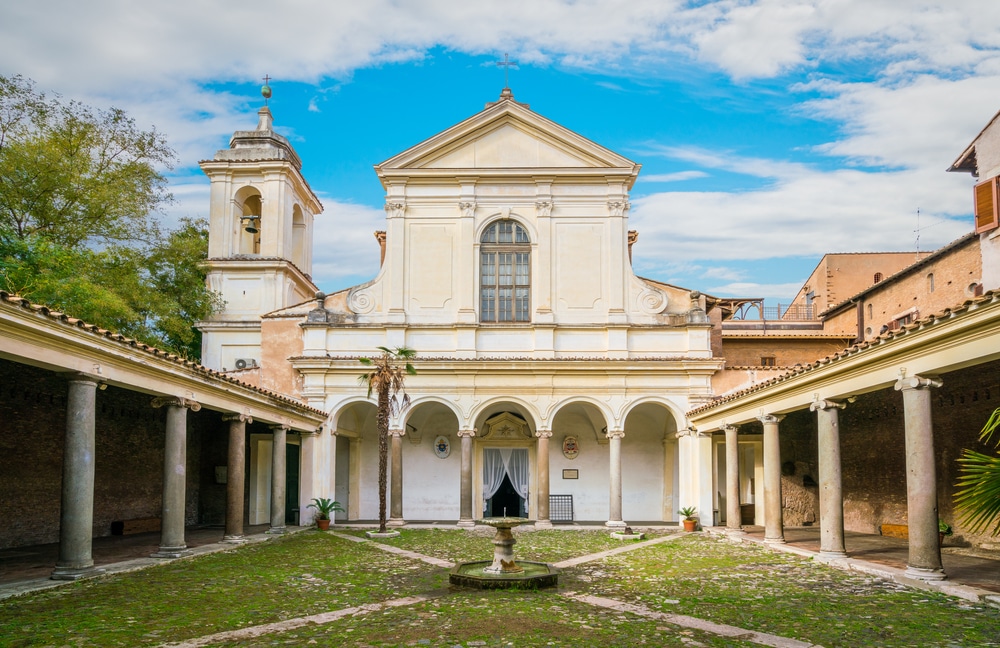
Dedicated to the fourth pope, Clement I, this minor basilica is a multilayered attraction offering a glimpse of early Christianity, and with architecture descending deep into Ancient Rome.
Outwardly this is a church (second basilica) from the 12th century, later given a Mannerist facade belying the wonders within.
But this building incorporates an earlier church dating from the 4th century, itself converted from a nobleman’s house, which had contained a Christian place of worship in the 1st century and a Mithraic temple in the 2nd century.
And then below that are the remnants of a republican-era villa and warehouse believed to have been destroyed in the fire of 64 CE.
Centuries of art await you in this profusely decorated building, including Rome’s largest collection of Early Medieval wall paintings in the lower basilica, and sumptuous 12th-century mosaics in the apse of the second basilica.
Lurking beneath all this is that pagan temple, the brickwork of a Roman villa and a piece of the Cloaca Maxima, Rome’s ancient sewer system.
18. Chiesa del Gesù
 Source: Stefano_Valeri / Shutterstock
You can’t overstate the importance of this landmark as the mother church of the Society of Jesus, which spread Christianity throughout the Americas and beyond in the Early Modern Age.
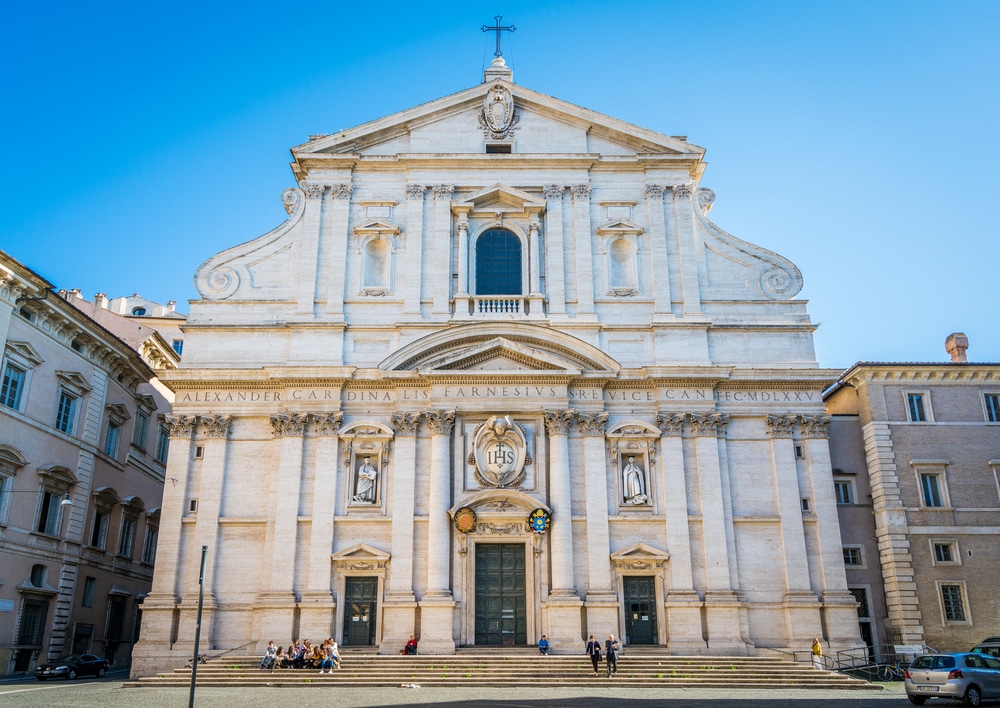
The Chiesa del Gesù, completed in 1580, is considered to have the first truly Baroque facade. Its exterior and interior layout and decoration were copied almost identically in Jesuit churches around the world.
The two architects were Giacomo Barozzi da Vignola and then Giacomo della Porta, both of whom worked on St Peter’s Basilica.
Check out the facade with its large volutes linking the upper and lower sections, and the cartouche bearing the initials IHS, the Latin form of the first three letters of Jesus spelled in Greek.
Many of the splendid frescoes within were painted around a century later, by the likes of Giovanni Battista Gaulli.
Andrea Pozzo, a Jesuit brother, was responsible for the marvellous St Ignatius Chapel, on the left side of the transept.
He designed the altar, crowned with the trinity atop a globe, clad with lapis lazuli, all above a statue of St Ignatius by Pierre Le Gros, framed by four fluted columns veneered with yet more lapis lazuli.
19. Palazzo Altemps
 Source: Diego Fiore / Shutterstock
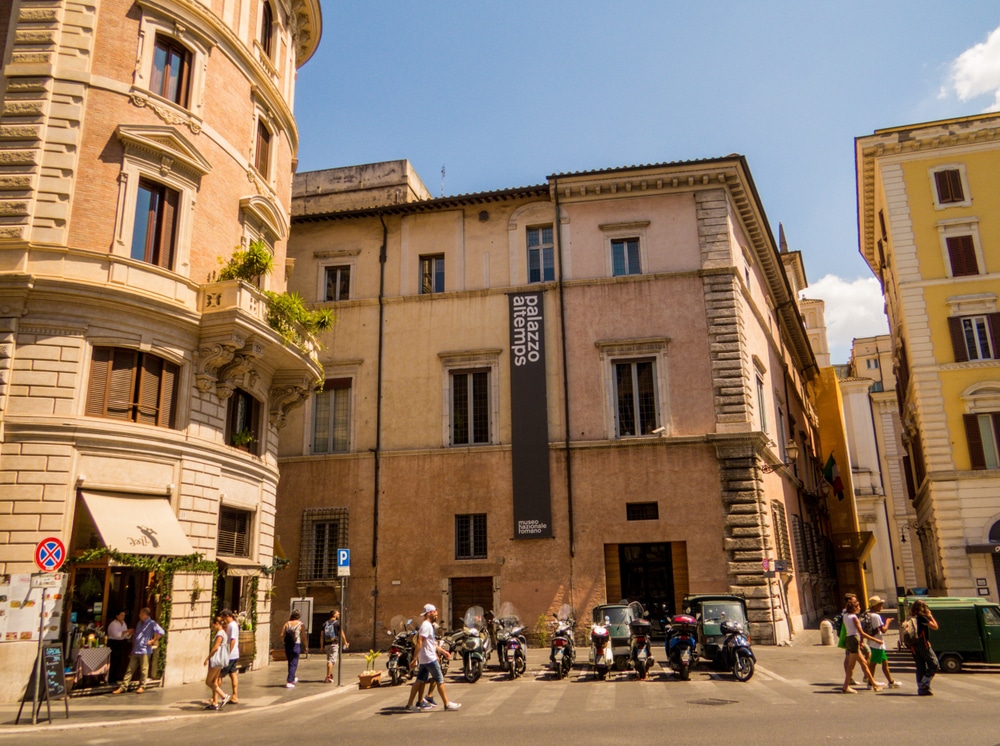
This branch of the National Roman Museum is in a 15th-century palazzo built for Girolamo Riario, nephew of Pope Sixtus IV.
The residence has an exquisite patio and monumental staircase, and is adorned with frescoes on its walls and ceilings, including one depicting Girolamo’s wedding to noblewoman Caterina Sforza in 1477.
It’s all a wonderful setting for Ancient Greek and Roman sculpture that was collected by the prominent Ludovisi and Boncompagni noble families in the 16th and 17th centuries.
Some of the famous works in store at Palazzo Altemps are the Ludovisi Gaul (2nd century CE), the Ludovisi Sarcophagus (250-260 CE), the Ludovisi Throne (460 BCE) and the Ludovisi Ares (2nd century CE).
20. Palatine Hill
 Source: xbrchx / Shutterstock
The most central of the city’s seven hills will take you back to the very beginnings of Ancient Rome.
According to Roman mythology this was the location of the cave in which the wolf Luperca suckled Romulus and Remus.
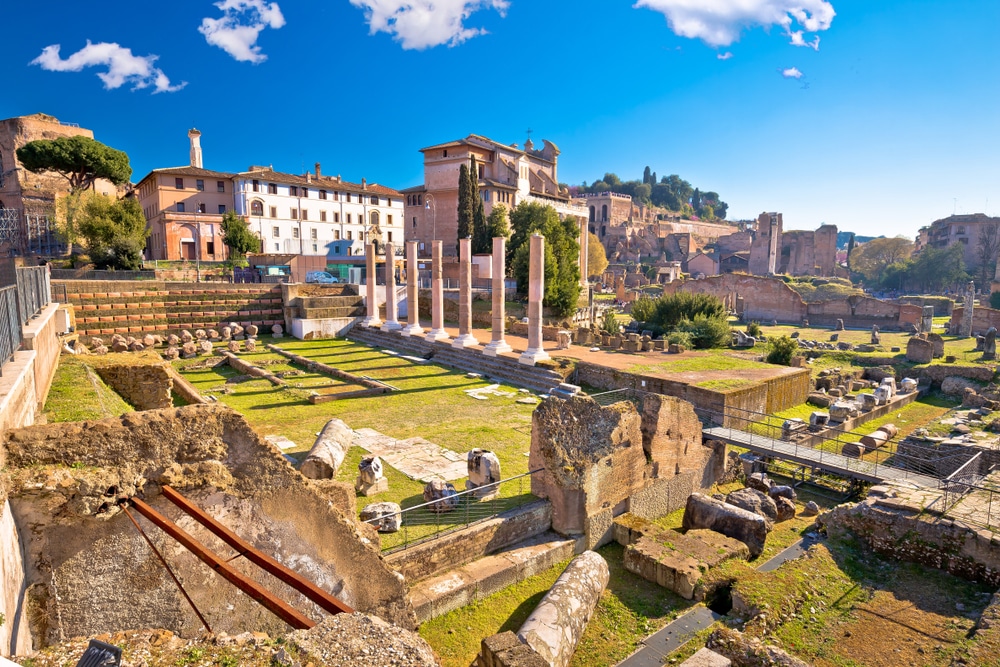
Rising south of the Forum, the Palatine Hill became a desirable spot, first for the very rich and then for emperors to build their residences.
The shard-like ruins of these grand properties are still visible for some distance, set among lots of greenery.
So using the same ticket as the Colosseum and Roman Forum you make a seamless journey into domestic life in Ancient Rome, even glimpsing mosaics, frescoes and other captivating details that indicate their owners.
Some of the many must-sees on the Palatine Hill are the Palace of Domitian (81-92 CE), the Houses of Livia and Augustus (1st century BCE) and the Hippodrome of Domitian (1st century CE), which despite its outline may have been a garden for the emperor.
21. Domus Aurea
 Source: Tara Van Der Linden Photo / Shutterstock
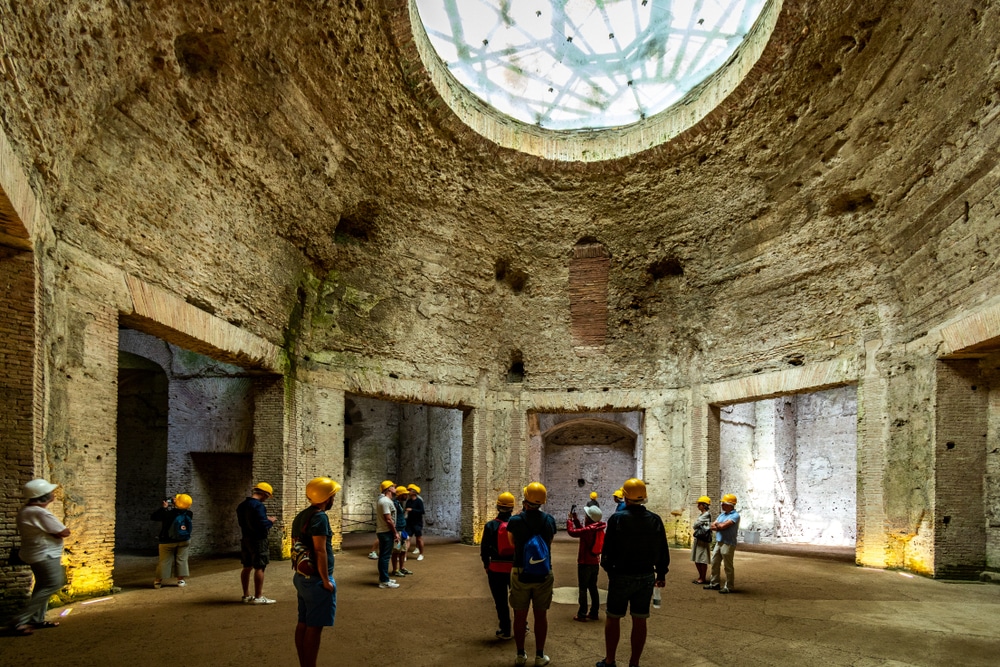
After the Great Fire of Rome in 64 CE Emperor Nero ordered a vast new palace with 300 rooms, mostly on the Palatine Hill, but also spreading onto the slopes of the Esquilline, Caelian, Oppian Hills.
The massive project was completed in short order by 68 CE, and Nero is claimed to have overseen every aspect.
Later, embarrassment at Nero’s decadent rule caused the lavish Domus Aurea to be stripped, abandoned, filled in and built over, and it wouldn’t be until the 15th century that the ruins were explored.
Michelangelo and Raphael were both influenced by the immaculately preserved frescoes they saw in these subterranean grottoes.
Moisture and the sheer weight of being buried beneath the city has taken its toll on the Domus Aurea, and restoration work is ongoing.
But you can book a guided tour, donning a helmet to view the sumptuous frescoed rooms of this imperial residence. The palace is also brought back to its jewel-encrusted, 1st-century heyday using virtual reality and a 20-minute film.
22. Catacombs of Domitilla
 Source: archer10 (Dennis) / Flickr | CC BY-SA
The southern outskirts of Ancient Rome are riddled with underground cemeteries, used mainly by the Christian and Jewish population, who were prohibited to perform burials within the city walls.
This particular cemetery dates from the 1st to the 5th centuries CE and with around 15,000 burials in more than 15 kilometres of tunnels.
The Catacombs of Domitilla are hewn from tufa and are treasured for their beautiful frescoes, many of which have only come to light after a recent restoration.
These have pagan or Christian themes, showing Jesus with the Apostles, Adam, Eve, Mary with Child, Noah’s Ark, Jonah and Daniel with the Lions, but also Orpheus, allegorical images of Spring and Summer and mythological creatures.
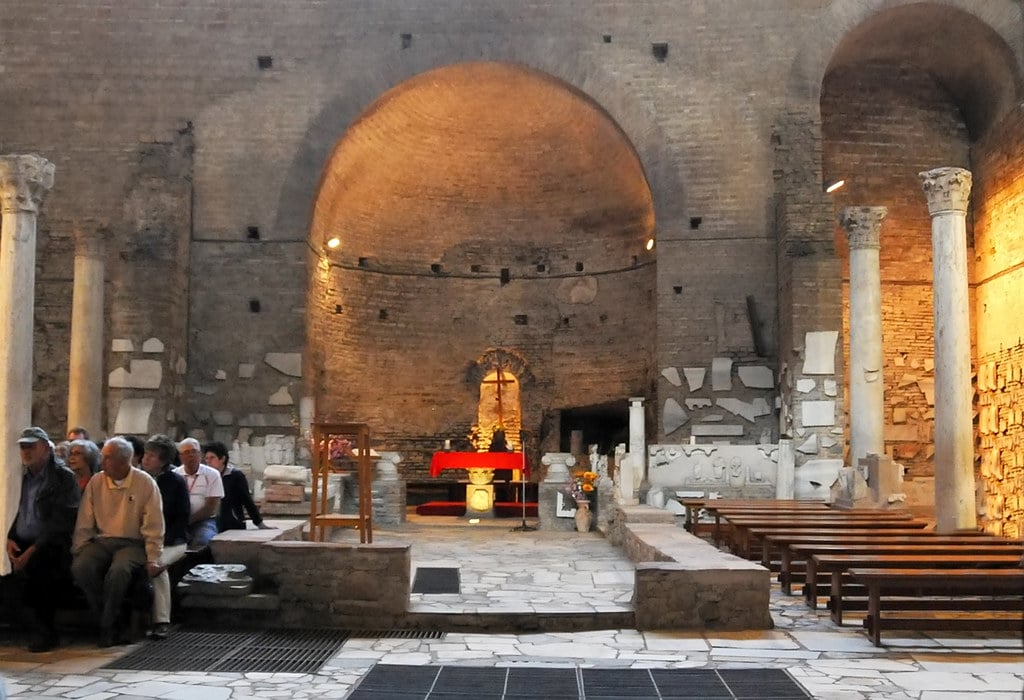
The Domitilla Catacomb is also the only publicly-accessible catacomb in Rome to contain an underground basilica.
This was established in the 4th century to venerate Nereo and Achilleo, two Christian Roman soldiers killed in the Diocletianic Persecution in 304 CE, along with St Petronilla, claimed to be the daughter of St Peter.
Also worthwhile are the Catacombs of San Sebastiano and the Catacombs of San Callisto, both on the Appian Way, a short way from the Catacombs of Domitilla.
23. Hadrian’s Villa
 Source: Stefano_Valeri / Shutterstock
On the off chance you get half a day spare, try to spend it at this UNESCO World Heritage Site 25 kilometres east from the centre of Rome.
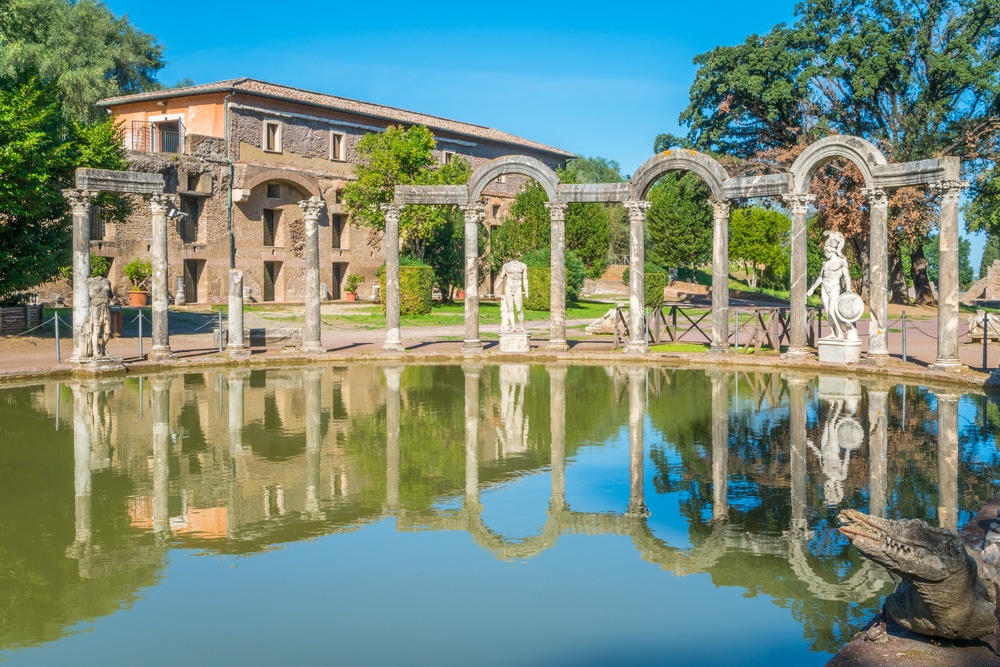
In the second and third decades of the 2nd century CE this was Hadrian’s country retreat at the picturesque foot of the Tiburtine Hills. Villas for Roman Emperors were vast, self-sustaining settlements, and Hadrian’s residence spread over 120 hectares and contained barracks, temples, baths, fountains and nymphaeum.
The site has given up many sublime pieces of art that have found their way to the Capitoline Museums and the National Roman Museum.
Some 40 hectares of Hadrian’s Villa are open to the public, and these tell you plenty about the grandeur of the site.
Some of the best bits are the Great and Small Baths, the spectacular Canopus canal, lined with caryatids, and the Maritime Theatre, a circular pool enclosed by a portico and with a villa on the island at the centre.
24. Trastevere
 Source: Catarina Belova / Shutterstock
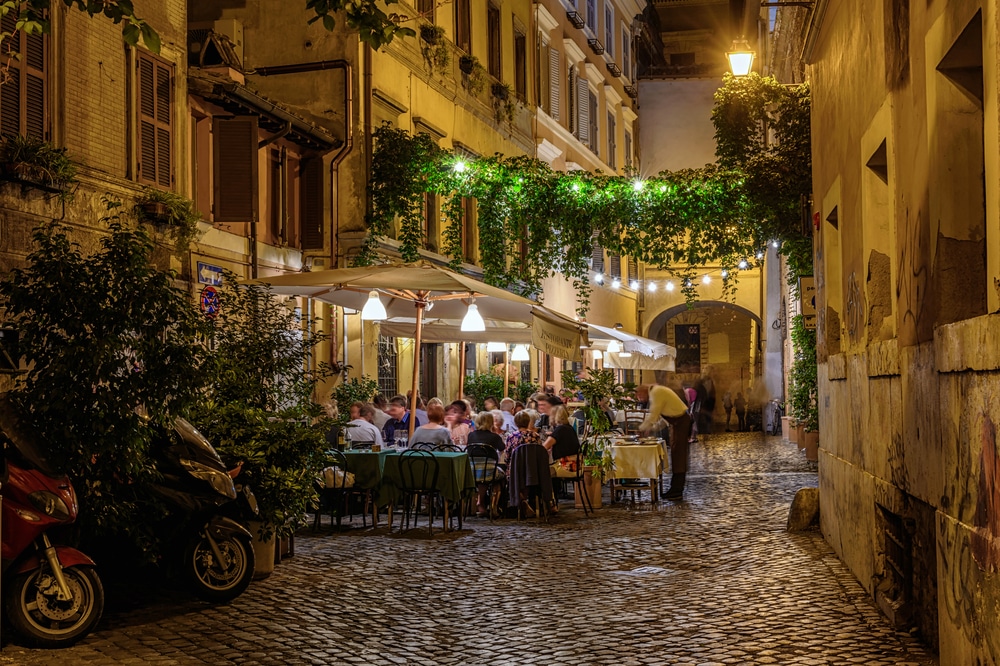
Maybe the best area for an idle wander in Rome is the enchanting rione of Trastevere on the right bank of the Tiber.
The narrow cobbled alleys here are lined with historic palazzi and deliver you to sequestered piazzas with elegant churches. It’s easy to get lost, but that’s part of the fun, as you’re sure to make a beautiful discovery.
Some spots to keep in mind are the Renaissance Villa Farnesina (Via della Lungara 230), the river island, Isola Tiberina, the Santa Cecilia in Trastevere church, which dates right back to the 5th century and Santa Cecilia in Trastevere, which has a floor plan from the 4th century.
Despite its history, Trastevere has a young character due to the presence of a number of foreign academic institutions, like The American University of Rome and The American Academy in Rome.
This also makes the area one of the best in the city for nightlife, while Trastevere really shines for its dining, endowed with dozens of restaurants high in quality but low in price.
25. Belvedere del Gianicolo
 Source: nightcap / Shutterstock
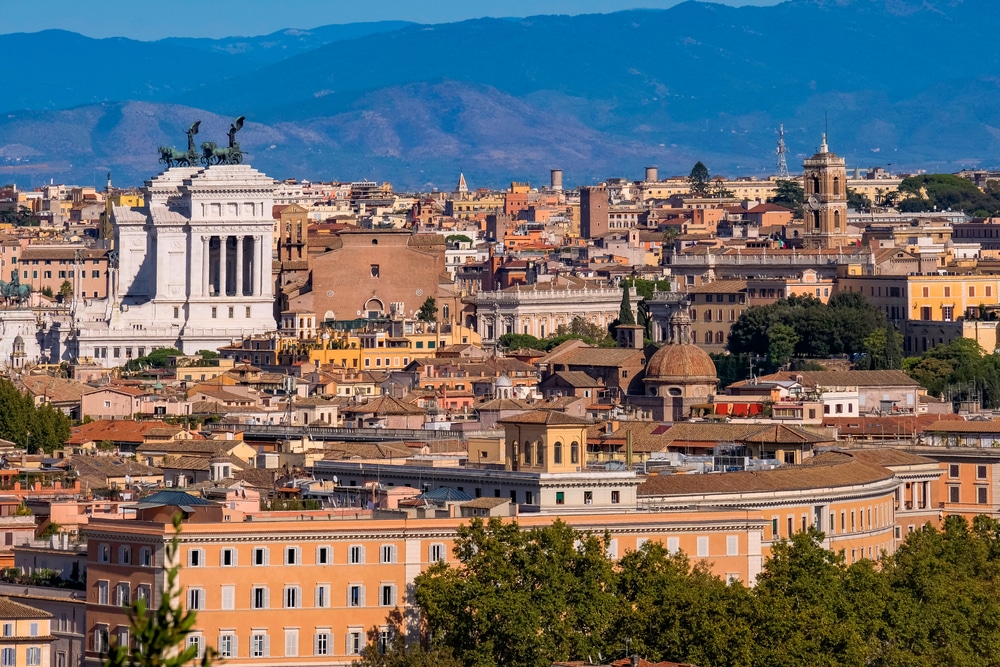
The second-tallest hill in modern Rome is on the right bank of the Tiber and isn’t included in Rome’s famous seven hills as it lies outside the boundaries of the ancient city.
Janiculum, granting one of the great panoramic views of Rome, was fortified as early as the 7th century BCE and swapped hands between the Etruscans and Romans.
In 1849 there was a battle here in which revolutionary Roman Republic forces under the command of Garibaldi struggled to hold out against the might of the French, fighting to restore the temporal power of Pope Pius IX over Rome.
This is the origin of the equestrian statue of Garibaldi, placed atop the terrace in 1895. Every day at 12:00 a cannon fires a blank shot towards the Tiber, in a tradition that began at the Castel Sant’Angelo and goes back to 1847.