Nimes has seen its fair share of ancient empires come and go. This could be down to its Mediterranean climate, which makes it one of the warmest cities in France. Or it could be down to its fine location, just 50 kilometres north of the Med in southern France.
Of them all, it is the Romans who left the most obvious lasting legacy. Several grand structures remain to this day, leading to Nimes sometimes being called ‘the most Roman city outside of Italy’.
Looking to more recent times, Nimes remains a prosperous city, with a multitude of cultural attractions, from art galleries to public spaces.
Check out the 15 best things to do in Nimes.
1. Maison Carrée
 Source: Sergey Dzyuba / Shutterstock
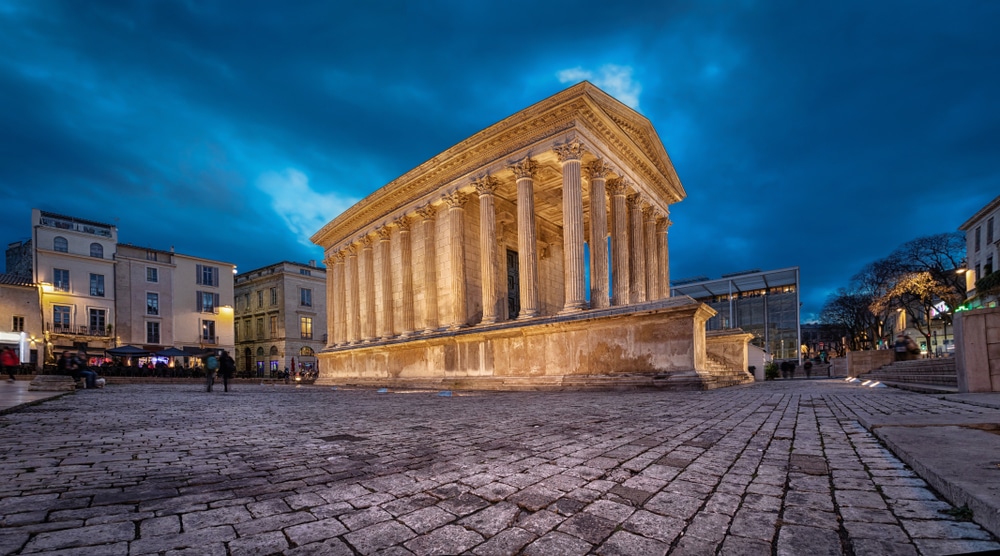
Not any old ‘Square House’, the literal translation of Maison Carrée, this structure in the centre of Nimes is considered one of the best-preserved temples anywhere in the Roman world.
Almost completely intact, it dates from the time when Nimes was the regional capital of Transalpine Gaul, an important Roman province.
Decorated with columns and with a frontage covered by a large portico, visitors are still able to safely go inside the temple more than 2,000 years after it was built.
Entering via a wooden doorway almost seven metres high, giving an indication of the scale of this structure, the interior surprises many by having no natural light.
Inside you’ll find a short film describing the Roman history of the city.
2. Jardins de la Fontaine
 Source: Goran Bogicevic / Shutterstock
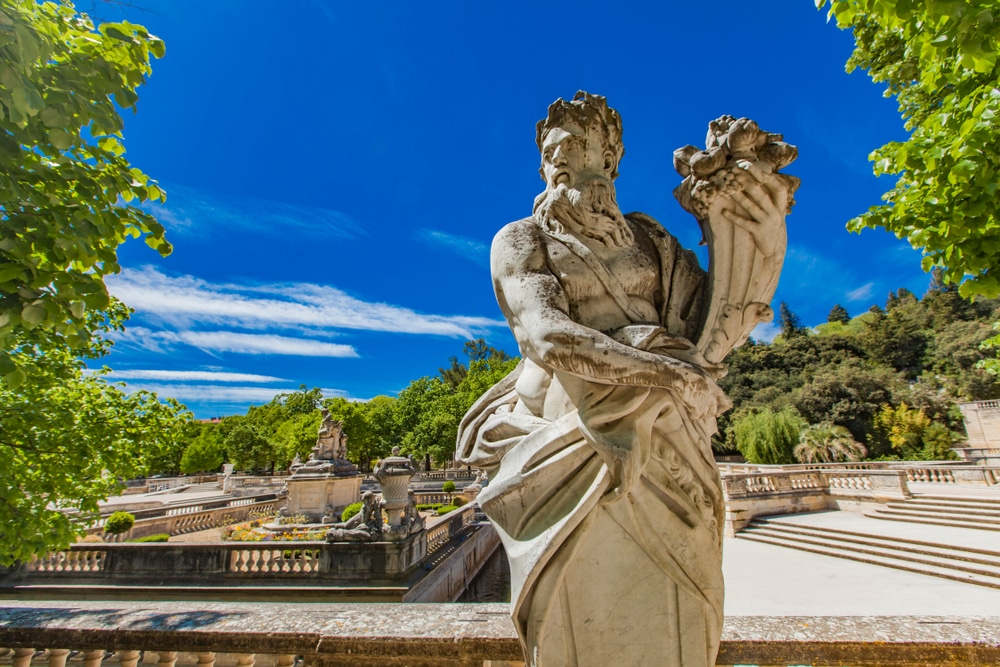
As you might expect from somewhere called the Garden of Fountains, these jardins are full of decorative fountains, statuary and pools, as well as some Roman ruins too.
Covering 15 hectares, the gardens were first laid out in 1745, making them the first public gardens in Europe.
While half the gardens maintain their original layout, there is also a Mediterranean garden of native species created around a hundred years later.
3. Les Arènes
 Source: Claudio Giovanni Colombo / Shutterstock
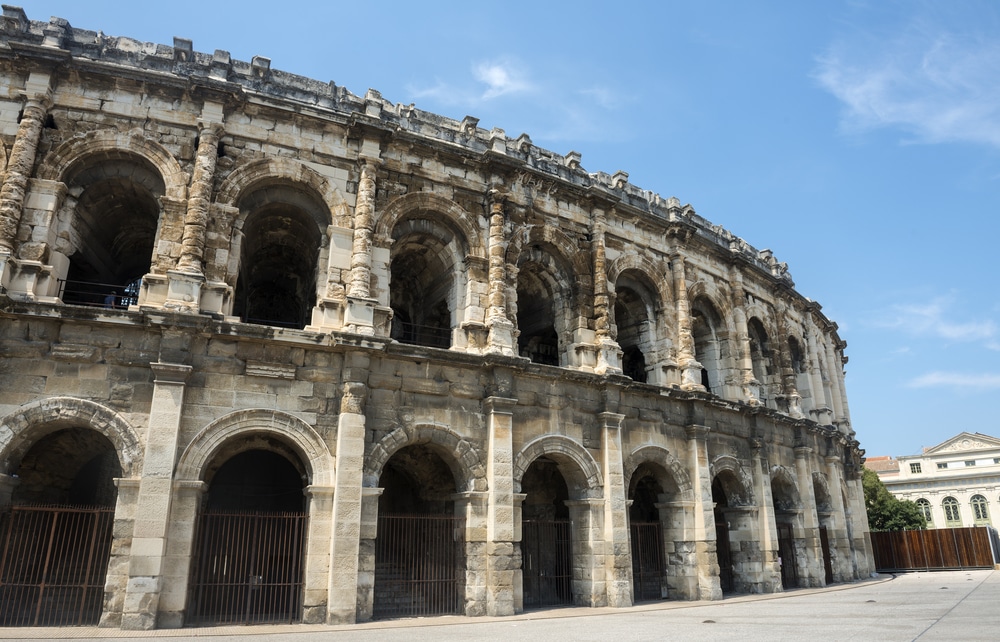
Another unmissable Roman-era find, Les Arènes (The Arena) is a Roman amphitheatre built in around 70 AD, and is an excellent example of its form.
The ellipse stretches more than 100 metres in one direction and 130 in the other, while its two-storeys rise more than 20 metres on 60 arches.
One of the largest amphitheatres ever built, it had space for 24,000 spectators on 34 tiers of stone seating.
Once used for gladiatorial combat and then as a refuge during several sieges of the city, it is now used for a variety of events throughout the year, and is open year-round.
4. Museum of Fine Arts
 Source: Inu / Shutterstock
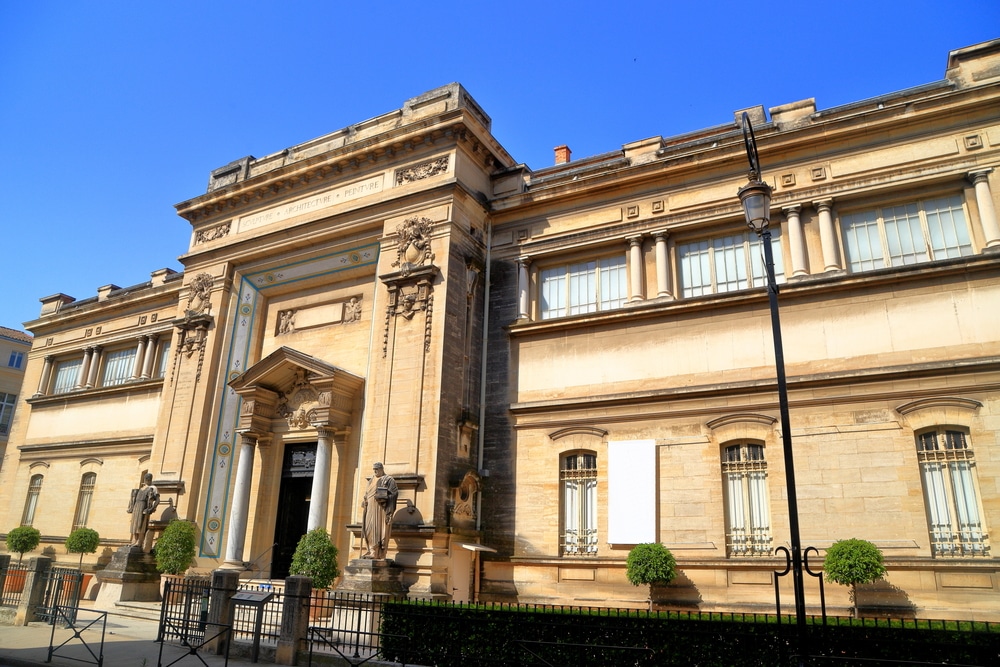
The Museum of Fine Arts (Musée des Beaux-Arts) was once housed in the Maison Carrée. Founded in 1821, it has since moved to a purpose-built gallery space on Place de la Mondragore.
The city’s premier art collection, it has around 3,600 individual works. The very best are displayed in three rooms of the Italian School down stairs, and seven rooms dedicated to French, Flemish, and Dutch painting upstairs.
Works include those by Rubens, and the British-themed Oliver Cromwell with the corpse of Charles I by Delaroche.
There is also a collection of painting by Charles-Joseph Natoire and Xavier Sigalon, who were both born in the city.
5. Tour Magne
 Source: Inu / Shutterstock
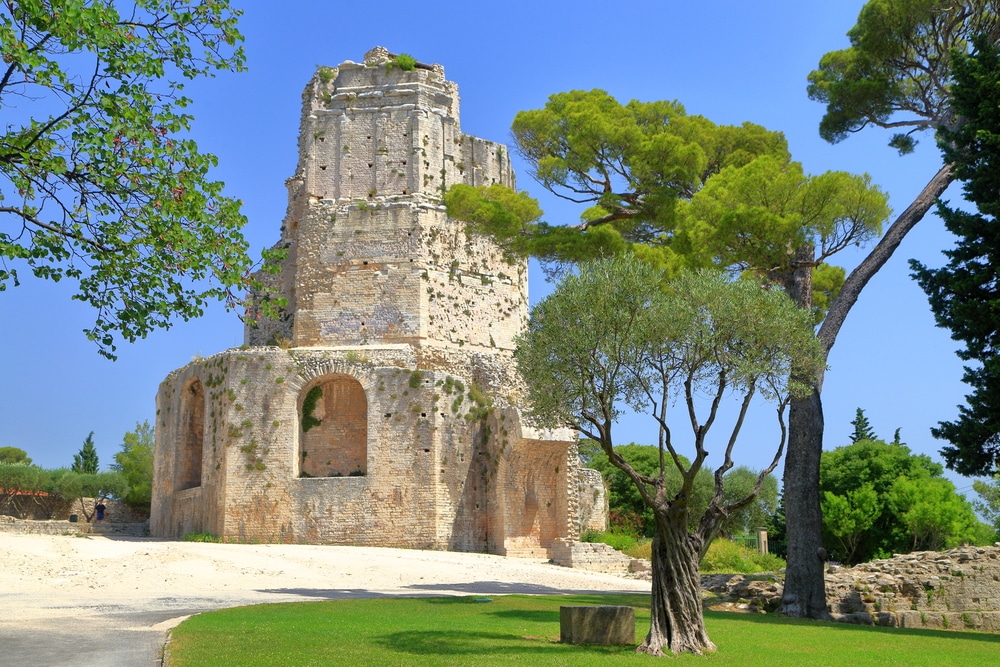
The Tour Magne, or ‘Great Tower’, predates the Museum of Fine Arts by some 1,800 years. Part of six kilometres of defensive walls built by the Romans, its impressive remnants rise 32 metres over the surrounding landscape of mature trees.
Located within the Jardins de la Fontaine, this former watch tower has an octagonal base that incorporated an earlier tower with it.
The only remaining section of defences constructed by Rome’s first emperor, Augustus Caesar, it stands on Mount Cavalier. At the highest point in the city, the surrounds offer great views across the rooftops of Nimes below.
6. Cathédrale Notre-Dame et Saint Castor
 Source: RossHelen / Shutterstock
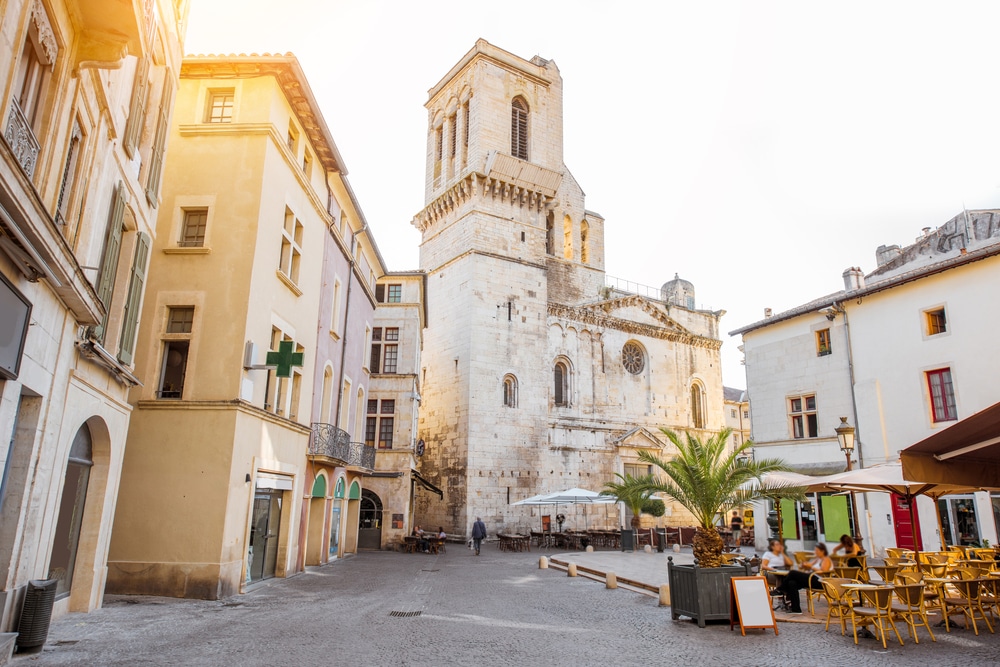
Nimes cathedral blends Romanesque and Gothic styles, and is believed to have been built over a Roman temple to the deified Augustus.
First constructed in 1096, it was entirely reconstructed in the 1800s after suffering significant damage in the catholic/protestant Wars of Religion.
That said, its main façade still demonstrates some of its earlier appearance, including a carved frieze showing stories from the Old Testament.
The interior style changes once more, with the Rosary Chapel, dating from 1699, one of the best examples of Baroque artwork in the city.
7. Pont du Gard Aqueduct
 Source: cge2010 / Shutterstock
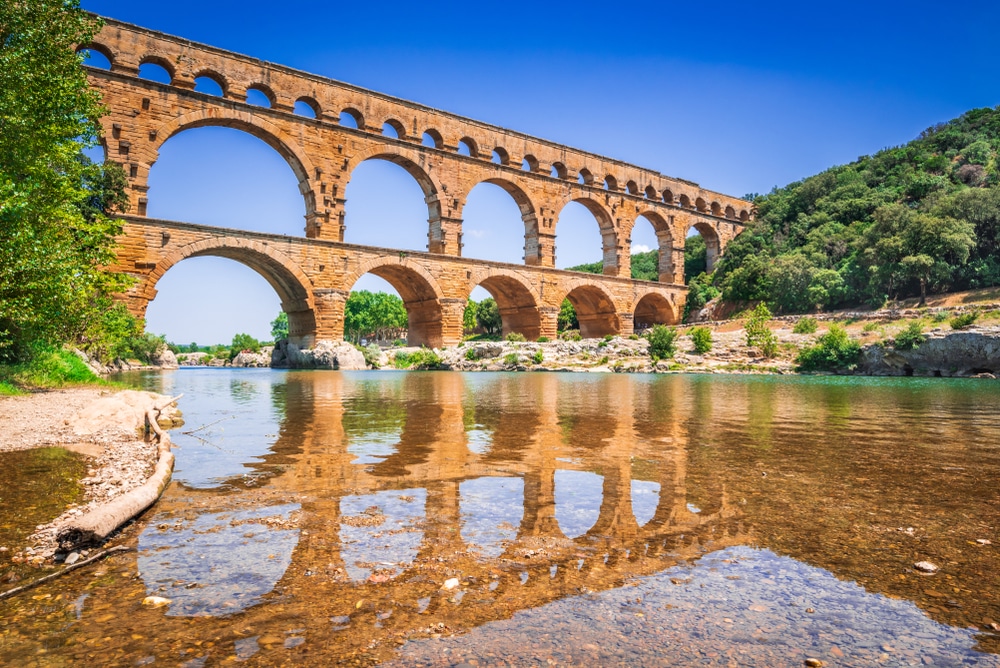
Situated 20 kilometres northeast of the city, the Pont du Gard Aqueduct has carried water across the River Gardon for 50 kilometres since it was constructed by Marcus Agrippa in the first century AD.
A UNESCO World Heritage Site since 1985, its three tiers of arches make it the tallest of any Roman aqueduct bridge at 48.8 metres high.
Incredibly, many of the aqueduct’s stones have been positioned without mortar or cement, and remain in place through the force of gravity alone. The largest weigh six tons.
Visitors are able to get up close to the aqueduct by following a neighbouring pedestrianised bridge across the river built in 1743.
8. Museum Romanité
 Source: Goran Bogicevic / Shutterstock
The smaller items of Nimes’ Roman heritage are not forgotten amid its impressive standing structures.
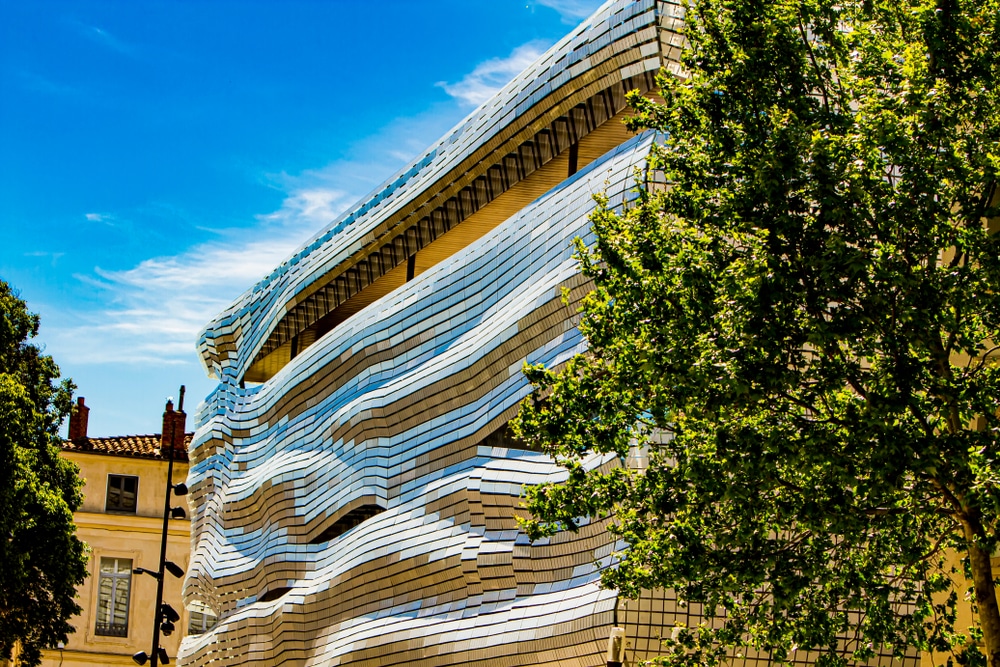
The Musée de la Romanité stands in a stylish contemporary structure of metal and concrete. Its main building is covered in undulating glass tiles, making it look like a box wrapped in ribbons.
Just a couple of years old, the museum contains a wealth of delightful objects, but the star of the show is heralded as a mosaic only discovered in 2006. It depicts Pentheus, a king of the Greek city of Thebes being killed by his mother.
Those with less of an appetite for all things Roman can visit the multilevel gardens without having to enter the museum, though views from the roof terrace of the amphitheatre next door are worth the entrance price alone.
Website: https://museedelaromanite.fr/
9. City gates
 Source: Attila JANDI / Shutterstock
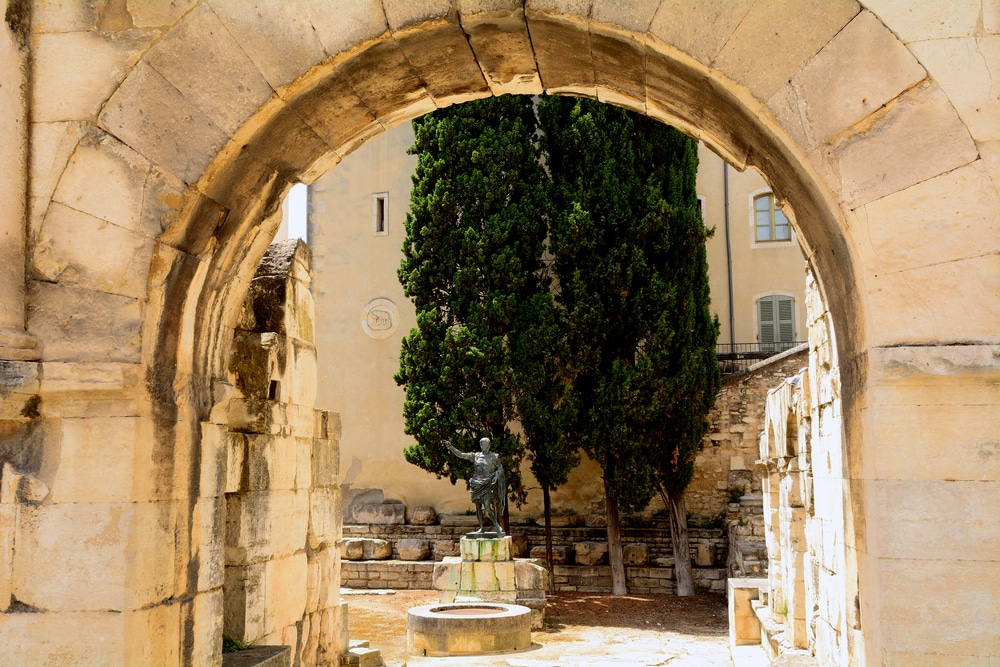
The relatively plain city gate called the Porte de France is wedged between two modern buildings. But it is none the less another important artefact from Nimes’ long history as a Roman city.
Approximately 2,000 years old, its good level of preservation means it still has its original portcullis.
From roughly the same period, the Porte d’Ausgusta on Boulevard Amiral Courbet was once the access point to the important Via Domitia to modern-day Catalonia from the city.
It consists of two larger central archways for carts and two narrower ones for pedestrians, although none can be passed under unlike at the Porte de France.
10. Carre d’Art
 Source: Goran Bogicevic / Shutterstock
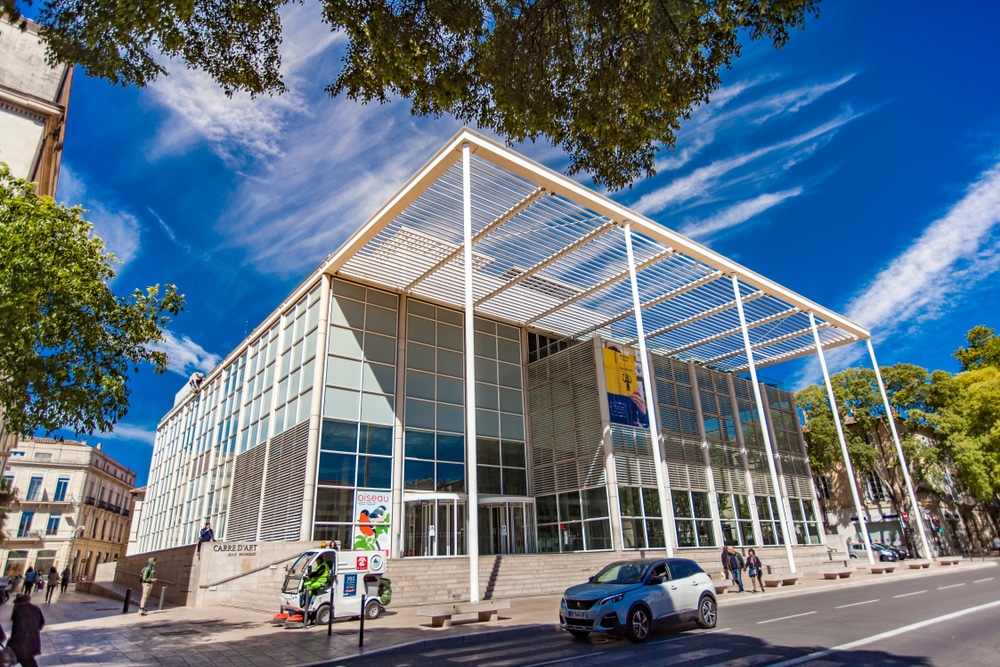
Immediately opposite the Maison Carrée, the Carre d’Art deliberately contrasts its modern glass and steel exterior with that of the ancient temple.
Designed by Norman Foster, this is a gallery of contemporary art which now contains some 600 works from 1960 to the present.
Its walls are rehung every year, and centre around art movements that were particularly well-represented in the region. These include Nouveau Réalisme, and Arte Povera, a movement from the 1960s and 70s that sought to return to simpler messages and objects.
Website: https://www.carreartmusee.com/
11. Temple of Diana
 Source: ermess / Shutterstock
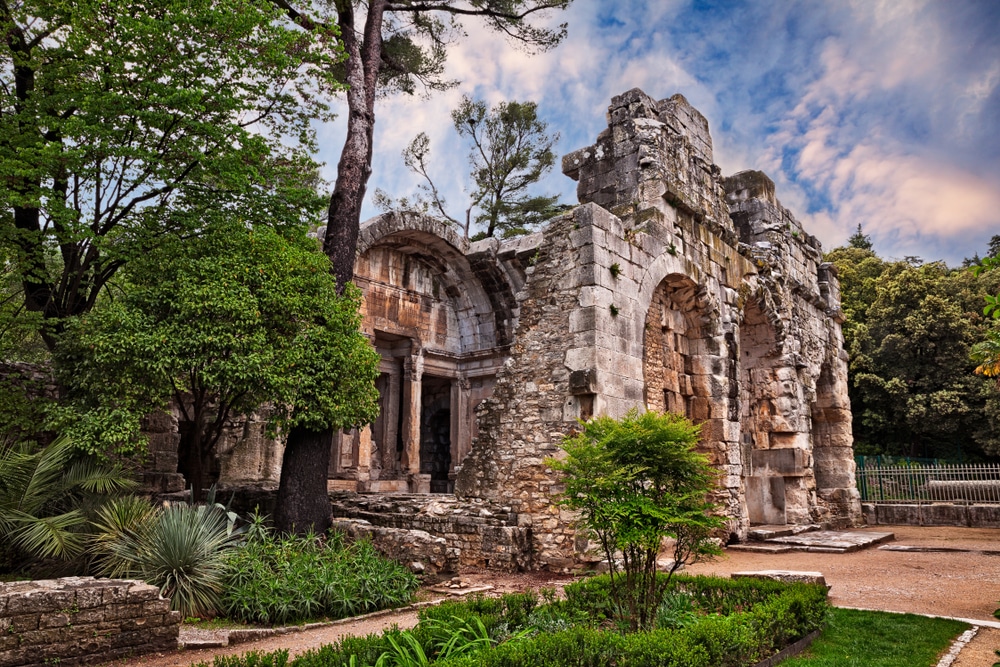
If the experts agree on one thing, it is that this structure wasn’t in fact a temple to the goddess Diana. However, that’s what you should look out for on signs.
Located within the Jardins de la Fontaine, the structure retains some impressive architectural details, including side niches and a partial barrel-shaped roof, whatever its function (which may have been a library).
Rebuilt in the second century AD, it survives largely due to the fact it was used as a monastery for many centuries, before being unearthed again in the 1700s when the gardens around it were formulated.
12. Museum of Old Nimes
 Source: nimes-tourisme.com
The Museum of Old Nimes (Musée du Vieux Nimes) doesn’t actually go as far back as the city’s Roman foundations.
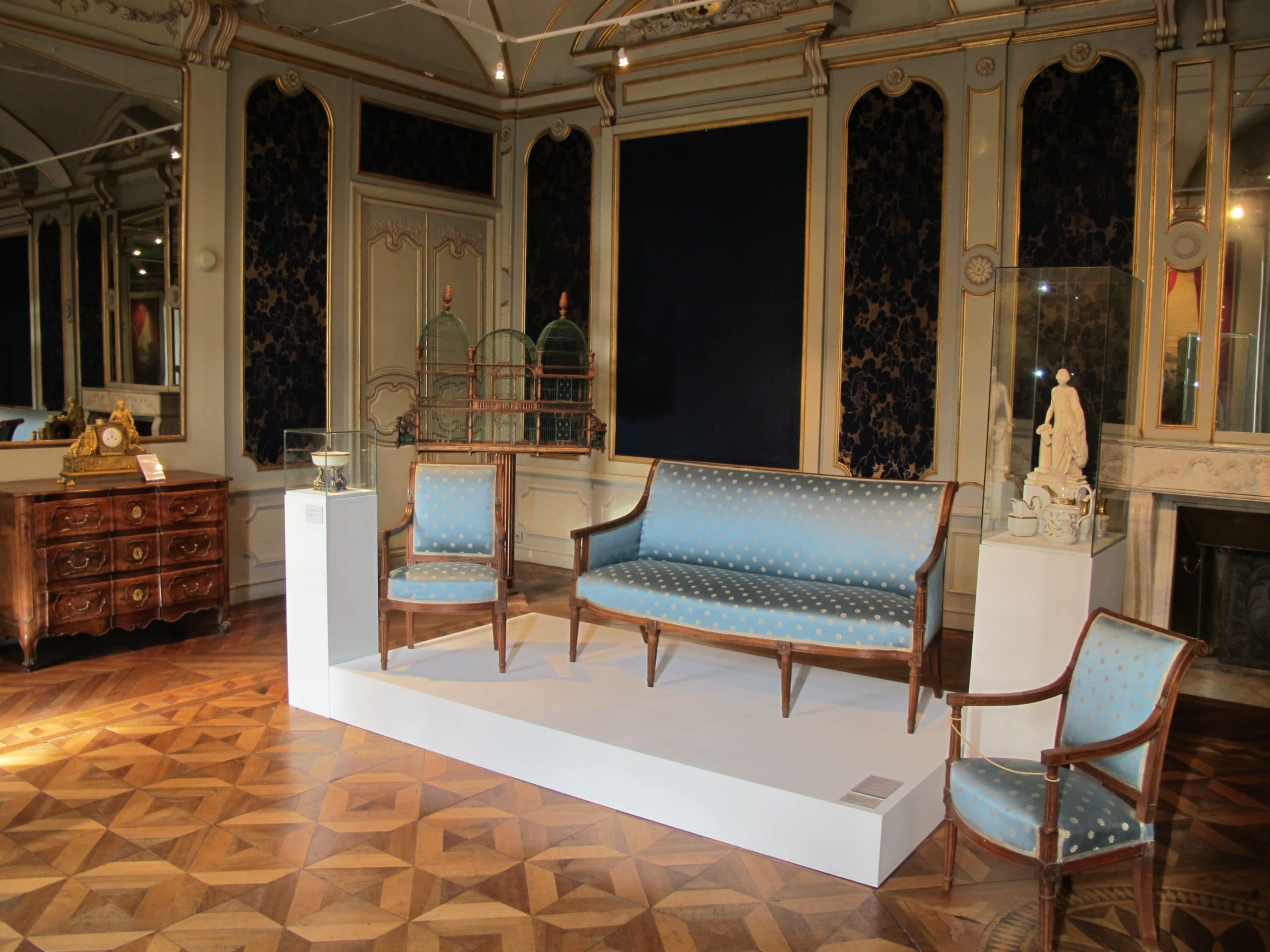
Instead, it concentrates on the Middle Ages to the nineteenth century. It is housed in the former bishop’s palace from the seventeenth century, and surrounded by beautiful gardens facing the cathedral.
The museum uses the exquisite furnished interiors as part of its displays, which also include ceramics and fine art.
The Blue Room is dedicated to the textile industry, and particularly that of denim. This universally used cotton fabric takes its name from Sergé de Nimes, though the indigo dye used in its production was grown in India and arrived into France via Genoa in Italy.
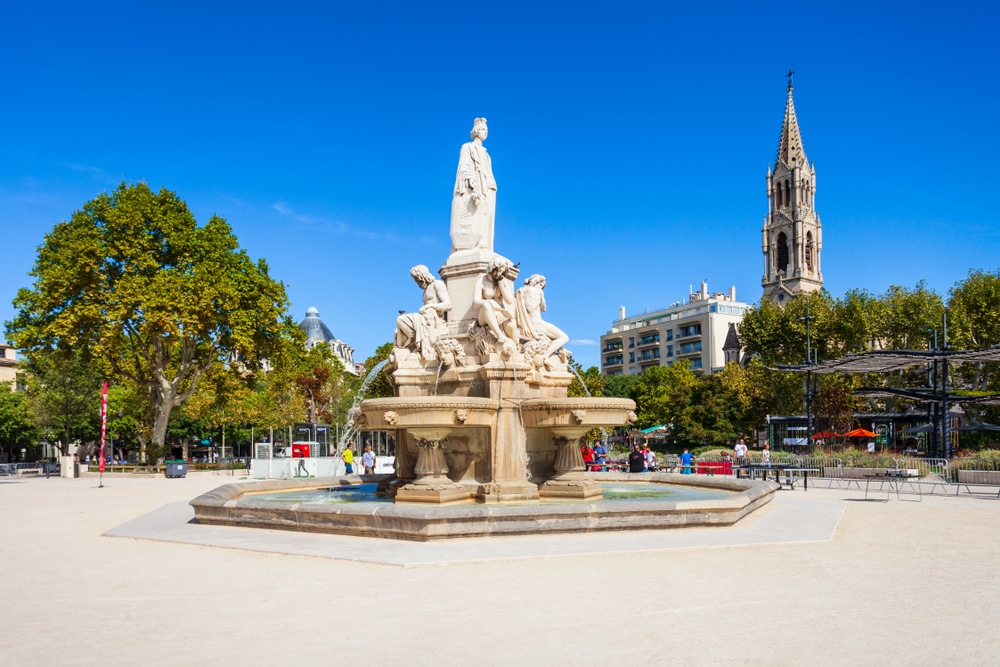
13. Fontaine Pradier
 Source: saiko3p / Shutterstock
The Jardins de la Fontaine aren’t the only impressive fountains in Nimes, with the Fontaine Pradier coming a close second.
Its evocative central figure is meant to be a representation of the city, with the quartet of seated statues around her depicting the region’s four major rivers.
Named after its sculptor, the white marble fountain was unveiled in 1851 can be found on Esplanade Charles de Gaulle.
An area of three hectares, the esplanade incorporates lawns and benches, and stretches towards the amphitheatre on one side and train station on the other.
14. Les Halles de Nimes
 Source: Premier Photo / Shutterstock
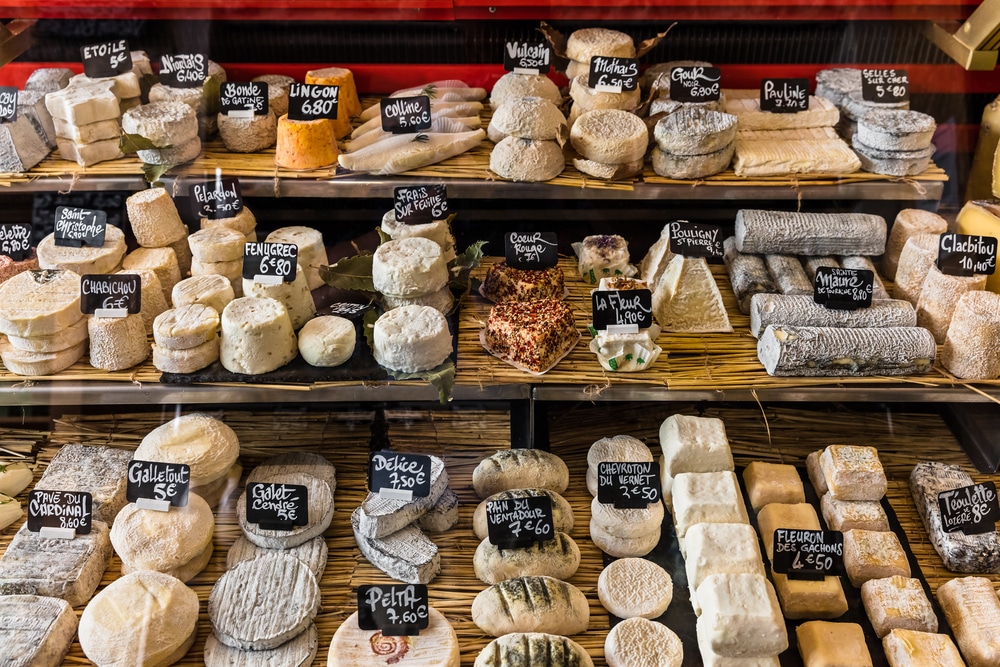
A must for any food-lover, Les Halles de Nimes is a covered market that has been helping to feed the residents of the city for over 120 years.
Consisting of stalls of independent local vendors, shoppers can find everything from fresh Mediterranean fish to Occitan cheeses.
There are also a number of bars and restaurants inside Les Halles, making it a great place to stop off even if you have no intention to shop.
Website: https://leshallesdenimes.fr/
15. Église Saint-Baudile
 Source: Santi Rodriguez / Shutterstock
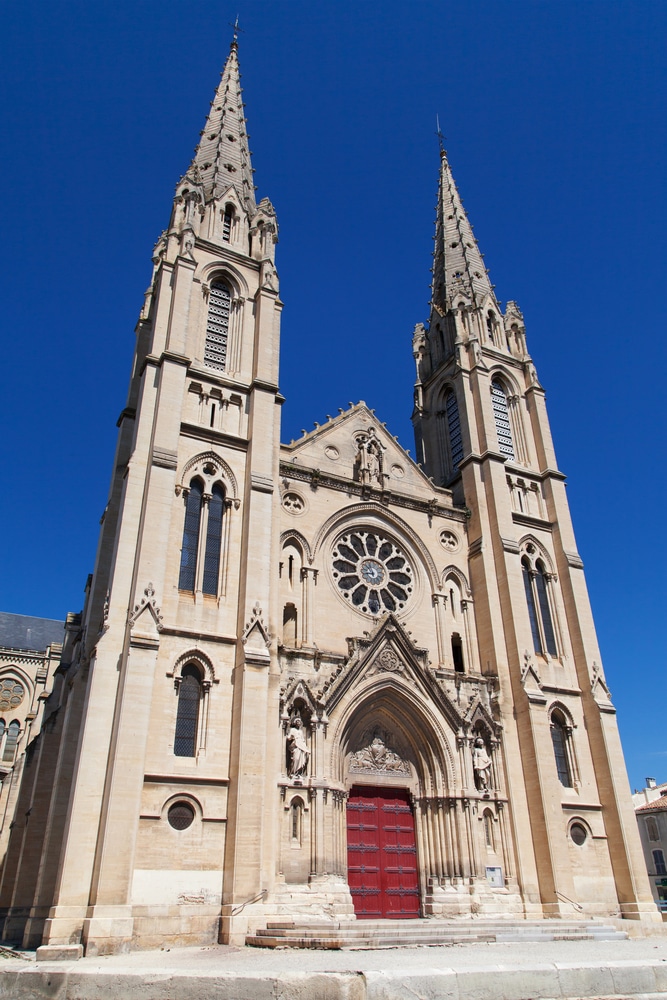
While not the oldest church in Nimes, the Église Saint-Baudile is the largest. Its twin towers hit a peak of 70 metres high, while its interior rises to a maximum height of 20 metres and is capable of welcoming 3,000 worshippers.
Built in just ten years between 1867 and 1877, it has a Neogothic appearance and sits beside the Porte d’Augusta.
The church is dedicated to Saint Baudile, a Christian martyr from Nimes, who can be seen on the main façade carrying a sword and a palm leaf – a symbol of martyrdom.