Once a Hanseatic City, Riga grew up on the banks of the Daugava, close to the river’s mouth on the Baltic.
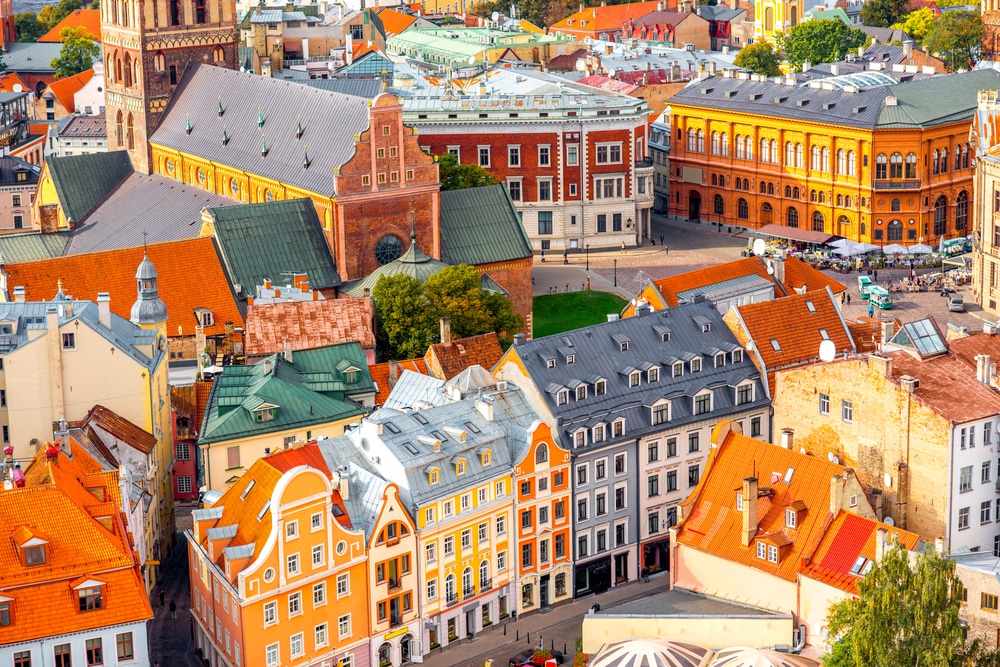
Riga’s Old Town is a UNESCO World Heritage site, showing why this city has been coveted by successive empires, leaving a diversity of monuments in their wake.
As well as a cute old core, Riga has a surprising amount of big-city grandeur, in the modern architecture on the left bank of the Daugava, the Eclectic architecture on the boulevards, the colossal Central Market in repurposed airship hangars and the ever-present Liberty Monument.
At the turn of the 20th century Riga had a newly affluent middle class, burgeoning population and a talented generation of architects, artists and designers. This all led to an explosion of Art Nouveau architecture, rivalling any city in Europe, and you can devote a big chunk of your trip to hunting down the finest examples.
1. Old Town (Vecrīga)
 Source: RossHelen / Shutterstock
With a charming silhouette of towers, steeples and gabled houses, Riga’s Medieval core was protected by walls until the middle of the 19th century.
When these were pulled down they made way for the twin boulevards that now arc around the Old Town on the east and north sides, while the old zigzagging moat became the Riga Canal.
Riga has experienced waves of invasion, particularly in the 20th century leaving the Old Town with some modern architecture stranded among the carefully restored churches and townhouses.
And though the architecture has changed, the fabric of the city and layout of these streets has hardly been altered since Riga was a member of the Hanseatic League in Medieval times.
Now the alleys and squares brim with museums, cafes, restaurants, art galleries, enticing little shops and big-hitting sights that encapsulate Riga’s story.
2. Riga Central Market
 Source: tichr / Shutterstock
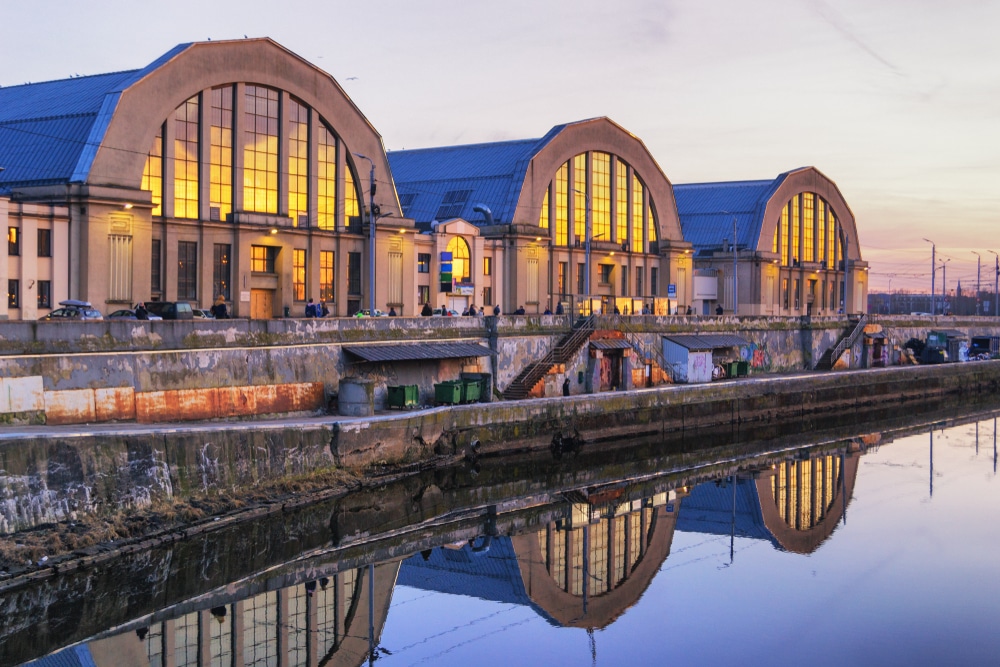
In five gargantuan pavilions, the Riga Central Market is the largest market and bazaar in Europe. It all lies a short distance from the Old Town by the right bank of the Daugava River.
Constructed between 1924 and 1930, the market complex mixes Art Deco and Neoclassical elements. The distinctive shape of the pavilions comes from the metal frameworks, which are actually repurposed from German World War I zeppelin hangars.
The Riga Central Market needs to be seen to gauge the awesome scale of the operation and the crazy whir of activity each day.
Much of what you’ll see is local and seasonal produce, so it’s an adventure for food-lovers too: The five pavilions are specifically devoted to dairy, fish, meat, fruit and vegetables and gastronomic products.
There are some items to tick off if you want to be authentic. You could try a mug of kvass, taste smoked eel or other smoked fish, grab a pot of hemp seed butter (sometimes described as Latvia’s black caviar), sample pickled cucumber and pick up a fresh rye bread loaf.
Website: https://www.rct.lv/en/
3. Riga Cathedral
 Source: Grisha Bruev / Shutterstock
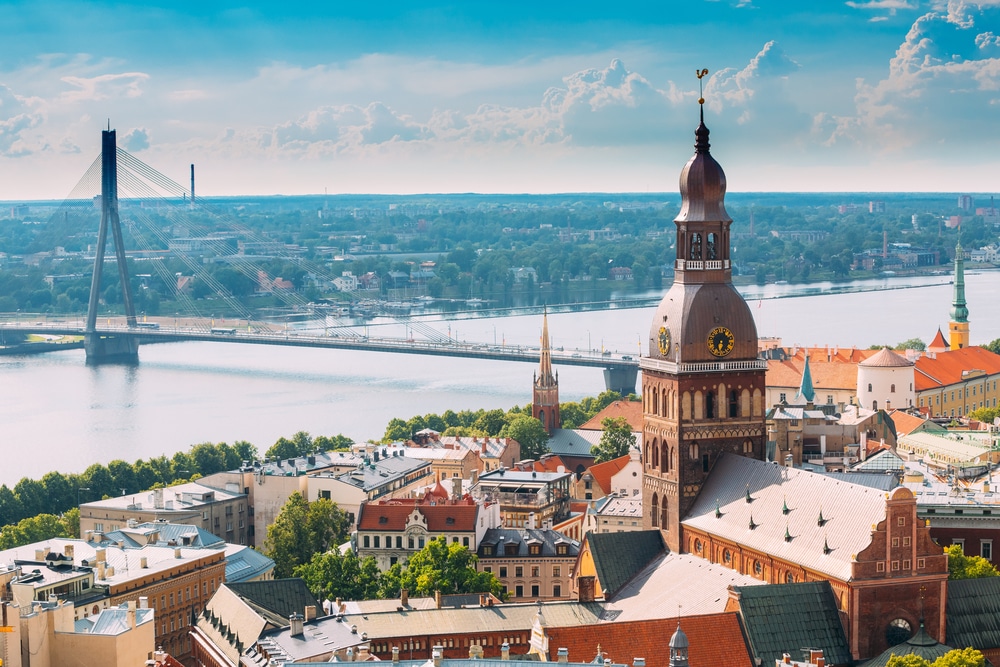
Touted as the largest Medieval church in the Baltic states, Riga’s Lutheran cathedral has a history going back to 1211 and has seen a lot of change in its time.
There’s a spectrum of architecture from Romanesque to early-Gothic, Baroque and Art Nouveau here. The Iconoclasts gutted the church of its fittings during the Reformation in 1524, while the Baroque onion dome cresting the tower is from a reconstruction in 1775.
In the Soviet period the nave became a concert hall, complete with air-conditioning and an automatic sprinkler system.
Although the cathedral is still an important concert venue, those modern amenities were removed in an ongoing restoration that returned the copper cladding on the roof of the nave and updated the tower’s historic wooden support structure.
There are lots of captivating historic details that have stood the test of time, like 19th-century stained glass, the acclaimed organ from the 1880s and the early-Gothic cloisters from the beginning of the 13th century.
There you can view coats of arms of prominent families and guilds in niches above the arcades, as well as ledger stones, the tower’s original weathervane and lots of fascinating architectural elements excavated around the Old Town.
Website: https://doms.lv/en
4. Riga Town Hall Square
 Source: Radowitz / Shutterstock
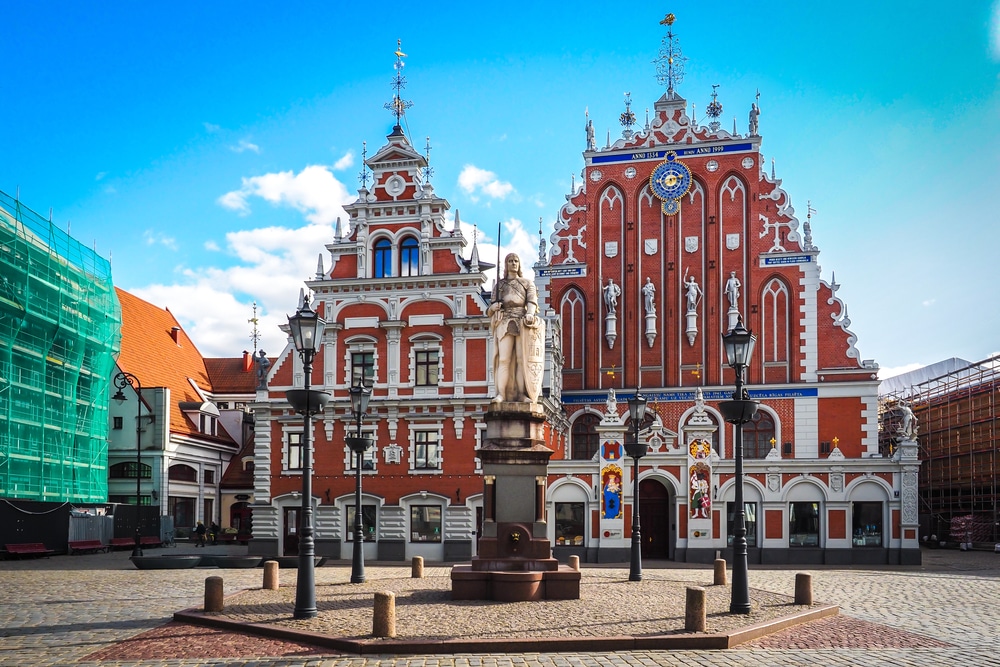
Riga’s central square is a historical document all of its own, recording Riga’s turbulent past and recent revival. This space was set out as early as the 13th century as a market place and following a lot of restoration work would now be familiar to a pre-War visitor.
The square was obliterated in World War II and its historic architecture was demolished instead of being renovated during the Soviet period.
One generation later and the Town Hall and the emblematic House of the Blackheads have been returned.
Reminding you of Riga’s German past is the Roland statue, a common feature of market squares in northern and eastern German cities, symbolising city privileges.
The original from the late-19th century can be seen in St Peter’s Church, and this copy was installed in 1999. In a tradition going back five centuries, Riga’s Christmas tree is lit and decorated on the Town Hall Square every year.
5. House of the Blackheads
 Source: S-F / Shutterstock
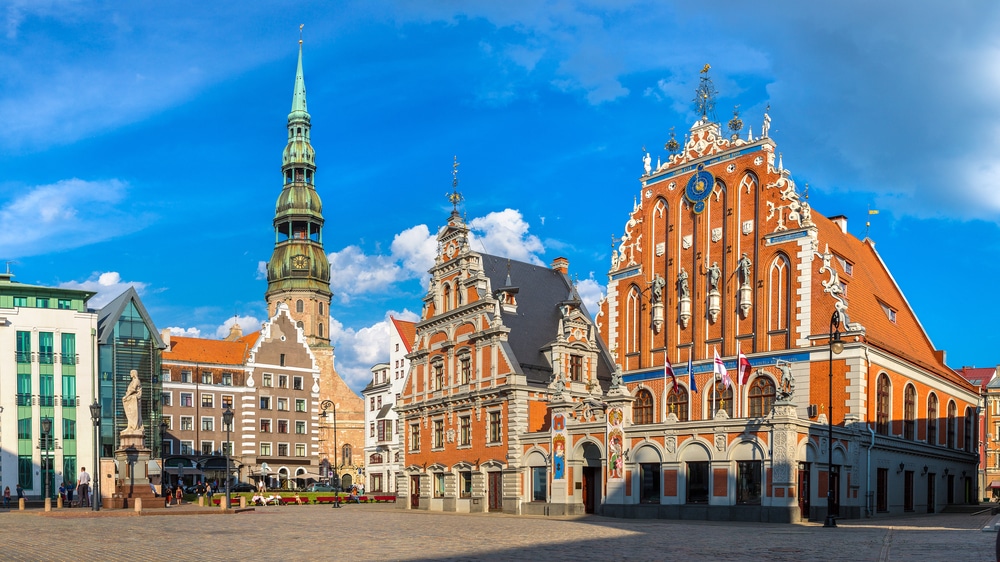
The pride of the Old Town is this stately hall, raised for the Brotherhood of the Blackheads towards the beginning of the 14th century.
This was a guild for unmarried ship-owners, foreign citizens and merchants, and the facade as it appears today is from a Mannerist facelift from the early 17th century.
Being a guild with a lot of bachelors, the Blackheads were known across the Baltic for their social activities, holding concerts and parties, but also collecting fine art.
The House of the Blackheads was badly damaged and then pulled down, and this faithful reconstruction was financed by the prominent economist and banker Valērijs Kargins.
The building’s position in Riga’s cultural scene has also been revived, and it hosts dinners, concerts, receptions and exhibitions. You can tour the interior to check out the Medieval cellars, intricate ceiling paintings, stuccowork, chandeliers and an extraordinary collection of silverware produced in Riga.
Website: https://www.melngalvjunams.lv/en
6. Panorama Riga Observation Deck
 Source: RAndrei / Shutterstock
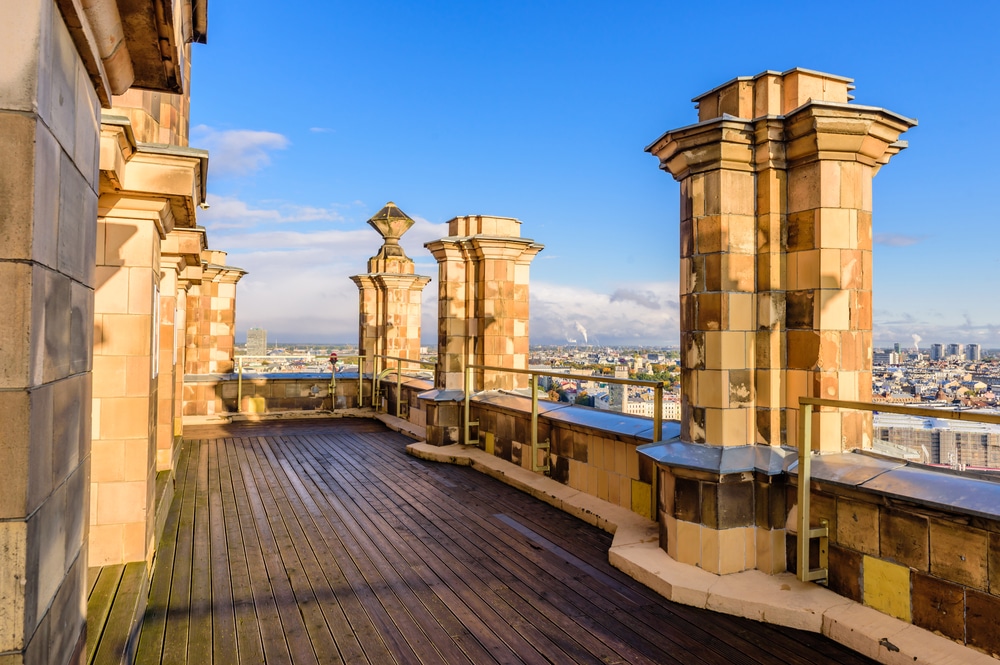
A striking holdover from the Soviet period, the Latvian Academy of Sciences building is a tower in the Socialist Classicist style standing close to the Central Market in the Maskavas Forštate area.
Unveiled in 1961, this was Latvia’s first skyscraper, rising to 121 metres and one of the tallest reinforced concrete buildings in the world at the time.
In the summer you can go up to the observation deck on the 17th floor, 65 metres above an otherwise low-rise city. The view is completely unobstructed, including the five bridges on the Daugava River, the Central Market and the spires, red roofs and gables of the Old Town.
The river’s left bank is littered with modern architecture, including the pyramid-like National Library of Latvia building (2014) and the sky-scraping Riga Radio and TV Tower (1989), which at 368.5 metres is the 16th-tallest self-supporting structure in the world.
Website: https://panoramariga.lv/
7. Ethnographic Open-Air Museum
 Source: Nadezhda Kharitonova / Shutterstock
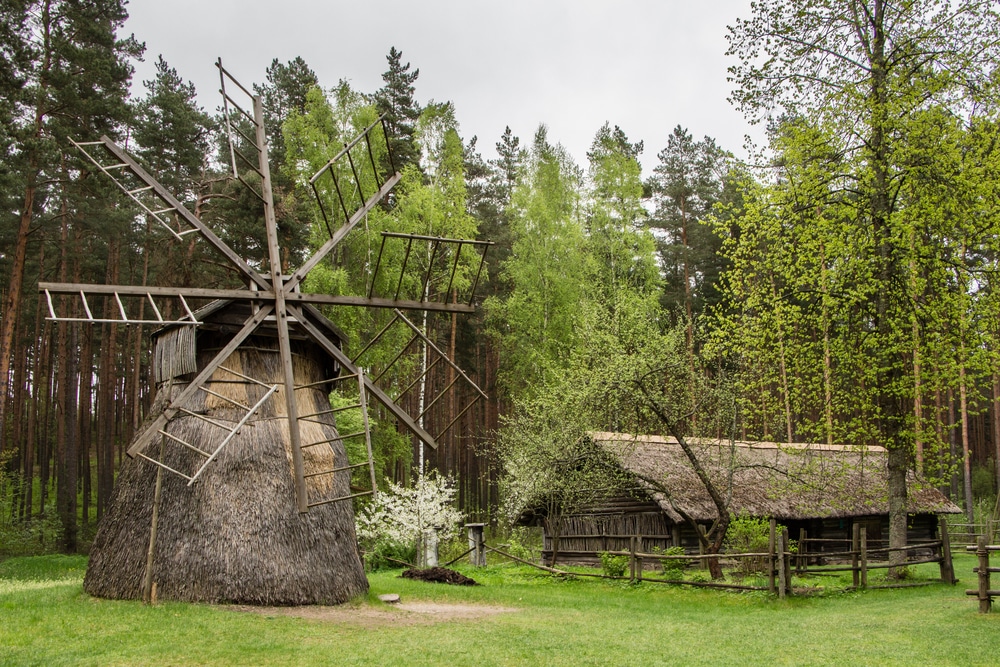
Latvia’s old, rural ways of life are preserved at a lovely spot on the wooded shores of Jugla Lake. The museum is around 10 kilometres from the Old Town but you can get out here by car or bus within 45 minutes.
The museum was founded in 1924, based on the Swedish Skansen model, showing off genuine architecture from all four of Latvia’s historical regions: Kurzeme, Latgale, Vidzeme and Zemgale.
There are 118 buildings here, sparsely located in 87 idyllic hectares. On your walk you’ll see a windmill, fisherman’s house, Catholic, Lutheran and Orthodox churches, a bathhouse and a lot more, all well-preserved and containing a trove of artefacts.
May to September the museum is alive with folk artisans like blacksmiths, potters, weavers, woodworkers and more plying their trade, and you’ll get to test your skills and also try out traditional Latvian games.
Website: http://brivdabasmuzejs.lv/en/
8. St Peter’s Church
 Source: Puripat Lertpunyaroj / Shutterstock
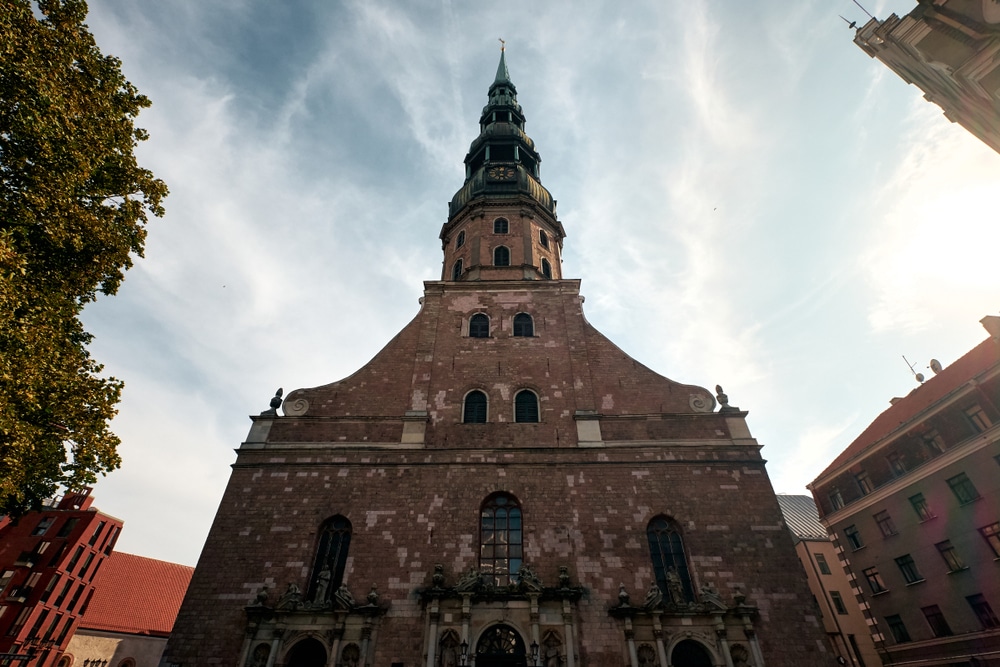
Integral to the city’s skyline, the tallest church in Riga climbs over Reformation Square. That spire is more than 123 metres high, and its tower was the tallest wooden structure in Europe up to World War II.
In a pattern repeated across the Old Town, this monument burnt down in the war, but here restoration work began as early as the 1950s.
The earliest mention of St Peter’s Church is from the beginning of the 13th century, and traces of that first building remain in the side walls and a few pillars in the nave. The building was expanded in the 15th century, and was then badly damaged by Iconoclasts in 1524.
One of the treasures destroyed at that time was an altarpiece by German Master Albrecht Dürer. Among the many enthralling things to see inside are Riga’s original Roland statue, as well as a beautiful late-Renaissance candelabra looted by the Germans in the war and returned to the church in 2012.
Make sure to catch the elevator to the observation deck, 72 metres over the city streets for an inspiring panorama of Old Riga and the city beyond.
9. Alberta Iela (Alberta Street)
 Source: Evgeniy Eivo / Shutterstock
Riga was once awash with Art Nouveau architecture, which flourished at a time of cultural and economic confidence at the turn of the 20th century.
A great deal of this was lost during a half century of neglect and destruction, but plenty of fine examples have since been recovered.
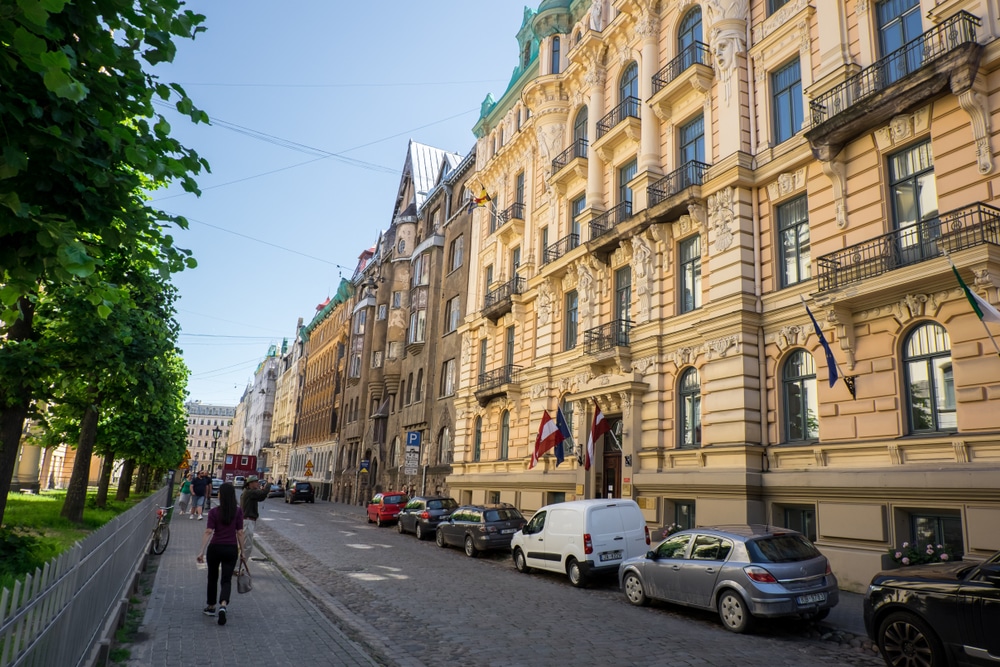
Alberta iela, a few minutes north of the Old Town, is remarkable because it was built almost in one go in the 1900s, mostly by architect and civil engineer Mikhail Eisenstein (1867-1920).
Every property is preserved as an architectural monument, and as well as lavish private residences these buildings also house the embassies for Hungary, Ireland and Belgium. No two houses are the same, and a sense of whimsy prevails in the profuse reliefs on No. 8 (1903) and No. 4 (1904), which has a beautiful curving window in its central bay.
With its loggia, No. 1 (1901), designed by Heinrich Scheel 1829-1909), looks like something out of the Italian Renaissance and was home to the writer Zenta Mauriņa (1897-1978).
10. Riga Jugendstila Centrs (Riga Art Nouveau Centre)
 Source: Lana B / Shutterstock
You’ll have an exciting opportunity to see the interior of one of the fine Art Nouveau residences on Alberta iela, staffed by a team in period costume.
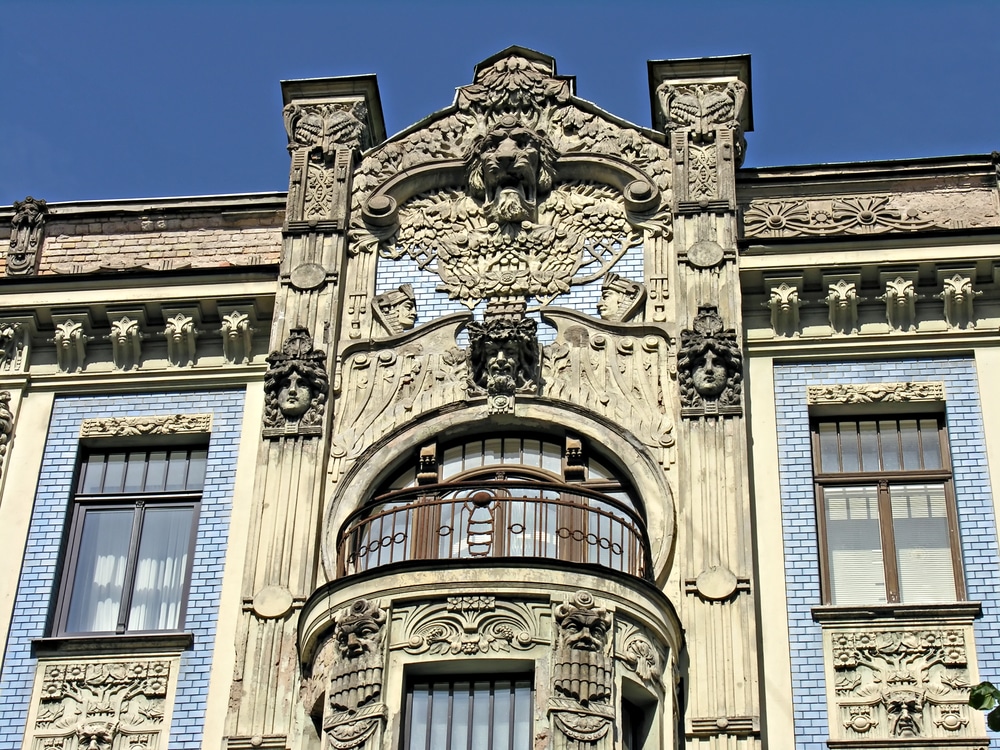
This gorgeous building at No. 12 dates to 1903 and was designed by the famed Latvian architect Konstantīns Pēkšēns (1859-1928), in the National Romantic style typical of Art Nouveau in Riga.
Outside you can take a moment to admire the detailed animal and vegetal mouldings on the gable, portal, balconies and the cornice. Inside, there’s sumptuous painting throughout, but especially on the ceiling of the main stairway.
This was most likely the work of Janis Rozentāls (1866-1917) who lived here in the early 1900s. The rooms are decorated entirely with period-appropriate Art Nouveau furniture, and the exquisite oak panelling, light fittings and stained glass windows have all been meticulously restored.
The museum has a fun interactive area in the basement where you can dress up in period garb for a photo.
Website: http://www.jugendstils.riga.lv/eng/
11. Latvian National Museum of Art
 Source: MaraZe / Shutterstock
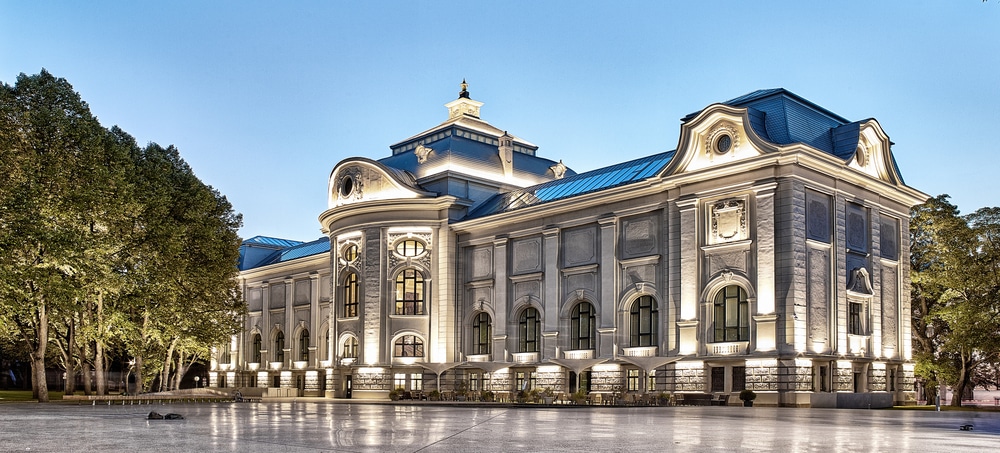
If you’d like a crash course in Latvian fine art there’s no better place to start than this grand neo-Baroque building on the north corner of the Esplanāde park.
This purpose-built venue was ready in 1905 and is a stage for mostly Latvian painting from the 18th to the middle of the 20th century. You can admire the works of luminaries like Janis Rozentāls, Kārlis Hūns, Jānis Valters and Leo Kokle, whose paintings are engraved in the national consciousness.
The collection spans movements like Neoclassicism, Romanticism, Symbolism, Realism, Impressionism and Art Nouveau.
A renovation to the building, ready in 2016, added some smart touches like a corridor that allows you to see the paintings not currently on show, waiting in storage.
You can also head up to the two roof terraces for views over to the Latvian Academy of Sciences Building, the Riga Radio and TV Tower and the Nativity of Christ Cathedral.
Website: http://www.lnmm.lv/en/lnma
12. Museum of History and Navigation
 Source: Evgeniy Eivo / Shutterstock
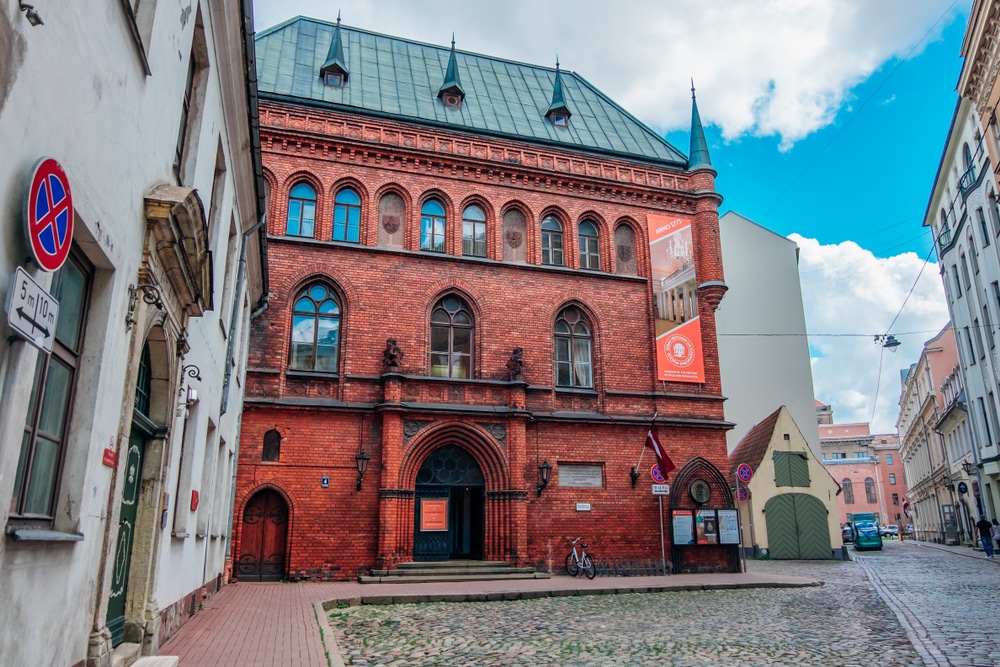
In the 1890s a Medieval monastic building by the cathedral was reworked to house this museum. The Museum of History and Navigation gives a comprehensive account of the history of the city, and goes back to the private holdings of the prominent 18th-century Riga doctor Nikolaus von Himsel.
In 16 halls you’ll track Riga’s growth from a trading outpost for the Vikings to a member of the Hanseatic League in the 13th century, from the periods spent under Polish, Swedish and Russian yoke to Latvian independence.
There’s a thrilling array of pieces to browse, including weights and measures from the days of the Hanseatic League, stunning pieces produced by Riga’s silversmiths, the 16th-century sword of the city’s executioner, maps navigational instruments, antique porcelain and a great deal more.
Website: http://www.rigamuz.lv/rvkm/en/
13. Mentzendorff House
 Source: MoLarjung / Shutterstock
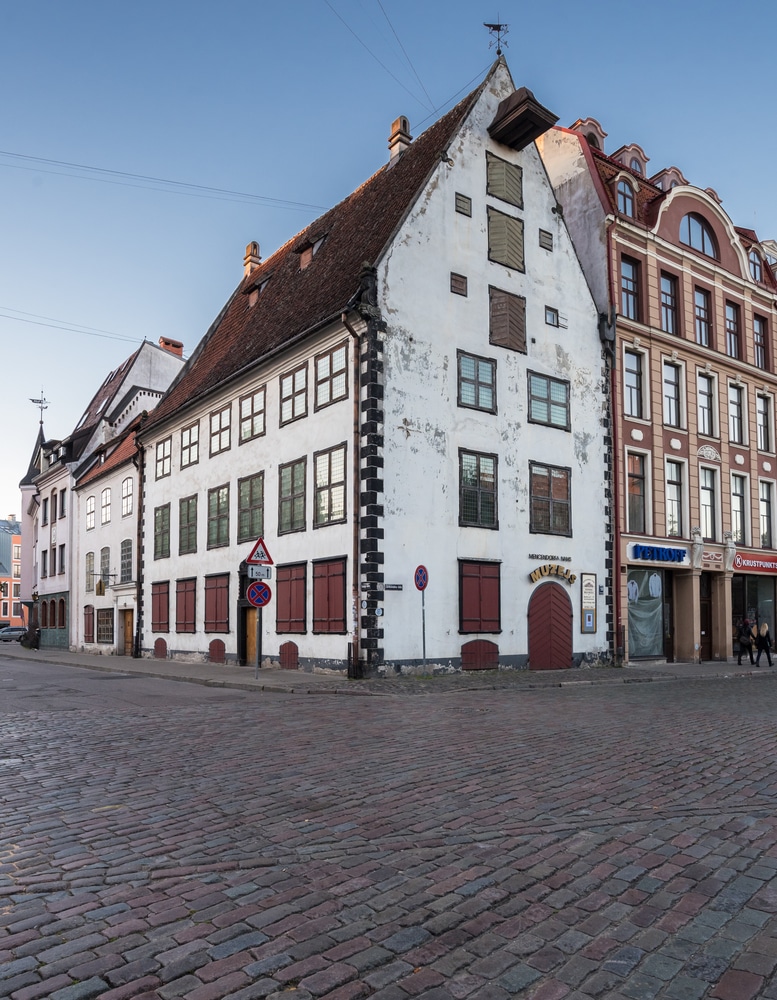
At this restored 17th-century townhouse you can find out how Riga’s affluent citizens lived in the 1600s and 1700s. The property was built for the master glazier, Jürgen Helms in 1695 and is named for its last owners, the Mentzendorff merchant family, who lived here at the turn of the 20th century.
Later the house had a tea shop and pharmacy on its ground floor. During restoration work some gorgeous 18th-century wall and ceiling paintings were brought to light for the first time in more than a hundred years.
These are complemented by period furniture and decorative pieces from the Museum of History and Navigation, while as a nod to Helms, a contemporary glass making workshop has been established in the vaults of the cellar. The attic meanwhile is used as a space for temporary exhibitions, changing every few weeks.
14. Riga Motormuseum
 Source: amnat30 / Shutterstock
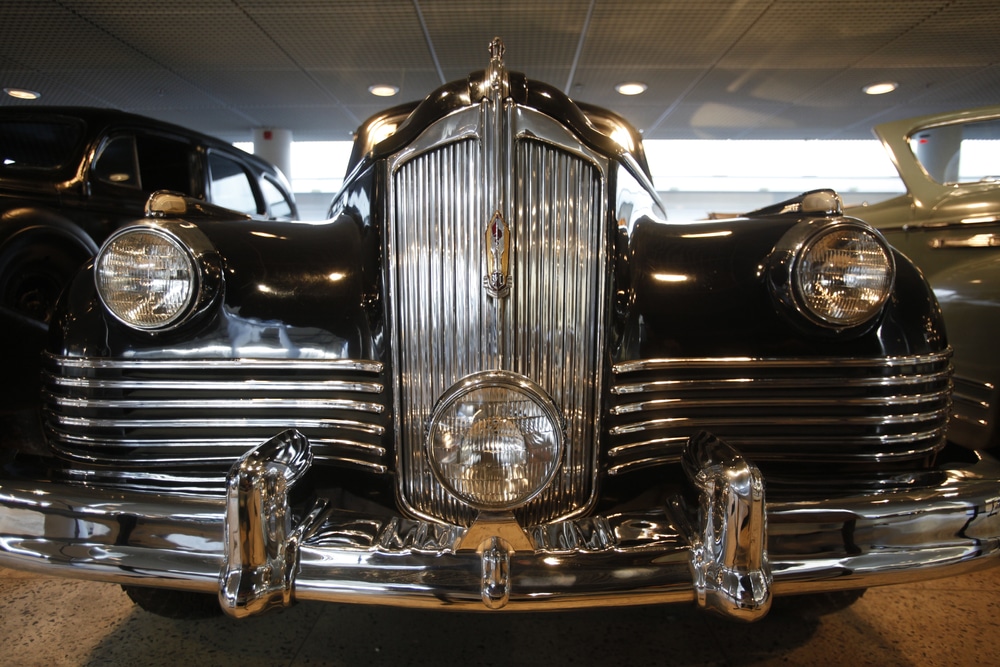
The Biķernieki Complex Sports Base in the east of the city is home to a world-class motoring museum with the largest collection of antique vehicles in the Baltic region.
This was revamped as recently as 2016, and specialises in vehicles produced in Latvia, by Russo-Balt, RAF and Ford-Vairogs, as well as Russian marques uncommon in Western Europe, like VAZ and GAZ.
In two immense warehouse-style halls you’ll come across some real rarities, all beautifully presented.
Among them is an early car produced in 1901 by the Latvian-American motoring pioneer Augusts Krastiņš, a Russo-Balt fire truck from 1912 and one of the only surviving examples of a pre-Audi Auto Union CD V16 hill-climbing race car from 1938.
Also compelling are vehicles from the Kremlin fleet, like a Rolls-Royce Silver Shadow, crashed by Leonid Brezhnev in 1980, and a ZIS-115 armoured limousine that transported Joseph Stalin.
Website: http://www.motormuzejs.lv/index.php/en/
15. Three Brothers
 Source: William Perugini / Shutterstock
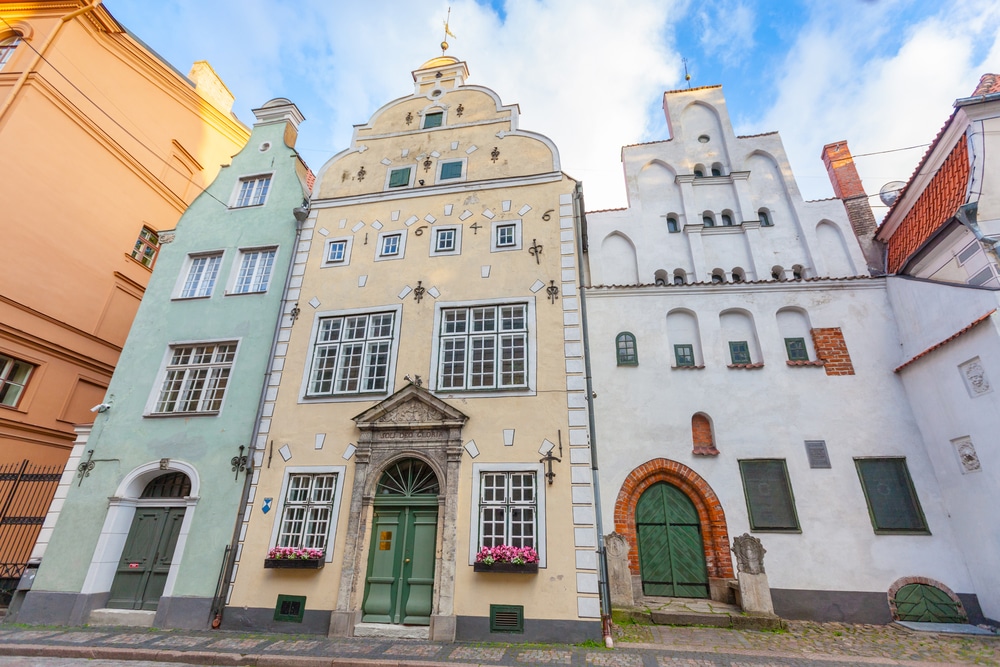
A stone’s throw from the cathedral in the Old Town is a set of three preserved residences recently awarded the European Heritage Label from the European Commission.
Affectionately known as the Three Brothers, the trio can be found at Nos. 17, 19 and 21 on Mazajā Pils ielā. When they were built they were on the city’s outskirts in a neighbourhood for craftsmen.
The oldest is No. 17 (c. 1490), a captivating artefact from the Hanseatic days and easily identified by its crow-stepped gables. This is the oldest stone-built residential building in Riga.
Then to the left you have the curving Mannerist gable of No. 19, from 1646 accompanied by a doorway pediment.
And on the far left is the narrow facade of No. 21, originally from the end of the 17th century but reworked in the 19th century. Fittingly, the Three Brothers now house the State Inspectorate for Heritage Protection.
16. Mežaparks
 Source: Ingus Kruklitis / Shutterstock
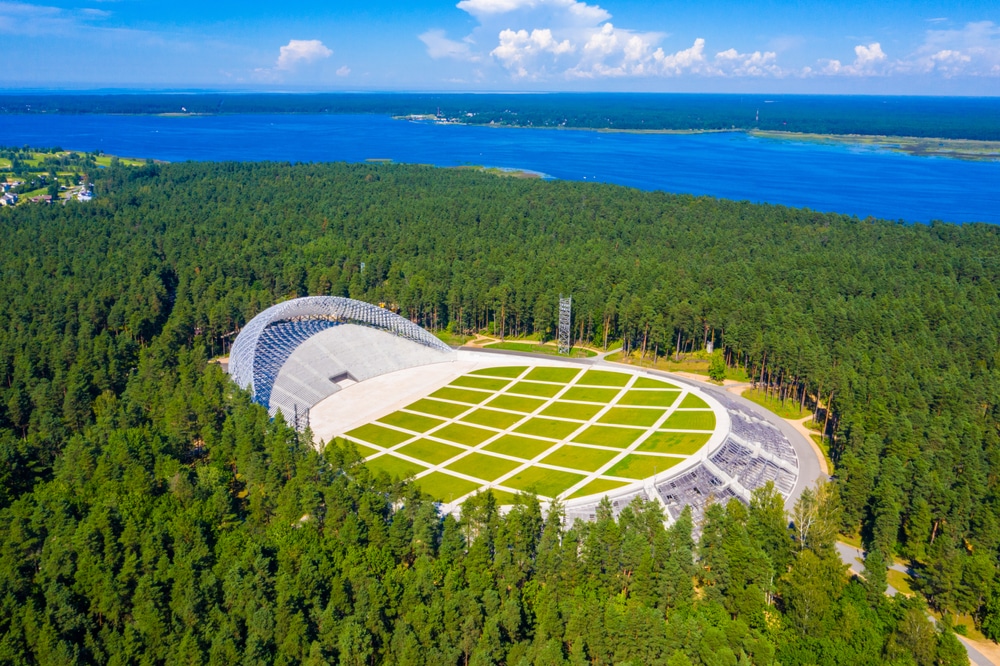
At the turn of the 20th century the shore of Lake Ķīšezers in the north of Riga became a favourite summer escape for the city’s moneyed residents.
Previously this had been the site of Swedish military camp in the 17th century, and in 1901 it was chosen for a Garden City, mixing a large public park with a community of villas integrated with the pine-covered hills. There are plenty of examples of Eclectic and Art Nouveau architecture from that time.
A large recreation park opened here after World War II, and you can make the trip to Mežaparks to amble or cycle in the forest, catch concerts and theatre performances, take a lakeside picnic, visit Riga Zoo, sunbathe on the beach or try water activities like paddleboarding.
17. Museum of the Occupation of Latvia
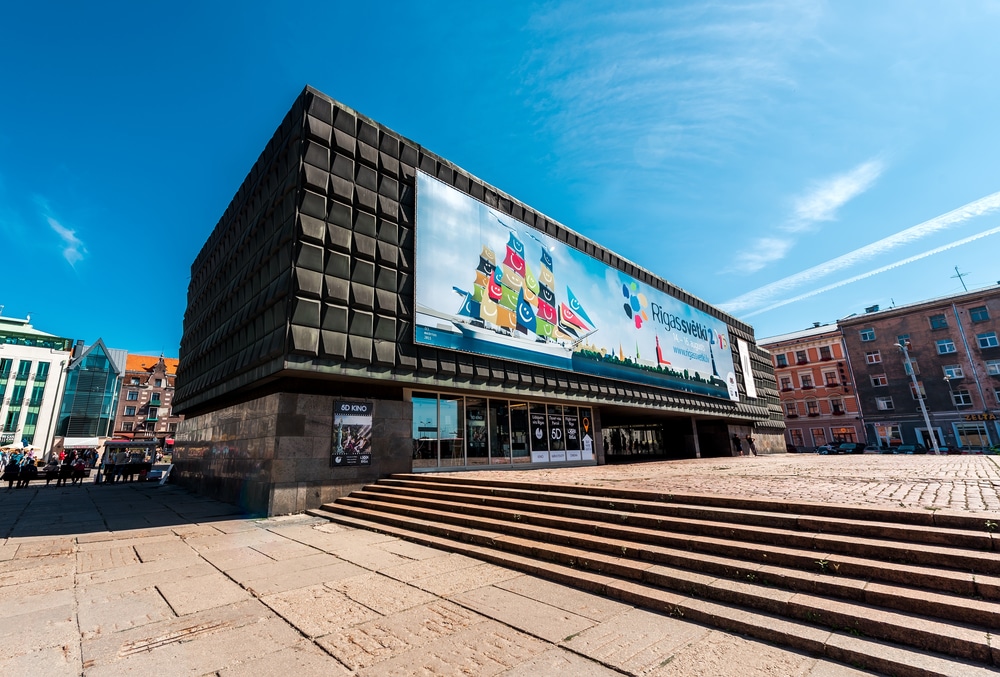 Source: Alex Tihonovs / Shutterstock
For more than 50 years between 1940 and 1991 Latvia was under a totalitarian regime, leaving the country unrecognisable from the period of independence that followed the First World War.
This time under the USSR then the Nazis and then the USSR again is chronicled at a museum that opened in 1993 and at the time of writing could be found at temporary premises on Raiņa Boulevard .
Calling on an inventory of around 60,000 objects and a large audiovisual library, the museum explains what happened to its people, land, culture, language and institutions during successive regimes.
You’ll learn about the life of Latvians in exile during this period, Nazi deportation, wartime resistance activity and the brutal existence in Siberian gulags where Latvian nationalists were sent after World War II.
Website: http://okupacijasmuzejs.lv/en/
18. Vērmane Garden
 Source: MarinaDa / Shutterstock
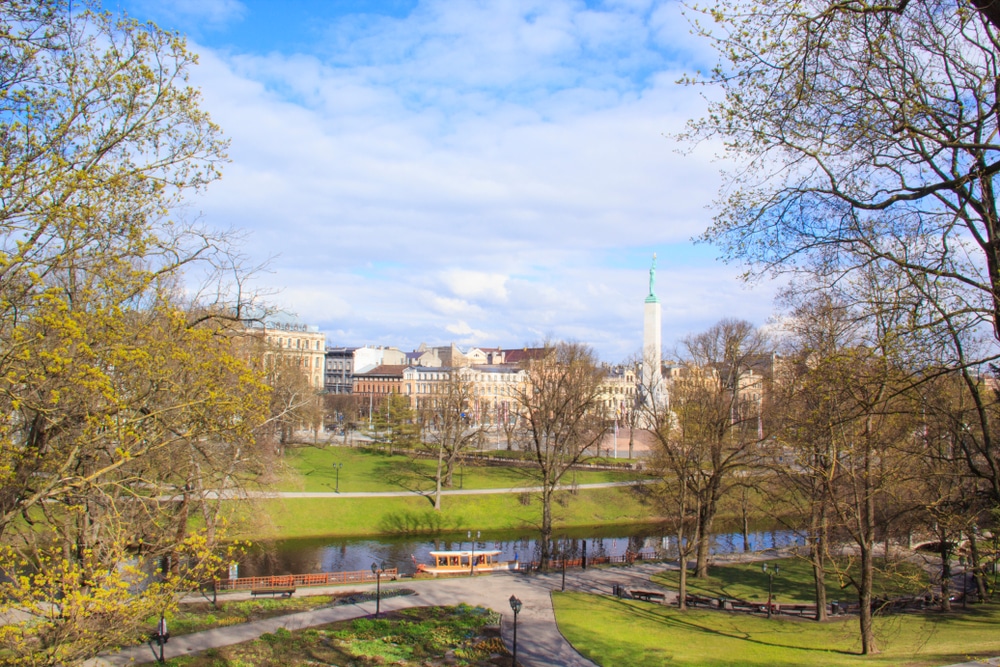
The second-oldest public park in Riga sits not far east of the Old Town, by the University of Latvia. The story of Vērmane Garden goes back to the 1810s, when the suburbs were being remodelled after being razed by fire before the French Siege of Riga (1820).
This plot of land was donated by one Anna Gertrude Vērmane, widow of a German merchant, along with a big sum of money, on the condition that it forever remain available to the public.
With paths, lawns, cafes, ice cream vendors, mature specimen trees, formal gardens and lots of monuments, Vērmane Garden is a pretty place to go for a wander.
Look out for the statues of Anna Gertrude Vērmane, Krišjānis Barons (1835-1923), the writer who compiled and preserved traditional Latvian folk songs (dainas) and World Chess Champion Mikhail Tal (1936-1992).
The elegant four seasons fountain dates to 1869, while the bandstand, with a series of concerts in summer, dates to 1950.
19. Museum of Decorative Arts and Design
 Source: Cezary Wojtkowski / Shutterstock
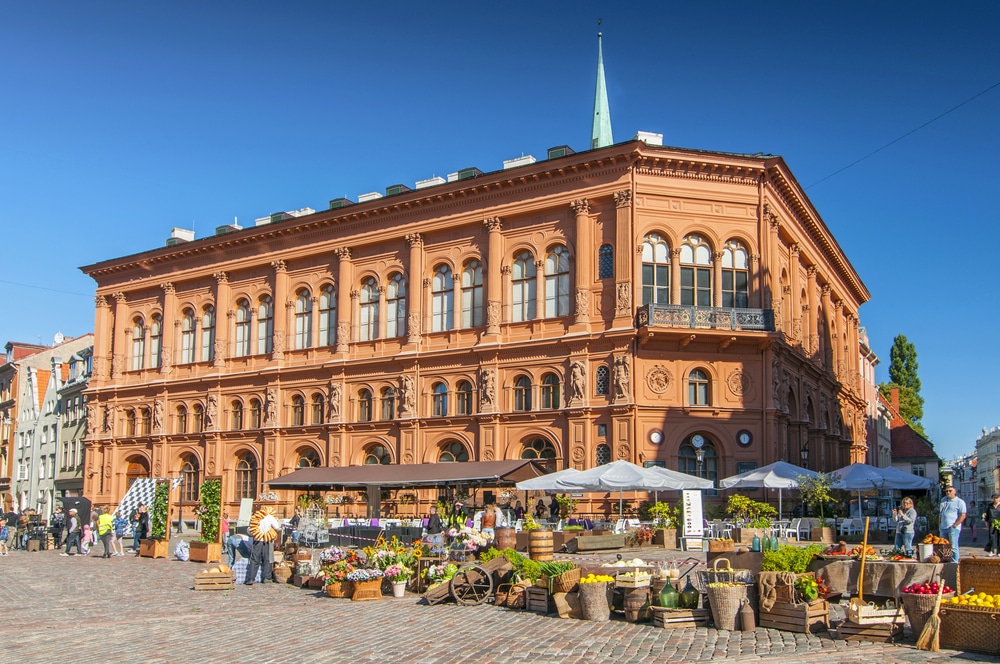
In 1989, the oldest-surviving stone building in Riga became the location for this museum showcasing the work of Latvia’s top designers from the 19th century to the present.
The building is the former Church of St George, dating back to the start of the 13th century and used as a warehouse since the Reformation.
On the first two floors you can browse pieces from the extensive collection, covering seven distinct categories: Ceramics, glass art, textiles, leather, metal, decorative wood and miscellaneous design.
The museum holds the largest existing collections of works by Sigismunds Vidbergs, Aleksandra Beļcova and Romans Suta, held as the founders of Latvian Modernism, and the original members of the influential porcelain painting studio, Baltars.
Take a peek at the temporary shows, dealing with Latvian and international design, while there’s a wide range of workshops, teaching crafts like textile printing and woodblock printing.
Website: http://www.lnmm.lv/en/mdad
20. Cat House
 Source: Matyas Rehak / Shutterstock
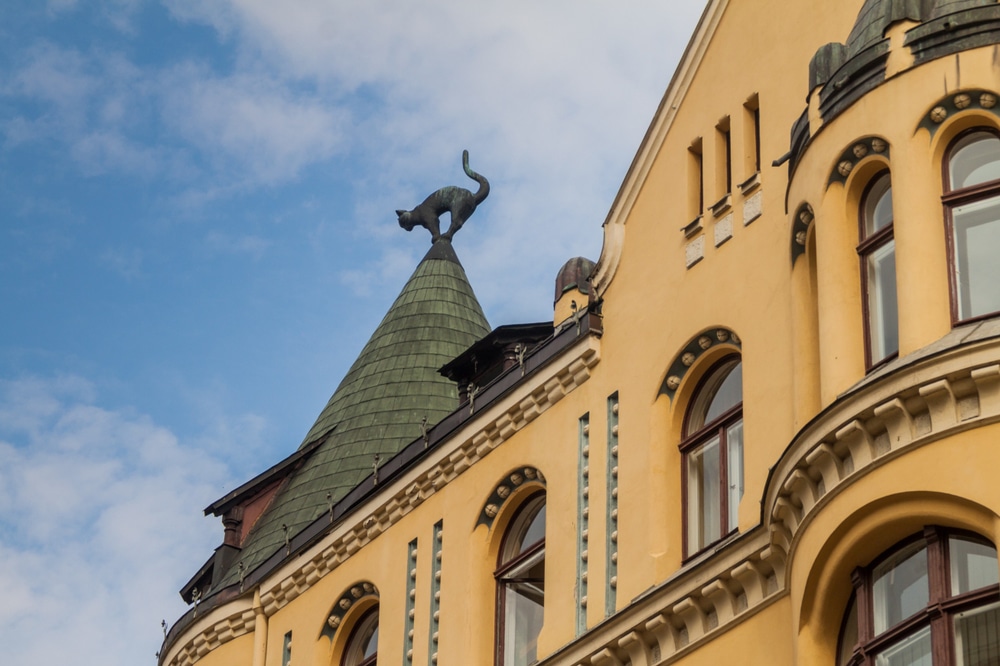
This beloved landmark in the Old Town has become a symbol for Riga, picking up its share of folk tales. To be so ingrained in the city’s culture, the Cat House is relatively young.
Completed in 1909, this Art Nouveau residence was designed by Friedich Scheffel (1865-1913), one of the leading architects in Riga at the time.
The architecture, with a step gable and turrets, is inspired by the Medieval period, and capping the two conical roofs are the namesake cats. These are cast in copper, and have their backs up.
The tale goes that the pair were placed here with their rears facing the City Hall, to spite the City Council, or the House of the Great Guild because of a grudge against the guild.
The first story revolves around a dispute about planning permission, while the latter is to do with being barred from joining the guild.
21. Freedom Monument
 Source: Ingus Kruklitis / Shutterstock
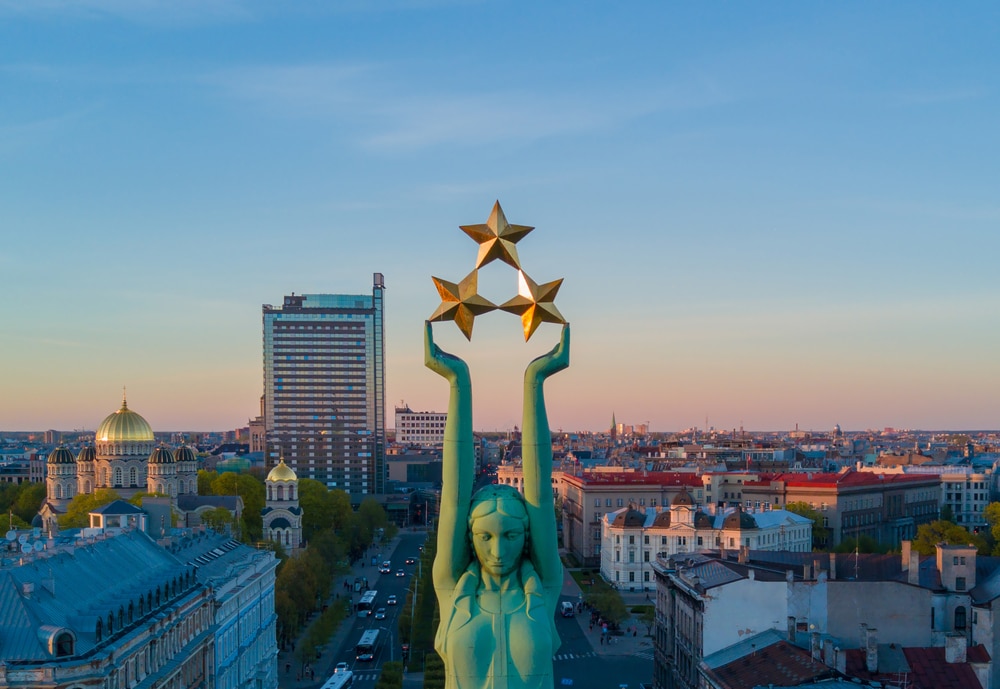
Raised in 1935 as a tribute to those who died in the Latvian War of Independence (1918-1920), the Freedom Monument remains a symbol of Latvian independence and a point of reference for the city.
Standing tall beside the Riga Canal on Brīvības iela, the column rises amid the greenery of Bastejkalns Park, laid out on the old fortress ramparts in the 19th century.
The 42-metre travertine column is crowned with an image of Liberty holding up three stars, each symbolising one of Latvia’s historical regions. As you approach, you’ll notice just how intricate the base of the Freedom Monument is.
In all there are 56 works of sculpture in 13 groups on five levels, carved from travertine and red granite.
These reliefs and statues depict scenes and characters from Latvian history and culture, also representing national qualities like spiritual strength, work ethic and independent spirit.
Unusually for a national monument, this landmark was spared during the soviet period, partly to keep the peace but also because of its artistic value.
22. National History Museum of Latvia
 Source: Zhank0 / Shutterstock
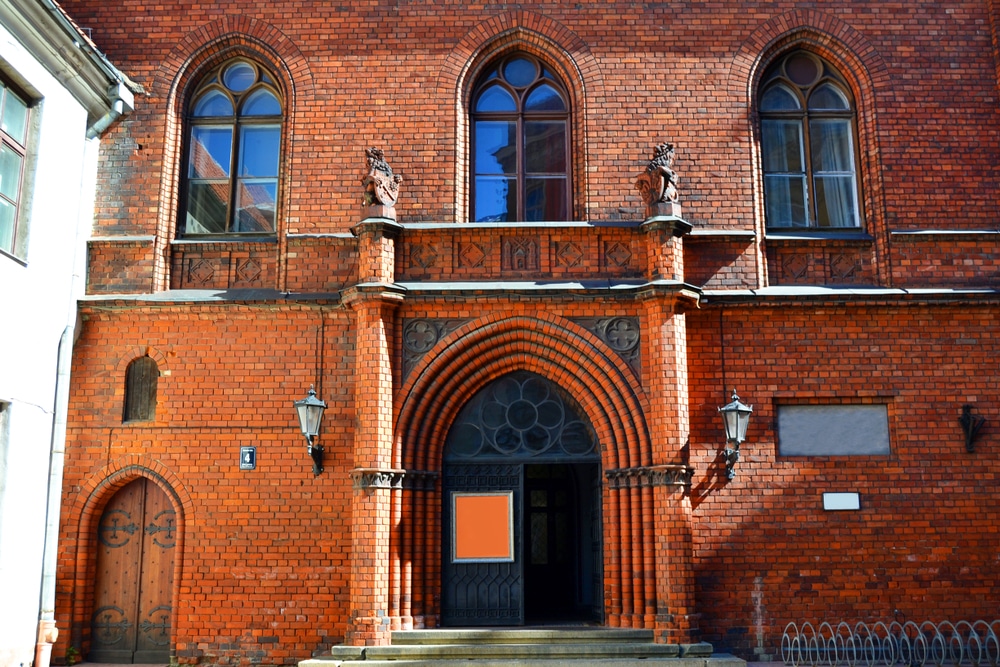
A few steps from the freedom monument you’ll find the current location for a museum that was based at Riga Castle until a fire in 2013.
The long-term plan is to move the National History Museum back to the castle, but in the early-2020s the museum was still housed at a former University of Latvia building on Brīvības iela.
On three floors you’ll glimpse the astonishing depth of the museum’s reserves, dealing with Latvia’s archaeology, ethnography, art and taking you from prehistory to the 20th century.
On display are objects from ancient hoards and burials, traditional dress, Medieval weapons, religious images, coins and much more.
Also worthwhile is a series of rooms, each decorated to evoke a different era, be it Biedermeier, Art Nouveau, Art Deco or the Soviet period.
Website: http://lnvm.lv/en/
23. Nativity of Christ Cathedral
 Source: dimbar76 / Shutterstock
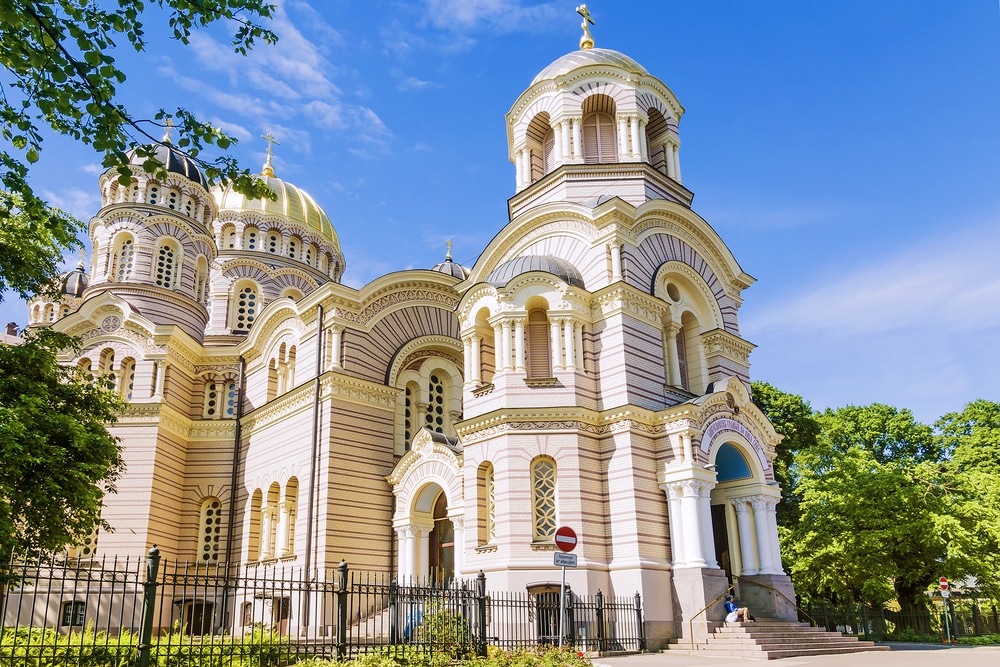
Also close to the Freedom Monument on the Esplanāde is the largest Orthodox place of worship in Riga and one of the four Orthodox Cathedrals of Latvia.
This neo-Byzantine building, hard to miss for its five domes, went up between 1876 and 1884 and on completion received a gift of 12 bells from Tsar Alexander II. At that time it was one of the most opulent structures in the city, but the 20th century took its toll on the cathedral.
After World War II the bells were melted down and the crucifixes sawn down, when the building became the Republic House of Knowledge during the Soviet period. There was a planetarium in the main dome, and a cafe opened in one of the side altar rooms.
The cathedral was re-consecrated in the early-1990s, and the restoration is still in progress. The domes are gradually being re-clad with gold. Inside, the multilevel iconostasis, unveiled in 2000, is particularly lavish and you can pass a lot of time admiring the colourful and intricate decoration adorning the walls and domes.
24. Riga Ghetto and Latvian Holocaust Museum
 Source: Nina Alizada / Shutterstock
The Riga Ghetto, created in October 1941, was within a brief walk of the Central Market on the right bank of the Daugava.
Almost all of Riga’s Latvian Jews rounded up here (some 35,000) were murdered shortly after in the Rumbula Massacre of November to December 1941.
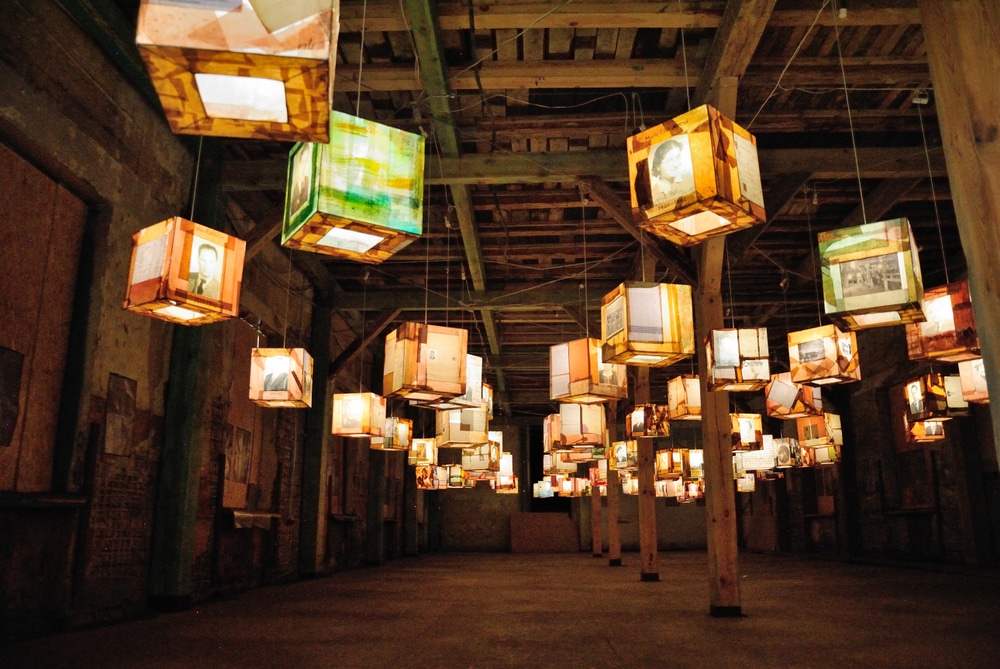
After that Jewish people from Germany were transported to Riga forced to live here. This grim period is recorded at a small but powerful outdoor museum, which has gathered and restored a number of landmarks going back to that time.
The cobblestones at the entrance for instance used to pave Ludzas iela, the ghetto’s main street on which tens of thousands of people were marched to the Rumbula Massacre.
At the Maza Kalnu iela House, you can get a sense of the ghetto’s cramped conditions, while next to a long wall of remembrance is a preserved boxcar used to transport people during the Holocaust.
Website: http://www.rgm.lv/?lang=en
25. Latvian National Opera
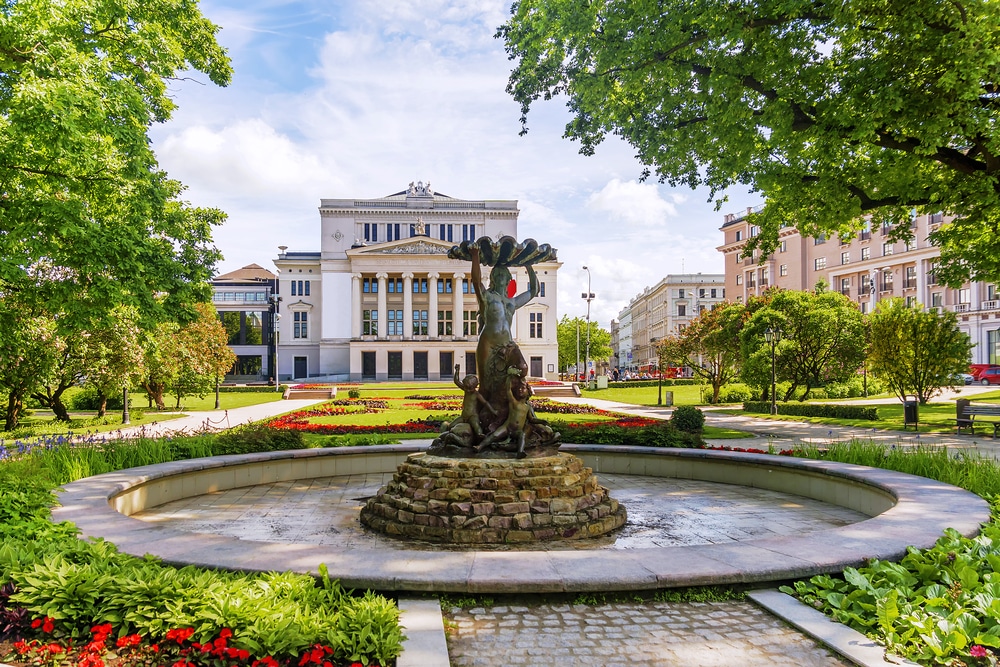 Source: dimbar76 / Shutterstock
Also embedded in that green corridor along the Riga Canal is this majestic Neoclassical opera house, built in the early 1860s.
The Latvian National Opera and Ballet moved here in 1919, and during its season from mid-September to late-May, puts on more than 200 performances, including six new productions.
As you may or may not know, Latvia has a rich opera tradition, and Richard Wagner worked in Riga early in his career.
The country has produced a lot of highly-regarded opera singers, like mezzo-soprano Elīna Garanča, tenor Aleksandrs Antoņenko and sopranos Kristine Opolais and Marina Rebeka, most of whom got their start at this institution, and occasionally give performances at this venue to great fanfare.
As well as ballet and opera, this stage has a programme of symphonic and chamber music concerts If you’d just like to hear a little about the building and see the handsome Great Hall you can book a guided tour.
Website: https://www.opera.lv/en/home